
GRADE A+ GI & Hepatic NCLEX-Style Questions and Rationales 2025
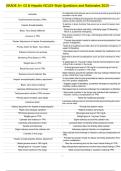
A medication that reduces serum ammonia levels by promoting its
Lactulose
excretion via the stool.
A method of feeding that bypasses the gastrointestinal tract, pro-
Total Parenteral Nutrition (TPN)
viding nutrition directly into the bloodstream.
A decline in brain function that occurs as a result of severe liver
Hepatic Encephalopathy
disease.
Stools that are black and sticky, indicating upper GI bleeding,
Black, Tarry Stools (Melena)
which is a potential emergency.
New onset crackles in the lungs, indicating possible fluid overload
Concern in TPN
or infection.
Provide low-protein meals to reduce ammonia production from
Dietary Adjustment in Hepatic Encephalopathy
protein metabolism.
Notify the healthcare provider due to the potential emergency of
Priority Action for Black, Tarry Stools
upper GI bleeding.
Decreased serum ammonia levels indicate the medication is ef-
Effective Outcome of Lactulose
fective.
Essential to prevent complications such as fluid overload or infec-
Monitoring Fluid Status in TPN
tion.
A weight gain of 1 kg over 3 days may be concerning but is less
Weight Gain in TPN
critical than crackles in the lungs.
A blood glucose level of 180 mg/dL is concerning but not as
Blood Glucose Level in TPN
immediate as crackles in the lungs.
Slight redness around the catheter site may indicate infection but
Redness Around Catheter Site
is less critical than lung crackles.
A low-protein diet may be prescribed to reduce ammonia produc-
Hepatic encephalopathy dietary adjustment
tion from protein metabolism.
Suggest upper GI bleeding, a potential emergency requiring im-
Black, tarry stools (melena)
mediate medical attention.
Lactulose effectiveness in cirrhosis Decreased serum ammonia indicates the medication is effective.
New onset crackles in the lungs may indicate fluid overload or
Total parenteral nutrition (TPN) concern
infection, serious complications of TPN.
Priority action for black, tarry stools Notify the healthcare provider.
Lactulose reduces serum ammonia levels by promoting its excre-
Lactulose action
tion via the stool.
Dietary adjustment for hepatic encephalopathy Provide low-protein meals.
Peptic ulcer disease symptom Reports of black, tarry stools.
TPN blood glucose level concern Blood glucose level of 180 mg/dL.
Weight gain in TPN Weight gain of 1 kg over 3 days.
Catheter site redness in TPN Slight redness around the catheter site.
Lactulose and potassium levels Lactulose does not directly affect potassium levels.
Ascites and lactulose Lactulose does not directly affect ascites.
Slight redness around the catheter site Indicates potential infection or complication.
May indicate fluid overload or infection, serious complications of
Crackles in the lungs
TPN.
Provide low-protein meals to reduce ammonia production from
Hepatic encephalopathy dietary adjustment
protein metabolism.
Blood glucose level of 180 mg/dL May be concerning but not the most critical finding in TPN.
Weight gain of 1 kg over 3 days May indicate fluid retention but not the most critical finding in TPN.
New onset crackles in the lungs Most concerning finding in a patient receiving TPN.
1/5
, GRADE A+ GI & Hepatic NCLEX-Style Questions and Rationales 2025
Educate on avoiding NSAIDs Important for patients with a history of peptic ulcer disease.
Document the findings Standard procedure for reporting patient symptoms.
Administer prescribed antacid May be necessary for patients with peptic ulcer disease.
Priority action for black, tarry stools indicating potential emer-
Notify the healthcare provider
gency.
Decreased ascites Not a direct indication of lactulose effectiveness.
Increased serum potassium Not a direct indication of lactulose effectiveness.
Increased bowel sounds Not a direct indication of lactulose effectiveness.
Reduces serum ammonia levels by promoting its excretion via the
Lactulose
stool.
A method of feeding that bypasses the gastrointestinal tract, de-
Total Parenteral Nutrition (TPN)
livering nutrients directly into the bloodstream.
May indicate fluid overload or infection, which are serious compli-
Crackles in the lungs
cations of TPN.
Effective outcome of lactulose Decreased serum ammonia indicates the medication is effective.
Monitoring fluid status Essential in patients receiving TPN to prevent complications.
Weight gain of 1 kg over 3 days in TPN May not be as concerning as new onset crackles in the lungs.
Blood glucose level of 180 mg/dL in TPN Generally not the most concerning finding compared to crackles.
Slight redness around the catheter site in TPN Less concerning than new onset crackles.
Increase protein intake in hepatic encephalopathy Not appropriate; a low-protein diet is recommended.
Not the primary dietary adjustment; low-protein meals are pre-
Decrease carbohydrate intake in hepatic encephalopathy
ferred.
High-fat diet in hepatic encephalopathy Not the recommended dietary adjustment.
Important but not the priority action when black, tarry stools are
Educate on avoiding NSAIDs for peptic ulcer disease
present.
Document the findings for black, tarry stools Important but not the priority action.
Administer prescribed antacid for black, tarry stools Not the priority action when upper GI bleeding is suspected.
Decreased ascites as an outcome of lactulose Not an indicator of effectiveness; decreased serum ammonia is.
Increased serum potassium as an outcome of lactulose Not an indicator of effectiveness; decreased serum ammonia is.
Increased bowel sounds as an outcome of lactulose Not an indicator of effectiveness; decreased serum ammonia is.
Rationale for lactulose It does not directly affect potassium or ascites.
Rationale for monitoring fluid status in TPN To prevent serious complications.
Rationale for low-protein diet in hepatic encephalopathy To reduce ammonia production from protein metabolism.
A method of feeding that bypasses the gastrointestinal tract, pro-
Total parenteral nutrition (TPN)
viding nutrients directly into the bloodstream.
New onset crackles in the lungs may indicate fluid overload or
Concern in TPN patient
infection, serious complications of TPN.
Effective outcome of lactulose Decreased serum ammonia.
Serum potassium and lactulose Lactulose does not directly affect potassium levels.
Weight gain of 1 kg over 3 days may not be concerning unless
Weight gain in TPN patient
accompanied by other symptoms.
A blood glucose level of 180 mg/dL may require monitoring but is
Blood glucose level in TPN
not the most concerning finding.
Slight redness may indicate infection but is not the most concern-
Redness around catheter site in TPN
ing finding compared to crackles.
Educate on avoiding NSAIDs to prevent exacerbation of ulcer
Educating on NSAIDs for peptic ulcer disease
disease.
2/5
A medication that reduces serum ammonia levels by promoting its
Lactulose
excretion via the stool.
A method of feeding that bypasses the gastrointestinal tract, pro-
Total Parenteral Nutrition (TPN)
viding nutrition directly into the bloodstream.
A decline in brain function that occurs as a result of severe liver
Hepatic Encephalopathy
disease.
Stools that are black and sticky, indicating upper GI bleeding,
Black, Tarry Stools (Melena)
which is a potential emergency.
New onset crackles in the lungs, indicating possible fluid overload
Concern in TPN
or infection.
Provide low-protein meals to reduce ammonia production from
Dietary Adjustment in Hepatic Encephalopathy
protein metabolism.
Notify the healthcare provider due to the potential emergency of
Priority Action for Black, Tarry Stools
upper GI bleeding.
Decreased serum ammonia levels indicate the medication is ef-
Effective Outcome of Lactulose
fective.
Essential to prevent complications such as fluid overload or infec-
Monitoring Fluid Status in TPN
tion.
A weight gain of 1 kg over 3 days may be concerning but is less
Weight Gain in TPN
critical than crackles in the lungs.
A blood glucose level of 180 mg/dL is concerning but not as
Blood Glucose Level in TPN
immediate as crackles in the lungs.
Slight redness around the catheter site may indicate infection but
Redness Around Catheter Site
is less critical than lung crackles.
A low-protein diet may be prescribed to reduce ammonia produc-
Hepatic encephalopathy dietary adjustment
tion from protein metabolism.
Suggest upper GI bleeding, a potential emergency requiring im-
Black, tarry stools (melena)
mediate medical attention.
Lactulose effectiveness in cirrhosis Decreased serum ammonia indicates the medication is effective.
New onset crackles in the lungs may indicate fluid overload or
Total parenteral nutrition (TPN) concern
infection, serious complications of TPN.
Priority action for black, tarry stools Notify the healthcare provider.
Lactulose reduces serum ammonia levels by promoting its excre-
Lactulose action
tion via the stool.
Dietary adjustment for hepatic encephalopathy Provide low-protein meals.
Peptic ulcer disease symptom Reports of black, tarry stools.
TPN blood glucose level concern Blood glucose level of 180 mg/dL.
Weight gain in TPN Weight gain of 1 kg over 3 days.
Catheter site redness in TPN Slight redness around the catheter site.
Lactulose and potassium levels Lactulose does not directly affect potassium levels.
Ascites and lactulose Lactulose does not directly affect ascites.
Slight redness around the catheter site Indicates potential infection or complication.
May indicate fluid overload or infection, serious complications of
Crackles in the lungs
TPN.
Provide low-protein meals to reduce ammonia production from
Hepatic encephalopathy dietary adjustment
protein metabolism.
Blood glucose level of 180 mg/dL May be concerning but not the most critical finding in TPN.
Weight gain of 1 kg over 3 days May indicate fluid retention but not the most critical finding in TPN.
New onset crackles in the lungs Most concerning finding in a patient receiving TPN.
1/5
, GRADE A+ GI & Hepatic NCLEX-Style Questions and Rationales 2025
Educate on avoiding NSAIDs Important for patients with a history of peptic ulcer disease.
Document the findings Standard procedure for reporting patient symptoms.
Administer prescribed antacid May be necessary for patients with peptic ulcer disease.
Priority action for black, tarry stools indicating potential emer-
Notify the healthcare provider
gency.
Decreased ascites Not a direct indication of lactulose effectiveness.
Increased serum potassium Not a direct indication of lactulose effectiveness.
Increased bowel sounds Not a direct indication of lactulose effectiveness.
Reduces serum ammonia levels by promoting its excretion via the
Lactulose
stool.
A method of feeding that bypasses the gastrointestinal tract, de-
Total Parenteral Nutrition (TPN)
livering nutrients directly into the bloodstream.
May indicate fluid overload or infection, which are serious compli-
Crackles in the lungs
cations of TPN.
Effective outcome of lactulose Decreased serum ammonia indicates the medication is effective.
Monitoring fluid status Essential in patients receiving TPN to prevent complications.
Weight gain of 1 kg over 3 days in TPN May not be as concerning as new onset crackles in the lungs.
Blood glucose level of 180 mg/dL in TPN Generally not the most concerning finding compared to crackles.
Slight redness around the catheter site in TPN Less concerning than new onset crackles.
Increase protein intake in hepatic encephalopathy Not appropriate; a low-protein diet is recommended.
Not the primary dietary adjustment; low-protein meals are pre-
Decrease carbohydrate intake in hepatic encephalopathy
ferred.
High-fat diet in hepatic encephalopathy Not the recommended dietary adjustment.
Important but not the priority action when black, tarry stools are
Educate on avoiding NSAIDs for peptic ulcer disease
present.
Document the findings for black, tarry stools Important but not the priority action.
Administer prescribed antacid for black, tarry stools Not the priority action when upper GI bleeding is suspected.
Decreased ascites as an outcome of lactulose Not an indicator of effectiveness; decreased serum ammonia is.
Increased serum potassium as an outcome of lactulose Not an indicator of effectiveness; decreased serum ammonia is.
Increased bowel sounds as an outcome of lactulose Not an indicator of effectiveness; decreased serum ammonia is.
Rationale for lactulose It does not directly affect potassium or ascites.
Rationale for monitoring fluid status in TPN To prevent serious complications.
Rationale for low-protein diet in hepatic encephalopathy To reduce ammonia production from protein metabolism.
A method of feeding that bypasses the gastrointestinal tract, pro-
Total parenteral nutrition (TPN)
viding nutrients directly into the bloodstream.
New onset crackles in the lungs may indicate fluid overload or
Concern in TPN patient
infection, serious complications of TPN.
Effective outcome of lactulose Decreased serum ammonia.
Serum potassium and lactulose Lactulose does not directly affect potassium levels.
Weight gain of 1 kg over 3 days may not be concerning unless
Weight gain in TPN patient
accompanied by other symptoms.
A blood glucose level of 180 mg/dL may require monitoring but is
Blood glucose level in TPN
not the most concerning finding.
Slight redness may indicate infection but is not the most concern-
Redness around catheter site in TPN
ing finding compared to crackles.
Educate on avoiding NSAIDs to prevent exacerbation of ulcer
Educating on NSAIDs for peptic ulcer disease
disease.
2/5


