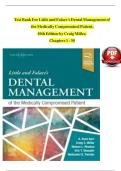
Test Bank For Little and Falace's Dental Management of
k k k k k k k k
the Medically Compromised Patient,
k k k k
10th Edition by Craig Miller,
k k k k k
Chapters 1 - 30 k k k
,Little: Dental Management of the Medically Compromised Patient, 10th Edition Test Bank
k k k k k k k k k k k
Table of Contents
k k
PART ONE: PATIENT EVALUATION AND RISK ASSESSMENT
k k k k k k
Chapter 1: Patient Evaluation and Risk Assessment
k k k k k k
PART TWO: CARDIOVASCULAR DISEASE
k k k
Chapter 2: Infective Endocarditis
k k k
Chapter 3: Hypertension
k k
Chapter 4: Ischemic Heart Disease
k k k k
Chapter 5: Cardiac Arrhythmias
k k k
Chapter 6: Heart Failure (or Congestive Heart Failure)
k k k k k k k
PART THREE: PULMONARY DISEASE
k k k
Chapter 7: Pulmonary Disease
k k k
Chapter 8: Smoking and Tobacco Use Cessation
k k k k k k
Chapter 9: Sleep-Related Breathing Disorders
k k k k
PART FOUR: GASTROINTESTIAL DISEASE
k k k
Chapter 10: Liver Disease
k k k
Chapter 11: Gastrointestinal Disease
k k k
PART FIVE: GENITOURINARY DISEASE
k k k
Chapter 12: Chronic Kidney Disease and Dialysis
k k k k k k
Chapter 13: Sexually Transmitted Diseases
k k k k
PART SIX: ENDOCRINE AND METABOLIC DISEASE
k k k k k
Chapter 14: Diabetes Mellitus
k k k
Chapter 15: Adrenal Insufficiency
k k k
Chapter 16: Thyroid Diseases
k k k
Chapter 17: Pregnancy and Breast Feeding
k k k k k
PART SEVEN: IMMUNOLOGIC DISEASE
k k k
Chapter 18: AIDS, HIV Infection, and Related Conditions
k k k k k k k
Chapter 19: Allergy
k k
Chapter 20: Rheumatologic and Connective Tissue Disorders
k k k k k k
Chapter 21: Organ and Bone Marrow Transplantation
k k k k k k
PART EIGHT: HEMATOLOGIC AND ONCOLOGIC DISEASE
k k k k k
Chapter 22: Disorders of Red Blood Cells
k k k k k k
Chapter 23: Disorders of White Blood Cells
k k k k k k
Chapter 24: Acquired Bleeding and Hypercoagulable Disorders
k k k k k k
Chapter 25: Congenital Bleeding and Hypercoagulable Disorders
k k k k k k
Chapter 26: Cancer and Oral Care of the Patient
k k k k k k k k
PART NINE: NEUROLOGIC, BEHAVIORAL, AND PSYCHIATRIC DISORDERS
k k k k k k
Chapter 27: Neurologic Disorders
k k k
Chapter 28: Anxiety, Eating Disorders, and Behavioral Reactions to Illness
k k k k k k k k k
Chapter 29: Psychiatric Disorders
k k k
Chapter 30: Drug and Alcohol Abuse
k k k k k
, WWW.GRADESMORE.COM
Stuvia.com k- kThe kMarketplace kto kBuy kand kSell kyour kStudy
kMaterial
Page 1 of 74
Chapter 01: Patient Evaluation and Risk Assessment
k k k k k k
Little: Dental Management of the Medically Compromised Patient, 10th Edition
k k k k k k k k k
MULTIPLE CHOICE k
1. Elective dental care should be deferred for patients with severe, uncontrolled hypertension,
k k k k k k k k k k k
meaning that the blood pressure is greater than or equal to
k k k k k k k k k k k mm Hg. k
a. 200/140
b. 180/140
c. 180/110
d. 160/110
ANSWER: C k
Elective dental care should be deferred for patients with severe, uncontrolled hypertension,
k k k k k k k k k k k
which is blood pressure greater than or equal to 180/110 mm Hg, until the condition can be
k k k k k k k k k k k k k k k k k
brought under control.
k k k
2. The American Heart Association currently recommends antibiotic prophylaxis for a patient
k k k k k k k k k k
with which of the following cardiac conditions?
k k k k k k k
a. Mitral valve prolapse k k
b. Prosthetic heart valve k k
c. Rheumatic heart disease k k
d. Pacemakers for cardiac arrhythmias k k k
ANSWER: B k
Previously, the American Heart Association (AHA) recommended antibiotic prophylaxis for
k k k k k k k k k
many patients with heart murmurs caused by valvular disease (e.g., mitral valve prolapse,
k k k k k k k k k k k k k
rheumatic heart disease) in an effort to prevent infective endocarditis; however, current
k k k k k k k k k k k k
guidelines omit this recommendation on the basis of accumulated scientific evidence. If a
k k k k k k k k k k k k k
murmur is due to certain specific cardiac conditions (e.g., previous endocarditis, prosthetic
k k k k k k k k k k k k
heart valve, complex congenital cyanotic heart disease), the AHA continues to recommend
k k k k k k k k k k k k
antibiotic prophylaxis for most dental procedures.
k k k k k k
3. One consequence of chronic hepatitis (B or C) or cirrhosis of the liver is decreased ability of
k k k k k k k k k k k k k k k k
the body to
k k k certain drugs, including local anesthetics and analgesics.
k k k k k k
a. absorb
b. distribute
c. metabolize
d. excrete
ANSWER: C k
Patients also may have chronic hepatitis (B or C) or cirrhosis, with impairment of liver
k k k k k k k k k k k k k k
function. This deficit may result in prolonged bleeding and less efficient metabolism of
k k k k k k k k k k k k k
certain drugs, including local anesthetics and analgesics.
k k k k k k k
4. Which of the following symptoms and signs is most consistent with allergy?
k k k k k k k k k k k
a. Heart palpitations k
b. Itching
c. Vomiting
d. Fainting
WWW.NURSYLAB.COM
GRADESMORE.COM
, WWW.GRADESMORE.COM
Stuvia.com k- kThe kMarketplace kto kBuy kand kSell kyour kStudy
kMaterial
Page 1 of 74
ANSWER: B k
Symptoms and signs consistent with allergy include itching, urticaria (hives), rash, swelling,
k k k k k k k k k k k
wheezing, angioedema, runny nose, and tearing eyes. Isolated signs and symptoms such as
k k k k k k k k k k k k k
nausea, vomiting, heart palpitations, and fainting generally are not of an allergic origin but
k k k k k k k k k k k k k k
rather are manifestations of drug intolerance, adverse side effects, or psychogenic reactions.
k k k k k k k k k k k k
5. Which of the following is true of the patient with a history of tuberculosis?
k k k k k k k k k k k k k
a. A positive result on skin testing means that the person has active TB.
k k k k k k k k k k k k
b. Most patients who become positive skin testers develop active disease.
k k k k k k k k k
c. Patients with acquired immunodeficiency syndrome (AIDS) have a high incidence
k k k k k k k k k
k of tuberculosis.
k
d. A diagnosis of active TB is made by a purified protein derivative (PPD) skin test.
k k k k k k k k k k k k k k
ANSWER: C k
The potential coexistence of tuberculosis and acquired immunodeficiency syndrome (AIDS)
k k k k k k k k k
should be explored because patients with AIDS have a high incidence of tuberculosis. A
k k k k k k k k k k k k k k
positive result on skin testing means specifically that the person has at some time been
k k k k k k k k k k k k k k k
infected with TB, not necessarily that active disease is present. Most patients who become
k k k k k k k k k k k k k k
positive skin testers do not develop active disease. A diagnosis of active TB is made by chest
k k k k k k k k k k k k k k k k k
x-ray, imaging, sputum culture, and clinical examination.
k k k k k k k
6. Vasoconstrictors should be avoided in patients who cocaine or methamphetamine users k k k k k k k k k k
because these agents may precipitate
k k k k k .
a. severe hypotension k
b. severe hypertension k
c. respiratory depression k
d. cessation of intestinal peristalsis k k k
ANSWER: B k
Vasoconstrictors should be avoided in patients who are cocaine or methamphetamine users
k k k k k k k k k k k
because the combination may precipitate arrhythmias, MI, or severe hypertension.
k k k k k k k k k k
7. It has been shown that the risk for occurrence of a serious perioperative cardiovascular event
k k k k k k k k k k k k k k
(e.g., MI, heart failure) is increased in patients who are unable to meet a -MET (metabolic
k k k k k k k k k k k k k k k k
equivalent of task) demand during normal daily activity.
k k k k k k k k
a. 4
b. 6
c. 8
d. 10
ANSWER: A k
Daily activities requiring 4 METs include level walking at 4 miles/hour or climbing a flight of
k k k k k k k k k k k k k k k
stairs. Activities requiring greater than 10 METs include swimming and singles tennis. An
k k k k k k k k k k k k k
exercise capacity of 10 to 13 METs indicates excellent physical conditioning.
k k k k k k k k k k k
8. Which of the following alterations in the fingernails is associated with cirrhosis?
k k k k k k k k k k k
a. Yellowing
b. Clubbing
c. White discoloration k
d. Splinter hemorrhages k
WWW.NURSYLAB.COM
GRADESMORE.COM
k k k k k k k k
the Medically Compromised Patient,
k k k k
10th Edition by Craig Miller,
k k k k k
Chapters 1 - 30 k k k
,Little: Dental Management of the Medically Compromised Patient, 10th Edition Test Bank
k k k k k k k k k k k
Table of Contents
k k
PART ONE: PATIENT EVALUATION AND RISK ASSESSMENT
k k k k k k
Chapter 1: Patient Evaluation and Risk Assessment
k k k k k k
PART TWO: CARDIOVASCULAR DISEASE
k k k
Chapter 2: Infective Endocarditis
k k k
Chapter 3: Hypertension
k k
Chapter 4: Ischemic Heart Disease
k k k k
Chapter 5: Cardiac Arrhythmias
k k k
Chapter 6: Heart Failure (or Congestive Heart Failure)
k k k k k k k
PART THREE: PULMONARY DISEASE
k k k
Chapter 7: Pulmonary Disease
k k k
Chapter 8: Smoking and Tobacco Use Cessation
k k k k k k
Chapter 9: Sleep-Related Breathing Disorders
k k k k
PART FOUR: GASTROINTESTIAL DISEASE
k k k
Chapter 10: Liver Disease
k k k
Chapter 11: Gastrointestinal Disease
k k k
PART FIVE: GENITOURINARY DISEASE
k k k
Chapter 12: Chronic Kidney Disease and Dialysis
k k k k k k
Chapter 13: Sexually Transmitted Diseases
k k k k
PART SIX: ENDOCRINE AND METABOLIC DISEASE
k k k k k
Chapter 14: Diabetes Mellitus
k k k
Chapter 15: Adrenal Insufficiency
k k k
Chapter 16: Thyroid Diseases
k k k
Chapter 17: Pregnancy and Breast Feeding
k k k k k
PART SEVEN: IMMUNOLOGIC DISEASE
k k k
Chapter 18: AIDS, HIV Infection, and Related Conditions
k k k k k k k
Chapter 19: Allergy
k k
Chapter 20: Rheumatologic and Connective Tissue Disorders
k k k k k k
Chapter 21: Organ and Bone Marrow Transplantation
k k k k k k
PART EIGHT: HEMATOLOGIC AND ONCOLOGIC DISEASE
k k k k k
Chapter 22: Disorders of Red Blood Cells
k k k k k k
Chapter 23: Disorders of White Blood Cells
k k k k k k
Chapter 24: Acquired Bleeding and Hypercoagulable Disorders
k k k k k k
Chapter 25: Congenital Bleeding and Hypercoagulable Disorders
k k k k k k
Chapter 26: Cancer and Oral Care of the Patient
k k k k k k k k
PART NINE: NEUROLOGIC, BEHAVIORAL, AND PSYCHIATRIC DISORDERS
k k k k k k
Chapter 27: Neurologic Disorders
k k k
Chapter 28: Anxiety, Eating Disorders, and Behavioral Reactions to Illness
k k k k k k k k k
Chapter 29: Psychiatric Disorders
k k k
Chapter 30: Drug and Alcohol Abuse
k k k k k
, WWW.GRADESMORE.COM
Stuvia.com k- kThe kMarketplace kto kBuy kand kSell kyour kStudy
kMaterial
Page 1 of 74
Chapter 01: Patient Evaluation and Risk Assessment
k k k k k k
Little: Dental Management of the Medically Compromised Patient, 10th Edition
k k k k k k k k k
MULTIPLE CHOICE k
1. Elective dental care should be deferred for patients with severe, uncontrolled hypertension,
k k k k k k k k k k k
meaning that the blood pressure is greater than or equal to
k k k k k k k k k k k mm Hg. k
a. 200/140
b. 180/140
c. 180/110
d. 160/110
ANSWER: C k
Elective dental care should be deferred for patients with severe, uncontrolled hypertension,
k k k k k k k k k k k
which is blood pressure greater than or equal to 180/110 mm Hg, until the condition can be
k k k k k k k k k k k k k k k k k
brought under control.
k k k
2. The American Heart Association currently recommends antibiotic prophylaxis for a patient
k k k k k k k k k k
with which of the following cardiac conditions?
k k k k k k k
a. Mitral valve prolapse k k
b. Prosthetic heart valve k k
c. Rheumatic heart disease k k
d. Pacemakers for cardiac arrhythmias k k k
ANSWER: B k
Previously, the American Heart Association (AHA) recommended antibiotic prophylaxis for
k k k k k k k k k
many patients with heart murmurs caused by valvular disease (e.g., mitral valve prolapse,
k k k k k k k k k k k k k
rheumatic heart disease) in an effort to prevent infective endocarditis; however, current
k k k k k k k k k k k k
guidelines omit this recommendation on the basis of accumulated scientific evidence. If a
k k k k k k k k k k k k k
murmur is due to certain specific cardiac conditions (e.g., previous endocarditis, prosthetic
k k k k k k k k k k k k
heart valve, complex congenital cyanotic heart disease), the AHA continues to recommend
k k k k k k k k k k k k
antibiotic prophylaxis for most dental procedures.
k k k k k k
3. One consequence of chronic hepatitis (B or C) or cirrhosis of the liver is decreased ability of
k k k k k k k k k k k k k k k k
the body to
k k k certain drugs, including local anesthetics and analgesics.
k k k k k k
a. absorb
b. distribute
c. metabolize
d. excrete
ANSWER: C k
Patients also may have chronic hepatitis (B or C) or cirrhosis, with impairment of liver
k k k k k k k k k k k k k k
function. This deficit may result in prolonged bleeding and less efficient metabolism of
k k k k k k k k k k k k k
certain drugs, including local anesthetics and analgesics.
k k k k k k k
4. Which of the following symptoms and signs is most consistent with allergy?
k k k k k k k k k k k
a. Heart palpitations k
b. Itching
c. Vomiting
d. Fainting
WWW.NURSYLAB.COM
GRADESMORE.COM
, WWW.GRADESMORE.COM
Stuvia.com k- kThe kMarketplace kto kBuy kand kSell kyour kStudy
kMaterial
Page 1 of 74
ANSWER: B k
Symptoms and signs consistent with allergy include itching, urticaria (hives), rash, swelling,
k k k k k k k k k k k
wheezing, angioedema, runny nose, and tearing eyes. Isolated signs and symptoms such as
k k k k k k k k k k k k k
nausea, vomiting, heart palpitations, and fainting generally are not of an allergic origin but
k k k k k k k k k k k k k k
rather are manifestations of drug intolerance, adverse side effects, or psychogenic reactions.
k k k k k k k k k k k k
5. Which of the following is true of the patient with a history of tuberculosis?
k k k k k k k k k k k k k
a. A positive result on skin testing means that the person has active TB.
k k k k k k k k k k k k
b. Most patients who become positive skin testers develop active disease.
k k k k k k k k k
c. Patients with acquired immunodeficiency syndrome (AIDS) have a high incidence
k k k k k k k k k
k of tuberculosis.
k
d. A diagnosis of active TB is made by a purified protein derivative (PPD) skin test.
k k k k k k k k k k k k k k
ANSWER: C k
The potential coexistence of tuberculosis and acquired immunodeficiency syndrome (AIDS)
k k k k k k k k k
should be explored because patients with AIDS have a high incidence of tuberculosis. A
k k k k k k k k k k k k k k
positive result on skin testing means specifically that the person has at some time been
k k k k k k k k k k k k k k k
infected with TB, not necessarily that active disease is present. Most patients who become
k k k k k k k k k k k k k k
positive skin testers do not develop active disease. A diagnosis of active TB is made by chest
k k k k k k k k k k k k k k k k k
x-ray, imaging, sputum culture, and clinical examination.
k k k k k k k
6. Vasoconstrictors should be avoided in patients who cocaine or methamphetamine users k k k k k k k k k k
because these agents may precipitate
k k k k k .
a. severe hypotension k
b. severe hypertension k
c. respiratory depression k
d. cessation of intestinal peristalsis k k k
ANSWER: B k
Vasoconstrictors should be avoided in patients who are cocaine or methamphetamine users
k k k k k k k k k k k
because the combination may precipitate arrhythmias, MI, or severe hypertension.
k k k k k k k k k k
7. It has been shown that the risk for occurrence of a serious perioperative cardiovascular event
k k k k k k k k k k k k k k
(e.g., MI, heart failure) is increased in patients who are unable to meet a -MET (metabolic
k k k k k k k k k k k k k k k k
equivalent of task) demand during normal daily activity.
k k k k k k k k
a. 4
b. 6
c. 8
d. 10
ANSWER: A k
Daily activities requiring 4 METs include level walking at 4 miles/hour or climbing a flight of
k k k k k k k k k k k k k k k
stairs. Activities requiring greater than 10 METs include swimming and singles tennis. An
k k k k k k k k k k k k k
exercise capacity of 10 to 13 METs indicates excellent physical conditioning.
k k k k k k k k k k k
8. Which of the following alterations in the fingernails is associated with cirrhosis?
k k k k k k k k k k k
a. Yellowing
b. Clubbing
c. White discoloration k
d. Splinter hemorrhages k
WWW.NURSYLAB.COM
GRADESMORE.COM