Understanding TF-CBT Components and Structure UPDATED ACTUAL
Questions and CORRECT Answers
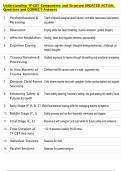
1. Psychoeducation & Teach child and caregiver about trauma, normalize responses, build parent-
Parenting ing skills
2. Relaxation Coping skills like deep breathing, muscle relaxation, guided imagery
3. Affective Modulation Identify, label, and regulate emotions appropriately
4. Cognitive Coping Introduce cognitive triangle (thoughts-feelings-behaviors); challenge un-
helpful thoughts
5. Trauma Narrative & Gradual exposure to trauma through storytelling and emotional processing
Processing
6. In Vivo Mastery of Confront real-life trauma cues in a safe, supported way
Trauma Reminders
7. Conjoint Child-Parent Child shares trauma story with caregiver; builds communication and support
Sessions
8. Enhancing Safety & Teach safety planning, boundary setting, and goal-setting for healthy future
Future Growth
9. Early Stage (P, R, A, C) Build foundational coping skills for managing trauma symptoms
10. Middle Stage (T, I) Safely process and confront traumatic memories and triggers
11. Final Stage (C, E) Reconnect with caregiver and build skills for future safety and resilience
12. Total Duration of ~12-16 sessions (weekly, 60-90 mins)
TF-CBT Sessions
13. Individual Sessions Sessions for child
14. Parallel Sessions Sessions for parent/caregiver
Questions and CORRECT Answers
1. Psychoeducation & Teach child and caregiver about trauma, normalize responses, build parent-
Parenting ing skills
2. Relaxation Coping skills like deep breathing, muscle relaxation, guided imagery
3. Affective Modulation Identify, label, and regulate emotions appropriately
4. Cognitive Coping Introduce cognitive triangle (thoughts-feelings-behaviors); challenge un-
helpful thoughts
5. Trauma Narrative & Gradual exposure to trauma through storytelling and emotional processing
Processing
6. In Vivo Mastery of Confront real-life trauma cues in a safe, supported way
Trauma Reminders
7. Conjoint Child-Parent Child shares trauma story with caregiver; builds communication and support
Sessions
8. Enhancing Safety & Teach safety planning, boundary setting, and goal-setting for healthy future
Future Growth
9. Early Stage (P, R, A, C) Build foundational coping skills for managing trauma symptoms
10. Middle Stage (T, I) Safely process and confront traumatic memories and triggers
11. Final Stage (C, E) Reconnect with caregiver and build skills for future safety and resilience
12. Total Duration of ~12-16 sessions (weekly, 60-90 mins)
TF-CBT Sessions
13. Individual Sessions Sessions for child
14. Parallel Sessions Sessions for parent/caregiver