

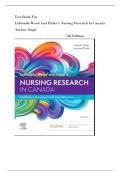
Test Bank For
Lobiondo-Wood And Haber’s Nursing Research In Canada
Author: Singh
5th Edition
,Table of Contents
Part 1: Research Overview
Research Vignette: Nursing research to improve immunization in Canada
Chapter 1 The Role of Research in Nursing
Chapter 2 Theoretical Frameworks
Chapter 3 Critical Appraisal Strategies: Reading Research
Chapter 4 Developing Research Questions, Hypotheses, and Clinical Questions
Chapter 5 Finding and Appraising the Literature
Chapter 6 Legal and Ethical Issues
Part 2: Indigenous Peoples: Research, Knowledges, and Ways of Knowing
Chapter 7 Indigenous Peoples: Research, Knowledges, and Ways of Knowing
Part 3: Qualitative Research
Chapter 8 Introduction to Qualitative Research
Chapter 9 Qualitative Approaches to Research
Part 4: Quantitative Research
Chapter 10 Introduction to Quantitative Research
Chapter 11 Experimental and Quasiexperimental Designs
Chapter 12 Nonexperimental Designs
Part 5: Processes Related to Research
Chapter 13 Sampling
Chapter 14 Data-Collection Methods
Chapter 15 Rigour in Research
Chapter 16 Qualitative Data Analysis
Chapter 17 Quantitative Data Analysis
Chapter 18 Presenting the Findings
Part 6: Critiquing Research
Chapter 19 Critiquing Qualitative Research
Chapter 20 Critiquing Quantitative Research
Part 7: Application of Research: Evidence-Informed Practice
Chapter 21 Developing an Evidence-Informed Practice
Research Vignette: Cancer Survivorship Program: Cancer, Work, Fear of Cancer Recurrence
,Chapter 01: The Role Of Research In Nursing
Lobiondo-Wood: Nursing Research In Canada, 5thedition
Multiple Choice
1. A Key Step To The Development Of Nursing Research Was
A. The Endowment Of Nursing Research Chairs.
B. Universities Offering Baccalaureate Nursing Programs.
C. A Baccalaureate Degree Becoming The Entry To Practice.
D. The Canadian Nurses Association Developing A Research Mandate. Ans: B
Feedback
A Endowment Of Nursing Research Chairs Did Not Occur Until The Number Of Nurses
With Phd Degrees Increased.
B Universities Offering Baccalaureate Nursing Programs Provided An Introduction To
Research Within The Bscn Programs And Led To Further Nursing Education At The Msn
And Phd Levels.
C Baccalaureate Degrees Becoming The Entry To Practice Did Not Occur Until The
Twenty-First Century.
D The Canadian Nurses Association Did Not Develop A Research Mandate Until The
End Of The Twentieth Century.
Difficulty: Cognitive Level: Application
Multiple choice questions: NCLEX (National Council Licensure Examination) :Client Care
Needs Category: Safe And Effective Care Environment; Health Promotion And Maintenance
2. How Is Nursing Research Significant To The Profession Of Nursing?
A. Responsibility Is More Specifically Defined.
, B. Liability Within The Practice Of Nursing Is Decreased.
C. A Specialized Body Of Knowledge Is Generated For Use In The Delivery Of Health
Care.
D. The Scope Of Nursing Practice Is Expanded Into Areas Formerly Reserved For Other
Disciplines. Ans: C
Feedback
A Research Aids In Documenting Accountability Of Nurses, But Professional
Guidelines Regarding Responsibility Already Exist.
B Liability Is A Legal Concept. Research Does Not Promote Liability.
C Theory-Based Nursing Research Provides A Foundation For Evidence-Informed
Nursing Care.
D Nursing Research Expands The Discipline Of Nursing As It Pertains To Nursing
Practice.
Difficulty: Cognitive Level: Comprehension
Multiple choice questions: NCLEX (National Council Licensure Examination) :Client Care
Needs Category: Safe And Effective Care Environment; Health Promotion And Maintenance
3. Why Are Nursing Practice–Oriented Scientific Investigations Valuable?
A. They Validate The Effectiveness Of Particular Nursing Interventions.
B. They Encourage Consumers To Question The Quality Of Health Care.
C. They Limit The Theory Base For Clinical Decision Making.
D. They Mandate Health Care Reform. Ans: A
Feedback
Lobiondo-Wood And Haber’s Nursing Research In Canada
Author: Singh
5th Edition
,Table of Contents
Part 1: Research Overview
Research Vignette: Nursing research to improve immunization in Canada
Chapter 1 The Role of Research in Nursing
Chapter 2 Theoretical Frameworks
Chapter 3 Critical Appraisal Strategies: Reading Research
Chapter 4 Developing Research Questions, Hypotheses, and Clinical Questions
Chapter 5 Finding and Appraising the Literature
Chapter 6 Legal and Ethical Issues
Part 2: Indigenous Peoples: Research, Knowledges, and Ways of Knowing
Chapter 7 Indigenous Peoples: Research, Knowledges, and Ways of Knowing
Part 3: Qualitative Research
Chapter 8 Introduction to Qualitative Research
Chapter 9 Qualitative Approaches to Research
Part 4: Quantitative Research
Chapter 10 Introduction to Quantitative Research
Chapter 11 Experimental and Quasiexperimental Designs
Chapter 12 Nonexperimental Designs
Part 5: Processes Related to Research
Chapter 13 Sampling
Chapter 14 Data-Collection Methods
Chapter 15 Rigour in Research
Chapter 16 Qualitative Data Analysis
Chapter 17 Quantitative Data Analysis
Chapter 18 Presenting the Findings
Part 6: Critiquing Research
Chapter 19 Critiquing Qualitative Research
Chapter 20 Critiquing Quantitative Research
Part 7: Application of Research: Evidence-Informed Practice
Chapter 21 Developing an Evidence-Informed Practice
Research Vignette: Cancer Survivorship Program: Cancer, Work, Fear of Cancer Recurrence
,Chapter 01: The Role Of Research In Nursing
Lobiondo-Wood: Nursing Research In Canada, 5thedition
Multiple Choice
1. A Key Step To The Development Of Nursing Research Was
A. The Endowment Of Nursing Research Chairs.
B. Universities Offering Baccalaureate Nursing Programs.
C. A Baccalaureate Degree Becoming The Entry To Practice.
D. The Canadian Nurses Association Developing A Research Mandate. Ans: B
Feedback
A Endowment Of Nursing Research Chairs Did Not Occur Until The Number Of Nurses
With Phd Degrees Increased.
B Universities Offering Baccalaureate Nursing Programs Provided An Introduction To
Research Within The Bscn Programs And Led To Further Nursing Education At The Msn
And Phd Levels.
C Baccalaureate Degrees Becoming The Entry To Practice Did Not Occur Until The
Twenty-First Century.
D The Canadian Nurses Association Did Not Develop A Research Mandate Until The
End Of The Twentieth Century.
Difficulty: Cognitive Level: Application
Multiple choice questions: NCLEX (National Council Licensure Examination) :Client Care
Needs Category: Safe And Effective Care Environment; Health Promotion And Maintenance
2. How Is Nursing Research Significant To The Profession Of Nursing?
A. Responsibility Is More Specifically Defined.
, B. Liability Within The Practice Of Nursing Is Decreased.
C. A Specialized Body Of Knowledge Is Generated For Use In The Delivery Of Health
Care.
D. The Scope Of Nursing Practice Is Expanded Into Areas Formerly Reserved For Other
Disciplines. Ans: C
Feedback
A Research Aids In Documenting Accountability Of Nurses, But Professional
Guidelines Regarding Responsibility Already Exist.
B Liability Is A Legal Concept. Research Does Not Promote Liability.
C Theory-Based Nursing Research Provides A Foundation For Evidence-Informed
Nursing Care.
D Nursing Research Expands The Discipline Of Nursing As It Pertains To Nursing
Practice.
Difficulty: Cognitive Level: Comprehension
Multiple choice questions: NCLEX (National Council Licensure Examination) :Client Care
Needs Category: Safe And Effective Care Environment; Health Promotion And Maintenance
3. Why Are Nursing Practice–Oriented Scientific Investigations Valuable?
A. They Validate The Effectiveness Of Particular Nursing Interventions.
B. They Encourage Consumers To Question The Quality Of Health Care.
C. They Limit The Theory Base For Clinical Decision Making.
D. They Mandate Health Care Reform. Ans: A
Feedback


