1
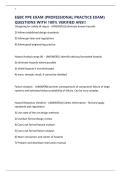
EGBC PPE EXAM (PROFESSIONAL PRACTICE EXAM)
QUESTIONS WITH 100% VERIFIED ANS!!
Designing for safety (4 steps) - (ANSWER)1) eliminate known hazards
2) follow established design standards
3) follow gov laws and regulations
4) follow good engineering practice
Hazard Analysis steps (4) - (ANSWER)1) identify obvious/concealed hazards
2) eliminate hazards where possible
3) shield hazards if not eliminated
4) warn, remedy, recall, if cannot be shielded
Failure Analysis - (ANSWER)Examines consequences of component failure of large
systems and estimate/reduce probability of failure. Can be very complex
Hazard Reduction checklist - (ANSWER)1) Collect Information - find and apply
standards and regulations
3) Use state of the art design methods
2) Conduct formal design review
4) Carry out formal hazard analysis
5) Carry out formal failure analysis
6) Warn consumers and clients of hazards
7) Prepare and distribute instruction manual
, 2
8) Maintain complete design records
Mandates of the Standards Council of Canada (SCC) - (ANSWER)Promotes
efficient and effective standardization and oversee the National Standards System
(organizations involved in standards development, promotion, and
implementation)
Role of the International Organization for Standards (ISO) and what are ISO 9000
and ISO 14000 Standards - (ANSWER)Standardize the standards amond countries
and make them more available.
ISO 9000 - Quality Management and Quality Assurance Standards
ISO 14000 - Environmental Management Systems
Name some Government Standards and Safety Regulations - (ANSWER)1) Codes
and Standards (e.g. NBCC and Construction codes, specified in laws and bylaws )
2) Federal/Provincial Produce Safety Legislation
3) Workers Compensation Act
4) Provincial Occupational Health and Safety Regulations (OHS)
5) Federal Workplace Safety Regulations (determines WHIMIS)
6) Environmental Legislation
Three basic rights of employees under OHS laws - (ANSWER)1) Right to Know
(informed of hazards and trained to operate)
2) Right to Refuse (dangerous work)
EGBC PPE EXAM (PROFESSIONAL PRACTICE EXAM)
QUESTIONS WITH 100% VERIFIED ANS!!
Designing for safety (4 steps) - (ANSWER)1) eliminate known hazards
2) follow established design standards
3) follow gov laws and regulations
4) follow good engineering practice
Hazard Analysis steps (4) - (ANSWER)1) identify obvious/concealed hazards
2) eliminate hazards where possible
3) shield hazards if not eliminated
4) warn, remedy, recall, if cannot be shielded
Failure Analysis - (ANSWER)Examines consequences of component failure of large
systems and estimate/reduce probability of failure. Can be very complex
Hazard Reduction checklist - (ANSWER)1) Collect Information - find and apply
standards and regulations
3) Use state of the art design methods
2) Conduct formal design review
4) Carry out formal hazard analysis
5) Carry out formal failure analysis
6) Warn consumers and clients of hazards
7) Prepare and distribute instruction manual
, 2
8) Maintain complete design records
Mandates of the Standards Council of Canada (SCC) - (ANSWER)Promotes
efficient and effective standardization and oversee the National Standards System
(organizations involved in standards development, promotion, and
implementation)
Role of the International Organization for Standards (ISO) and what are ISO 9000
and ISO 14000 Standards - (ANSWER)Standardize the standards amond countries
and make them more available.
ISO 9000 - Quality Management and Quality Assurance Standards
ISO 14000 - Environmental Management Systems
Name some Government Standards and Safety Regulations - (ANSWER)1) Codes
and Standards (e.g. NBCC and Construction codes, specified in laws and bylaws )
2) Federal/Provincial Produce Safety Legislation
3) Workers Compensation Act
4) Provincial Occupational Health and Safety Regulations (OHS)
5) Federal Workplace Safety Regulations (determines WHIMIS)
6) Environmental Legislation
Three basic rights of employees under OHS laws - (ANSWER)1) Right to Know
(informed of hazards and trained to operate)
2) Right to Refuse (dangerous work)