
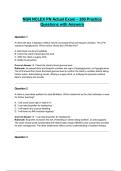
NGN NCLEX PN Actual Exam – 200 Practice
Questions with Answers
Question 1
A client with type 2 diabetes mellitus reports increased thirst and frequent urination. The LPN
suspects hypoglycemia. Which action should the LPN take first?
A. Administer insulin immediately
B. Check the client’s blood glucose level
C. Offer the client a sugary drink
D. Notify the physician
Correct Answer: B. Check the client’s blood glucose level
Rationale : Increased thirst and frequent urination are signs of hyperglycemia, not hypoglycemia.
The LPN should first check the blood glucose level to confirm the client’s condition before taking
further action. Administering insulin, offering a sugary drink, or notifying the physician without
data is premature and unsafe.
Question 2
A client is prescribed warfarin for atrial fibrillation. Which statement by the client indicates a need
for further teaching?
A. “I will avoid foods high in vitamin K.”
B. “I can take ibuprofen for headaches.”
C. “I will report any unusual bleeding.”
D. “I will have my INR checked regularly.”
Correct Answer: B. “I can take ibuprofen for headaches.”
Rationale : Ibuprofen increases the risk of bleeding in clients taking warfarin, an anticoagulant.
The client should avoid nonsteroidal anti-inflammatory drugs (NSAIDs) and consult their provider
for pain management. The other statements reflect correct understanding of warfarin therapy.
Question 3
,The LPN is assisting a client with ambulation after hip surgery. Which action ensures client
safety?
A. Allowing the client to bear full weight on the affected leg
B. Using a walker and ensuring a clear path
C. Walking behind without supporting the client
D. Using a cane on the unaffected side
Correct Answer: B. Using a walker and ensuring a clear path
Rationale : A walker provides stability for a client post-hip surgery, and a clear path prevents
falls. Full weight-bearing may not be allowed, depending on the surgeon’s orders. Walking
without support or using a cane prematurely is unsafe.
Question 4
A client with chronic obstructive pulmonary disease (COPD) is receiving oxygen at 2 L/min via
nasal cannula. The client reports shortness of breath. What should the LPN do first?
A. Increase the oxygen flow to 4 L/min
B. Check the client’s oxygen saturation
C. Place the client in a supine position
D. Administer a rescue inhaler
Correct Answer: B. Check the client’s oxygen saturation
Rationale : Checking oxygen saturation assesses the client’s respiratory status and guides
further intervention. Increasing oxygen flow without an order, placing the client supine, or
administering an inhaler without assessment is inappropriate.
Question 5
Which finding in a client with heart failure indicates worsening condition?
A. Clear lung sounds
B. Increased urine output
C. Crackles in the lungs
D. Stable blood pressure
Correct Answer: C. Crackles in the lungs
Rationale : Crackles indicate fluid accumulation in the lungs, a sign of worsening heart failure
due to pulmonary edema. Clear lung sounds, increased urine output, and stable blood pressure
suggest stable or improving condition.
,Question 6
The LPN is teaching a client about a low-sodium diet for hypertension. Which food should the
client avoid?
A. Fresh apples
B. Canned soup
C. Grilled chicken
D. Brown rice
Correct Answer: B. Canned soup
Rationale : Canned soup often contains high sodium levels, which can exacerbate hypertension.
Fresh apples, grilled chicken, and brown rice are low-sodium options suitable for the diet.
Question 7
A client with a urinary tract infection (UTI) is prescribed ciprofloxacin. Which instruction should
the LPN include?
A. Take the medication with dairy products
B. Drink plenty of water
C. Avoid sunlight exposure
D. Take on an empty stomach
Correct Answer: B. Drink plenty of water
Rationale : Adequate hydration helps flush bacteria from the urinary tract, supporting UTI
treatment. Ciprofloxacin should not be taken with dairy, which reduces absorption. Sunlight
avoidance is specific to other antibiotics like doxycycline, and the drug can be taken with or
without food.
Question 8
The LPN observes a client with dementia wandering in the hallway. What is the best initial
action?
A. Restrain the client to prevent falls
B. Gently redirect the client to a safe area
C. Ignore the behavior as it is expected
D. Call the physician immediately
, Correct Answer: B. Gently redirect the client to a safe area
Rationale : Redirecting the client ensures safety while respecting autonomy. Restraints are a
last resort, ignoring the behavior risks harm, and calling the physician is unnecessary unless the
behavior escalates.
Question 9
A client is receiving heparin therapy. Which laboratory value should the LPN monitor?
A. International Normalized Ratio (INR)
B. Activated Partial Thromboplastin Time (aPTT)
C. Platelet count
D. Hemoglobin level
Correct Answer: B. Activated Partial Thromboplastin Time (aPTT)
Rationale : Heparin’s anticoagulant effect is monitored via aPTT to ensure therapeutic levels.
INR is used for warfarin, while platelet count and hemoglobin are not specific to heparin
monitoring.
Question 10
The LPN is preparing to administer insulin to a client with diabetes. The client’s blood glucose is
50 mg/dL. What should the LPN do first?
A. Administer the scheduled insulin dose
B. Give the client a fast-acting carbohydrate
C. Notify the physician
D. Recheck the blood glucose in 1 hour
Correct Answer: B. Give the client a fast-acting carbohydrate
Rationale : A blood glucose of 50 mg/dL indicates hypoglycemia, requiring immediate
administration of a fast-acting carbohydrate (e.g., juice) to raise glucose levels. Administering
insulin would worsen hypoglycemia, notifying the physician delays treatment, and rechecking
later is unsafe.
Question 11
A client with a colostomy reports leakage around the stoma. What should the LPN do first?
Questions with Answers
Question 1
A client with type 2 diabetes mellitus reports increased thirst and frequent urination. The LPN
suspects hypoglycemia. Which action should the LPN take first?
A. Administer insulin immediately
B. Check the client’s blood glucose level
C. Offer the client a sugary drink
D. Notify the physician
Correct Answer: B. Check the client’s blood glucose level
Rationale : Increased thirst and frequent urination are signs of hyperglycemia, not hypoglycemia.
The LPN should first check the blood glucose level to confirm the client’s condition before taking
further action. Administering insulin, offering a sugary drink, or notifying the physician without
data is premature and unsafe.
Question 2
A client is prescribed warfarin for atrial fibrillation. Which statement by the client indicates a need
for further teaching?
A. “I will avoid foods high in vitamin K.”
B. “I can take ibuprofen for headaches.”
C. “I will report any unusual bleeding.”
D. “I will have my INR checked regularly.”
Correct Answer: B. “I can take ibuprofen for headaches.”
Rationale : Ibuprofen increases the risk of bleeding in clients taking warfarin, an anticoagulant.
The client should avoid nonsteroidal anti-inflammatory drugs (NSAIDs) and consult their provider
for pain management. The other statements reflect correct understanding of warfarin therapy.
Question 3
,The LPN is assisting a client with ambulation after hip surgery. Which action ensures client
safety?
A. Allowing the client to bear full weight on the affected leg
B. Using a walker and ensuring a clear path
C. Walking behind without supporting the client
D. Using a cane on the unaffected side
Correct Answer: B. Using a walker and ensuring a clear path
Rationale : A walker provides stability for a client post-hip surgery, and a clear path prevents
falls. Full weight-bearing may not be allowed, depending on the surgeon’s orders. Walking
without support or using a cane prematurely is unsafe.
Question 4
A client with chronic obstructive pulmonary disease (COPD) is receiving oxygen at 2 L/min via
nasal cannula. The client reports shortness of breath. What should the LPN do first?
A. Increase the oxygen flow to 4 L/min
B. Check the client’s oxygen saturation
C. Place the client in a supine position
D. Administer a rescue inhaler
Correct Answer: B. Check the client’s oxygen saturation
Rationale : Checking oxygen saturation assesses the client’s respiratory status and guides
further intervention. Increasing oxygen flow without an order, placing the client supine, or
administering an inhaler without assessment is inappropriate.
Question 5
Which finding in a client with heart failure indicates worsening condition?
A. Clear lung sounds
B. Increased urine output
C. Crackles in the lungs
D. Stable blood pressure
Correct Answer: C. Crackles in the lungs
Rationale : Crackles indicate fluid accumulation in the lungs, a sign of worsening heart failure
due to pulmonary edema. Clear lung sounds, increased urine output, and stable blood pressure
suggest stable or improving condition.
,Question 6
The LPN is teaching a client about a low-sodium diet for hypertension. Which food should the
client avoid?
A. Fresh apples
B. Canned soup
C. Grilled chicken
D. Brown rice
Correct Answer: B. Canned soup
Rationale : Canned soup often contains high sodium levels, which can exacerbate hypertension.
Fresh apples, grilled chicken, and brown rice are low-sodium options suitable for the diet.
Question 7
A client with a urinary tract infection (UTI) is prescribed ciprofloxacin. Which instruction should
the LPN include?
A. Take the medication with dairy products
B. Drink plenty of water
C. Avoid sunlight exposure
D. Take on an empty stomach
Correct Answer: B. Drink plenty of water
Rationale : Adequate hydration helps flush bacteria from the urinary tract, supporting UTI
treatment. Ciprofloxacin should not be taken with dairy, which reduces absorption. Sunlight
avoidance is specific to other antibiotics like doxycycline, and the drug can be taken with or
without food.
Question 8
The LPN observes a client with dementia wandering in the hallway. What is the best initial
action?
A. Restrain the client to prevent falls
B. Gently redirect the client to a safe area
C. Ignore the behavior as it is expected
D. Call the physician immediately
, Correct Answer: B. Gently redirect the client to a safe area
Rationale : Redirecting the client ensures safety while respecting autonomy. Restraints are a
last resort, ignoring the behavior risks harm, and calling the physician is unnecessary unless the
behavior escalates.
Question 9
A client is receiving heparin therapy. Which laboratory value should the LPN monitor?
A. International Normalized Ratio (INR)
B. Activated Partial Thromboplastin Time (aPTT)
C. Platelet count
D. Hemoglobin level
Correct Answer: B. Activated Partial Thromboplastin Time (aPTT)
Rationale : Heparin’s anticoagulant effect is monitored via aPTT to ensure therapeutic levels.
INR is used for warfarin, while platelet count and hemoglobin are not specific to heparin
monitoring.
Question 10
The LPN is preparing to administer insulin to a client with diabetes. The client’s blood glucose is
50 mg/dL. What should the LPN do first?
A. Administer the scheduled insulin dose
B. Give the client a fast-acting carbohydrate
C. Notify the physician
D. Recheck the blood glucose in 1 hour
Correct Answer: B. Give the client a fast-acting carbohydrate
Rationale : A blood glucose of 50 mg/dL indicates hypoglycemia, requiring immediate
administration of a fast-acting carbohydrate (e.g., juice) to raise glucose levels. Administering
insulin would worsen hypoglycemia, notifying the physician delays treatment, and rechecking
later is unsafe.
Question 11
A client with a colostomy reports leakage around the stoma. What should the LPN do first?


