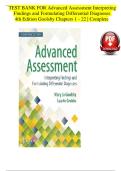
TEST BANK FOR Advanced Assessment Interpreting
ss ss ss ss ss
Findings and Formulating Differential Diagnoses
ss ss ss ss ss ss
4th Edition Goolsby Chapters 1 - 22 | Complete
ss ss ss ss ss ss ss ss ss
, TABLE OF CONTENTSss ss
➢ Chapter ss1. ssAssessment ssand ssClinical ssDecision ssMaking: ssAn ssOverview
➢ Chapter ss2. ssGenomic ssAssessment: ssInterpreting ssFindings ssand ssFormulating ssDifferential ssDiagnoses
➢ Chapter ss3. ssSkin
➢ Chapter ss4. ssHead, ssFace, ssand ssNeck
➢ Chapter ss5. ssThe ssEye
➢ Chapter ss6. ssEar, ssNose, ssMouth, ssand ssThroat
➢ Chapter ss7. ssCardiac ssand ssPeripheral ssVascular ssSystems
➢ Chapter ss8. ssRespiratory ssSystem
➢ Chapter ss9. ssBreasts
➢ Chapter ss10. ssAbdomen
➢ Chapter ss11. ssGenitourinary ssSystem
➢ Chapter ss12. ssMale ssReproductive ssSystem
➢ Chapter ss13. ssFemale ssReproductive ssSystem
➢ Chapter ss14. ssMusculoskeletal ssSystem
➢ Chapter ss15. ssNeurological ssSystem
➢ Chapter ss16. ssNonspecific ssComplaints
➢ Chapter ss17. ssPsychiatric ssMental ssHealth
➢ Chapter ss18. ssPediatric ssPatients
➢ Chapter ss19. ssPregnant ssPatients
➢ Chapter ss20. ssAssessment ssof ssthe ssTransgender ssor ssGender ssDiverse ssAdult
➢ Chapter ss21. ssOlder ssPatients
➢ Chapter ss22. ssPersons ssWith ssDisabilities
, ➢ Chapter 1. Assessment and Clinical Decision Making: An Overview
ss ss ss ss ss ss ss ss
Multiple ss Choice
Identify ssthe sschoice ssthat ssbest sscompletes ssthe ssstatement ssor ssanswers ssthe ssquestion.
ss 1. Which sstype ssof ssclinical ssdecision-making ssis ssmost ssreliable?
A. Intuitive
B. Analytical
C. Experiential
D. Augenblick
ss 2. Which ssof ssthe ssfollowing ssis ssfalse? ssTo ssobtain ssadequate sshistory, sshealth-care ssproviders ssmust ssbe:
A. Methodical ssand sssystematic
B. Attentive ssto ssthe sspatient’s ssverbal ssand ssnonverbal
sslanguage
C. Able ssto ssaccurately ssinterpret ssthe sspatient’s ssresponses
D. Adept ssat ssreading ssinto ssthe sspatient’s ssstatements
ss 3. Essential ssparts ssof ssa sshealth sshistory ssinclude ssall ssof ssthe ssfollowing ssexcept:
A. Chief sscomplaint
B. History ssof ssthe sspresent ssillness
C. Current ssvital sssigns
D. All ssof ssthe ssabove ssare ssessential sshistory
sscomponents
ss 4. Which ssof ssthe ssfollowing ssis ssfalse? ssWhile ssperforming ssthe ssphysical ssexamination, ssthe ssexaminer ssmust ssbe ssable ssto:
A. Differentiate ssbetween ssnormal ssand ssabnormal ssfindings
B. Recall ssknowledge ssof ssa ssrange ssof ssconditions ssand sstheir ssassociated sssigns ssand
sssymptoms
C. Recognize sshow sscertain ssconditions ssaffect ssthe ssresponse ssto ssother ssconditions
D. Foresee ssunpredictable ssfindings
ss 5. The ssfollowing ssis ssthe ssleast ssreliable sssource ssof ssinformation ssfor ssdiagnostic ssstatistics:
A. Evidence-based ssinvestigations
B. Primary ssreports ssof ssresearch
C. Estimation ssbased sson ssa ssprovider’s
ssexperience
D. Published ssmeta-analyses
ss 6. The ssfollowing sscan ssbe ssused ssto ssassist ssin sssound ssclinical ssdecision-making:
A. Algorithm sspublished ssin ssa sspeer-reviewed ssjournal
ssarticle
B. Clinical sspractice ssguidelines
C. Evidence-based ssresearch
D. All ssof ssthe ssabove
ss 7. If ssa ssdiagnostic ssstudy sshas sshigh sssensitivity, ssthis ssindicates ssa:
A. High sspercentage ssof sspersons sswith ssthe ssgiven sscondition sswill sshave ssan
ssabnormal ssresult
B. Low sspercentage ssof sspersons sswith ssthe ssgiven sscondition sswill sshave ssan
ssabnormal ssresult
C. Low sslikelihood ssof ssnormal ssresult ssin sspersons sswithout ssa ssgiven sscondition
D. None ssof ssthe ssabove
ss 8. If ssa ssdiagnostic ssstudy sshas sshigh ssspecificity, ss this ssindicates ssa:
A. Low sspercentage ssof sshealthy ssindividuals sswill ssshow ssa ssnormal ssresult
B. High sspercentage ssof sshealthy ssindividuals sswill ssshow ssa ssnormal ssresult
C. High sspercentage ssof ssindividuals sswith ssa ssdisorder sswill ssshow ssa ssnormal
ssresult
D. Low sspercentage ssof ssindividuals sswith ssa ssdisorder sswill ssshow ssan
ssabnormal ssresult
ss 9. A sslikelihood ssratio ssabove ss1 ssindicates ssthat ssa ssdiagnostic sstest ssshowing ssa:
A. Positive ssresult ssis ssstrongly ssassociated sswith ssthe ssdisease
B. Negative ssresult ssis ssstrongly ssassociated sswith ssabsence ssof ssthe
ssdisease
C. Positive ssresult ssis ssweakly ssassociated sswith ssthe ssdisease
D. Negative ssresult ssis ssweakly ssassociated sswith ssabsence ssof ssthe
ssdisease
, ss 10. Which ssof ssthe ssfollowing ssclinical ssreasoning sstools ssis ssdefined ssas ssevidence-based ssresource ssbased sson ssmathematical ssmodeling
to ssexpress ssthe sslikelihood ssof ssa sscondition ssin ssselect sssituations, sssettings, ssand/or sspatients?
ss ss ss ss ss
Findings and Formulating Differential Diagnoses
ss ss ss ss ss ss
4th Edition Goolsby Chapters 1 - 22 | Complete
ss ss ss ss ss ss ss ss ss
, TABLE OF CONTENTSss ss
➢ Chapter ss1. ssAssessment ssand ssClinical ssDecision ssMaking: ssAn ssOverview
➢ Chapter ss2. ssGenomic ssAssessment: ssInterpreting ssFindings ssand ssFormulating ssDifferential ssDiagnoses
➢ Chapter ss3. ssSkin
➢ Chapter ss4. ssHead, ssFace, ssand ssNeck
➢ Chapter ss5. ssThe ssEye
➢ Chapter ss6. ssEar, ssNose, ssMouth, ssand ssThroat
➢ Chapter ss7. ssCardiac ssand ssPeripheral ssVascular ssSystems
➢ Chapter ss8. ssRespiratory ssSystem
➢ Chapter ss9. ssBreasts
➢ Chapter ss10. ssAbdomen
➢ Chapter ss11. ssGenitourinary ssSystem
➢ Chapter ss12. ssMale ssReproductive ssSystem
➢ Chapter ss13. ssFemale ssReproductive ssSystem
➢ Chapter ss14. ssMusculoskeletal ssSystem
➢ Chapter ss15. ssNeurological ssSystem
➢ Chapter ss16. ssNonspecific ssComplaints
➢ Chapter ss17. ssPsychiatric ssMental ssHealth
➢ Chapter ss18. ssPediatric ssPatients
➢ Chapter ss19. ssPregnant ssPatients
➢ Chapter ss20. ssAssessment ssof ssthe ssTransgender ssor ssGender ssDiverse ssAdult
➢ Chapter ss21. ssOlder ssPatients
➢ Chapter ss22. ssPersons ssWith ssDisabilities
, ➢ Chapter 1. Assessment and Clinical Decision Making: An Overview
ss ss ss ss ss ss ss ss
Multiple ss Choice
Identify ssthe sschoice ssthat ssbest sscompletes ssthe ssstatement ssor ssanswers ssthe ssquestion.
ss 1. Which sstype ssof ssclinical ssdecision-making ssis ssmost ssreliable?
A. Intuitive
B. Analytical
C. Experiential
D. Augenblick
ss 2. Which ssof ssthe ssfollowing ssis ssfalse? ssTo ssobtain ssadequate sshistory, sshealth-care ssproviders ssmust ssbe:
A. Methodical ssand sssystematic
B. Attentive ssto ssthe sspatient’s ssverbal ssand ssnonverbal
sslanguage
C. Able ssto ssaccurately ssinterpret ssthe sspatient’s ssresponses
D. Adept ssat ssreading ssinto ssthe sspatient’s ssstatements
ss 3. Essential ssparts ssof ssa sshealth sshistory ssinclude ssall ssof ssthe ssfollowing ssexcept:
A. Chief sscomplaint
B. History ssof ssthe sspresent ssillness
C. Current ssvital sssigns
D. All ssof ssthe ssabove ssare ssessential sshistory
sscomponents
ss 4. Which ssof ssthe ssfollowing ssis ssfalse? ssWhile ssperforming ssthe ssphysical ssexamination, ssthe ssexaminer ssmust ssbe ssable ssto:
A. Differentiate ssbetween ssnormal ssand ssabnormal ssfindings
B. Recall ssknowledge ssof ssa ssrange ssof ssconditions ssand sstheir ssassociated sssigns ssand
sssymptoms
C. Recognize sshow sscertain ssconditions ssaffect ssthe ssresponse ssto ssother ssconditions
D. Foresee ssunpredictable ssfindings
ss 5. The ssfollowing ssis ssthe ssleast ssreliable sssource ssof ssinformation ssfor ssdiagnostic ssstatistics:
A. Evidence-based ssinvestigations
B. Primary ssreports ssof ssresearch
C. Estimation ssbased sson ssa ssprovider’s
ssexperience
D. Published ssmeta-analyses
ss 6. The ssfollowing sscan ssbe ssused ssto ssassist ssin sssound ssclinical ssdecision-making:
A. Algorithm sspublished ssin ssa sspeer-reviewed ssjournal
ssarticle
B. Clinical sspractice ssguidelines
C. Evidence-based ssresearch
D. All ssof ssthe ssabove
ss 7. If ssa ssdiagnostic ssstudy sshas sshigh sssensitivity, ssthis ssindicates ssa:
A. High sspercentage ssof sspersons sswith ssthe ssgiven sscondition sswill sshave ssan
ssabnormal ssresult
B. Low sspercentage ssof sspersons sswith ssthe ssgiven sscondition sswill sshave ssan
ssabnormal ssresult
C. Low sslikelihood ssof ssnormal ssresult ssin sspersons sswithout ssa ssgiven sscondition
D. None ssof ssthe ssabove
ss 8. If ssa ssdiagnostic ssstudy sshas sshigh ssspecificity, ss this ssindicates ssa:
A. Low sspercentage ssof sshealthy ssindividuals sswill ssshow ssa ssnormal ssresult
B. High sspercentage ssof sshealthy ssindividuals sswill ssshow ssa ssnormal ssresult
C. High sspercentage ssof ssindividuals sswith ssa ssdisorder sswill ssshow ssa ssnormal
ssresult
D. Low sspercentage ssof ssindividuals sswith ssa ssdisorder sswill ssshow ssan
ssabnormal ssresult
ss 9. A sslikelihood ssratio ssabove ss1 ssindicates ssthat ssa ssdiagnostic sstest ssshowing ssa:
A. Positive ssresult ssis ssstrongly ssassociated sswith ssthe ssdisease
B. Negative ssresult ssis ssstrongly ssassociated sswith ssabsence ssof ssthe
ssdisease
C. Positive ssresult ssis ssweakly ssassociated sswith ssthe ssdisease
D. Negative ssresult ssis ssweakly ssassociated sswith ssabsence ssof ssthe
ssdisease
, ss 10. Which ssof ssthe ssfollowing ssclinical ssreasoning sstools ssis ssdefined ssas ssevidence-based ssresource ssbased sson ssmathematical ssmodeling
to ssexpress ssthe sslikelihood ssof ssa sscondition ssin ssselect sssituations, sssettings, ssand/or sspatients?