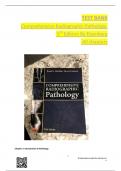
Comprehensive Radiographic Pathology – 6th Edition (Eisenberg) | Complete Test Bank
fd fd fd fd fd fd fd fd fd fd
| REVISED EDITION – NEW 100% VERIFIED CORRECT
fd fd fd fd fd fd fd fd
Chapter 1: Introduction to Pathology
fd fd fd fd
Test Bank fd
MULTIPLE CHOICE fd
1. A disease process caused by physicians or their treatment is this type of process.
fd fd fd fd fd fd fd fd fd fd fd fd fd
a. Idiopathic
b. Iatrogenic
c. Neoplasia
d. Community acquired d
f
ANS: B
The disease process caused by physicians and their treatment is iatrogenic.
fd fd fd fd fd fd fd fd fd fd
REF: p. 3 fd
2. Basic reactions of the body to some form of injury is a:
fd fd fd fd fd fd fd fd fd fd fd
a. Disease process fd
b. Pathology
c. Study of diseases fd fd
d. Idiopathic process fd
ANS: A
A disease is the pattern of the body’s response to some form of injury.
fd fd fd fd fd fd fd fd fd fd fd fd fd
REF: p. 1 fd
29
All information provided for reference only
fd fd fd fd fd
Join us on Facebook.com/thetopgrades
fd fd fd
,3. What term is used to denote a disease in which the underlying cause is unknown?
fd fd fd fd fd fd fd fd fd fd fd fd fd fd
a. Idiopathic
b. Antietiologic
c. Iatrogenic
d. Nosocomial
ANS: A
Idiopathic diseases are those with an unknown, or as of yet unidentified, cause.
fd fd fd fd fd fd fd fd d
f fd fd fd
REF: p. 3 fd
4. Alterations of cell growth, specifically an abnormal proliferation of cells is called:
fd fd fd fd fd fd fd fd fd fd fd
a. Hyperplasia
b. Dysplasia
c. Neoplasia
d. Aplasia
ANS: C
Alterations in cell growth lead to the development of neoplasms (tumors).
fd fd fd fd fd fd fd fd fd fd
REF: p. 7 fd
5. The initial response of body tissues to local injury is:
fd fd fd fd fd fd fd fd fd
a. Infection
b. Ischemia
c. Edema
d. Inflammation
ANS: D
Inflammation is the initial response of body tissues to local injury.
fd fd fd fd fd fd fd fd fd fd
29
All information provided for reference only
fd fd fd fd fd
Join us on Facebook.com/thetopgrades
fd fd fd
, REF: p. 3 fd
6. Heat and redness associated with inflammation is produced by:
fd fd fd fd fd fd fd fd
a. Hyperemia
b. Scar tissue fd
c. Hyperplasia
d. Infarction
ANS: A
This hyperemia produces the heat and redness associated with inflammation.
fd fd fd fd fd fd fd fd fd
REF: p. 3 fd
7. In an injury, the destroyed tissue is replaced with:
fd fd fd fd fd fd fd fd
a. Granulomatous inflammation fd
b. Granulation tissue d
f
c. Phagocytes
d. Pyogens
ANS: B
A fibrous scar replaces the area of destroyed tissue with granulation tissue. Granulation tissue refers
fd fd fd fd fd fd fd fd fd fd fd fd fd fd
to a combination of young, developing capillaries and actively proliferating fibroblasts, which
fd fd fd fd fd fd fd fd fd fd fd fd
produce connective tissue fibers (collagen) that replace the dead tissue.
fd fd fd fd fd fd fd fd fd fd
REF: p. 4 fd
8. Of the five clinical signs of acute inflammation, the medical term for swelling is:
fd fd fd fd fd fd fd fd fd fd fd fd fd
a. Edema
b. Tumor
c. Calor
29
All information provided for reference only
fd fd fd fd fd
Join us on Facebook.com/thetopgrades
fd fd fd
, d. Dolor
ANS: B
The five clinical signs of acute inflammation are rubor (redness), calor (heat), tumor (swelling), dolor
fd fd fd fd fd fd fd fd fd fd fd fd fd fd
(pain), and loss of function.
fd fd fd fd fd
REF: p. 4fd
9. Some bacterial organisms that produce these substances that cause damage to the tissue and incite
fd fd fd fd fd fd fd fd fd fd fd fd fd fd
the inflammatory process are known as:
fd fd fd fd fd fd
a. Toxoids
b. Pyogens
c. Toxins
d. Abscesses
ANS: C
Some bacterial organisms (such as staphylococci and streptococci) produce toxins that damage the
fd fd fd fd fd fd fd fd fd fd fd fd
tissues and incite an inflammatory response.
fd fd fd fd fd fd
REF: p. 4fd
10. Chronic inflammation in a localized area, which often has a centralized necrosis is called:
fd fd fd fd fd fd fd fd fd fd fd fd fd
a. An exudates fd
b. A granuloma fd
c. An abscess fd
d. Hyperplasia
ANS: B
A granuloma is a localized area of chronic inflammation, often with central necrosis.
fd fd fd fd fd fd fd fd fd fd fd fd
REF: p. 4fd
29
All information provided for reference only
fd fd fd fd fd
Join us on Facebook.com/thetopgrades
fd fd fd
fd fd fd fd fd fd fd fd fd fd
| REVISED EDITION – NEW 100% VERIFIED CORRECT
fd fd fd fd fd fd fd fd
Chapter 1: Introduction to Pathology
fd fd fd fd
Test Bank fd
MULTIPLE CHOICE fd
1. A disease process caused by physicians or their treatment is this type of process.
fd fd fd fd fd fd fd fd fd fd fd fd fd
a. Idiopathic
b. Iatrogenic
c. Neoplasia
d. Community acquired d
f
ANS: B
The disease process caused by physicians and their treatment is iatrogenic.
fd fd fd fd fd fd fd fd fd fd
REF: p. 3 fd
2. Basic reactions of the body to some form of injury is a:
fd fd fd fd fd fd fd fd fd fd fd
a. Disease process fd
b. Pathology
c. Study of diseases fd fd
d. Idiopathic process fd
ANS: A
A disease is the pattern of the body’s response to some form of injury.
fd fd fd fd fd fd fd fd fd fd fd fd fd
REF: p. 1 fd
29
All information provided for reference only
fd fd fd fd fd
Join us on Facebook.com/thetopgrades
fd fd fd
,3. What term is used to denote a disease in which the underlying cause is unknown?
fd fd fd fd fd fd fd fd fd fd fd fd fd fd
a. Idiopathic
b. Antietiologic
c. Iatrogenic
d. Nosocomial
ANS: A
Idiopathic diseases are those with an unknown, or as of yet unidentified, cause.
fd fd fd fd fd fd fd fd d
f fd fd fd
REF: p. 3 fd
4. Alterations of cell growth, specifically an abnormal proliferation of cells is called:
fd fd fd fd fd fd fd fd fd fd fd
a. Hyperplasia
b. Dysplasia
c. Neoplasia
d. Aplasia
ANS: C
Alterations in cell growth lead to the development of neoplasms (tumors).
fd fd fd fd fd fd fd fd fd fd
REF: p. 7 fd
5. The initial response of body tissues to local injury is:
fd fd fd fd fd fd fd fd fd
a. Infection
b. Ischemia
c. Edema
d. Inflammation
ANS: D
Inflammation is the initial response of body tissues to local injury.
fd fd fd fd fd fd fd fd fd fd
29
All information provided for reference only
fd fd fd fd fd
Join us on Facebook.com/thetopgrades
fd fd fd
, REF: p. 3 fd
6. Heat and redness associated with inflammation is produced by:
fd fd fd fd fd fd fd fd
a. Hyperemia
b. Scar tissue fd
c. Hyperplasia
d. Infarction
ANS: A
This hyperemia produces the heat and redness associated with inflammation.
fd fd fd fd fd fd fd fd fd
REF: p. 3 fd
7. In an injury, the destroyed tissue is replaced with:
fd fd fd fd fd fd fd fd
a. Granulomatous inflammation fd
b. Granulation tissue d
f
c. Phagocytes
d. Pyogens
ANS: B
A fibrous scar replaces the area of destroyed tissue with granulation tissue. Granulation tissue refers
fd fd fd fd fd fd fd fd fd fd fd fd fd fd
to a combination of young, developing capillaries and actively proliferating fibroblasts, which
fd fd fd fd fd fd fd fd fd fd fd fd
produce connective tissue fibers (collagen) that replace the dead tissue.
fd fd fd fd fd fd fd fd fd fd
REF: p. 4 fd
8. Of the five clinical signs of acute inflammation, the medical term for swelling is:
fd fd fd fd fd fd fd fd fd fd fd fd fd
a. Edema
b. Tumor
c. Calor
29
All information provided for reference only
fd fd fd fd fd
Join us on Facebook.com/thetopgrades
fd fd fd
, d. Dolor
ANS: B
The five clinical signs of acute inflammation are rubor (redness), calor (heat), tumor (swelling), dolor
fd fd fd fd fd fd fd fd fd fd fd fd fd fd
(pain), and loss of function.
fd fd fd fd fd
REF: p. 4fd
9. Some bacterial organisms that produce these substances that cause damage to the tissue and incite
fd fd fd fd fd fd fd fd fd fd fd fd fd fd
the inflammatory process are known as:
fd fd fd fd fd fd
a. Toxoids
b. Pyogens
c. Toxins
d. Abscesses
ANS: C
Some bacterial organisms (such as staphylococci and streptococci) produce toxins that damage the
fd fd fd fd fd fd fd fd fd fd fd fd
tissues and incite an inflammatory response.
fd fd fd fd fd fd
REF: p. 4fd
10. Chronic inflammation in a localized area, which often has a centralized necrosis is called:
fd fd fd fd fd fd fd fd fd fd fd fd fd
a. An exudates fd
b. A granuloma fd
c. An abscess fd
d. Hyperplasia
ANS: B
A granuloma is a localized area of chronic inflammation, often with central necrosis.
fd fd fd fd fd fd fd fd fd fd fd fd
REF: p. 4fd
29
All information provided for reference only
fd fd fd fd fd
Join us on Facebook.com/thetopgrades
fd fd fd