

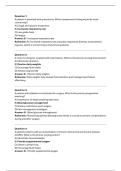
Question 1:
A patient is admitted with pneumonia. Which assessment finding would be most
concerning?
A) Cough and sputum production
B) Increased respiratory rate
C) Low-grade fever
D) Fatigue
Answer: B - Increased respiratory rate
Rationale: An increased respiratory rate indicates respiratory distress and potential
hypoxia, which is concerning in pneumonia patients.
Question 2:
A nurse is caring for a patient with heart failure. What is the priority nursing intervention?
A) Administer diuretics
B) Monitor daily weights
C) Encourage fluid intake
D) Assess lung sounds
Answer: B - Monitor daily weights
Rationale: Daily weights help assess fluid retention and manage heart failure
effectively.
Question 3:
A patient with diabetes is scheduled for surgery. What is the priority preoperative
teaching?
A) Importance of deep breathing exercises
B) Blood glucose management
C) Dietary restrictions post-surgery
D) Pain management strategies
Answer: B - Blood glucose management
Rationale: Maintaining optimal blood glucose levels is crucial to prevent complications
during and after surgery.
Question 4:
A patient presents with an exacerbation of chronic obstructive pulmonary disease
(COPD). What is the priority nursing action?
A) Administer bronchodilator
B) Provide supplemental oxygen
C) Obtain a chest X-ray
D) Encourage fluid intake
Answer: B - Provide supplemental oxygen
,Medical-Surgical RN B Prophecy Relias Exam
[Latest 2025/2026 Edition] | Complete Test Bank
with Verified Questions and Answers | Detailed
Rationales, Study Guide, Practice Tests, and Quiz
Bank for RN Med-Surg Nursing Assessment Prep
Rationale: Oxygen therapy is essential for COPD exacerbations to improve oxygenation
and relieve hypoxia.
Question 5:
A patient with a history of hypertension is prescribed a new antihypertensive
medication. What is the most important instruction to provide?
A) Take medication with food
B) Monitor blood pressure regularly
C) Increase potassium intake
D) Limit fluid intake
Answer: B - Monitor blood pressure regularly
Rationale: Regular monitoring of blood pressure is crucial to evaluate the effectiveness
of antihypertensive therapy.
Question 6:
A nurse is caring for a patient with a deep vein thrombosis (DVT). What is the priority
nursing intervention?
A) Administer anticoagulants
B) Encourage ambulation
C) Apply compression stockings
D) Monitor for signs of pulmonary embolism
Answer: D - Monitor for signs of pulmonary embolism
Rationale: Monitoring for signs of pulmonary embolism is critical due to the risk
associated with DVT.
Question 7:
A patient with renal failure is on a potassium-restricted diet. What food should the
nurse advise the patient to avoid?
A) Apples
B) Bananas
C) Blueberries
D) Grapes
,Medical-Surgical RN B Prophecy Relias Exam
[Latest 2025/2026 Edition] | Complete Test Bank
with Verified Questions and Answers | Detailed
Rationales, Study Guide, Practice Tests, and Quiz
Bank for RN Med-Surg Nursing Assessment Prep
Answer: B - Bananas
Rationale: Bananas are high in potassium and should be avoided in patients with renal
failure.
Question 8:
A patient with a history of stroke presents with slurred speech and weakness on one
side. What is the priority action?
A) Administer aspirin
B) Notify the healthcare provider immediately
C) Perform a neurological assessment
D) Monitor vital signs
Answer: B - Notify the healthcare provider immediately
Rationale: Prompt communication is vital for potential thrombolytic therapy in stroke
patients.
Question 9:
A nurse is educating a patient about managing asthma. Which statement indicates a
need for further teaching?
A) "I should avoid my triggers."
B) "I can use my rescue inhaler as needed."
C) "I should stop my medication once I feel better."
D) "I need to monitor my peak flow regularly."
Answer: C - "I should stop my medication once I feel better."
Rationale: Patients should continue their asthma medications even when feeling better
to prevent exacerbations.
Question 10:
A patient is receiving chemotherapy and reports nausea. What is the best nursing
intervention?
A) Administer IV fluids
B) Provide antiemetic medications
C) Encourage small, frequent meals
, Medical-Surgical RN B Prophecy Relias Exam
[Latest 2025/2026 Edition] | Complete Test Bank
with Verified Questions and Answers | Detailed
Rationales, Study Guide, Practice Tests, and Quiz
Bank for RN Med-Surg Nursing Assessment Prep
D) Assess for dehydration
Answer: B - Provide antiemetic medications
Rationale: Administering antiemetics is essential for managing chemotherapy-induced
nausea.
Question 11:
A patient with chronic kidney disease is scheduled for dialysis. What is the priority
assessment before the procedure?
A) Skin integrity
B) Fluid status
C) Nutritional status
D) Mobility
Answer: B - Fluid status
Rationale: Assessing fluid status is critical to determine the dialysis needs and prevent
complications.
Question 12:
A patient with a history of coronary artery disease is being discharged. What education
should the nurse provide?
A) Lifestyle changes to reduce risk factors
B) Avoid all physical activity
C) Limit all dietary fats
D) Stop medications if feeling well
Answer: A - Lifestyle changes to reduce risk factors
Rationale: Education on lifestyle changes is essential to prevent further cardiovascular
events.
Question 13:
A patient is experiencing a hyperglycemic crisis. What is the priority nursing action?
A) Administer oral hypoglycemics
B) Initiate intravenous insulin
C) Encourage fluid intake
A patient is admitted with pneumonia. Which assessment finding would be most
concerning?
A) Cough and sputum production
B) Increased respiratory rate
C) Low-grade fever
D) Fatigue
Answer: B - Increased respiratory rate
Rationale: An increased respiratory rate indicates respiratory distress and potential
hypoxia, which is concerning in pneumonia patients.
Question 2:
A nurse is caring for a patient with heart failure. What is the priority nursing intervention?
A) Administer diuretics
B) Monitor daily weights
C) Encourage fluid intake
D) Assess lung sounds
Answer: B - Monitor daily weights
Rationale: Daily weights help assess fluid retention and manage heart failure
effectively.
Question 3:
A patient with diabetes is scheduled for surgery. What is the priority preoperative
teaching?
A) Importance of deep breathing exercises
B) Blood glucose management
C) Dietary restrictions post-surgery
D) Pain management strategies
Answer: B - Blood glucose management
Rationale: Maintaining optimal blood glucose levels is crucial to prevent complications
during and after surgery.
Question 4:
A patient presents with an exacerbation of chronic obstructive pulmonary disease
(COPD). What is the priority nursing action?
A) Administer bronchodilator
B) Provide supplemental oxygen
C) Obtain a chest X-ray
D) Encourage fluid intake
Answer: B - Provide supplemental oxygen
,Medical-Surgical RN B Prophecy Relias Exam
[Latest 2025/2026 Edition] | Complete Test Bank
with Verified Questions and Answers | Detailed
Rationales, Study Guide, Practice Tests, and Quiz
Bank for RN Med-Surg Nursing Assessment Prep
Rationale: Oxygen therapy is essential for COPD exacerbations to improve oxygenation
and relieve hypoxia.
Question 5:
A patient with a history of hypertension is prescribed a new antihypertensive
medication. What is the most important instruction to provide?
A) Take medication with food
B) Monitor blood pressure regularly
C) Increase potassium intake
D) Limit fluid intake
Answer: B - Monitor blood pressure regularly
Rationale: Regular monitoring of blood pressure is crucial to evaluate the effectiveness
of antihypertensive therapy.
Question 6:
A nurse is caring for a patient with a deep vein thrombosis (DVT). What is the priority
nursing intervention?
A) Administer anticoagulants
B) Encourage ambulation
C) Apply compression stockings
D) Monitor for signs of pulmonary embolism
Answer: D - Monitor for signs of pulmonary embolism
Rationale: Monitoring for signs of pulmonary embolism is critical due to the risk
associated with DVT.
Question 7:
A patient with renal failure is on a potassium-restricted diet. What food should the
nurse advise the patient to avoid?
A) Apples
B) Bananas
C) Blueberries
D) Grapes
,Medical-Surgical RN B Prophecy Relias Exam
[Latest 2025/2026 Edition] | Complete Test Bank
with Verified Questions and Answers | Detailed
Rationales, Study Guide, Practice Tests, and Quiz
Bank for RN Med-Surg Nursing Assessment Prep
Answer: B - Bananas
Rationale: Bananas are high in potassium and should be avoided in patients with renal
failure.
Question 8:
A patient with a history of stroke presents with slurred speech and weakness on one
side. What is the priority action?
A) Administer aspirin
B) Notify the healthcare provider immediately
C) Perform a neurological assessment
D) Monitor vital signs
Answer: B - Notify the healthcare provider immediately
Rationale: Prompt communication is vital for potential thrombolytic therapy in stroke
patients.
Question 9:
A nurse is educating a patient about managing asthma. Which statement indicates a
need for further teaching?
A) "I should avoid my triggers."
B) "I can use my rescue inhaler as needed."
C) "I should stop my medication once I feel better."
D) "I need to monitor my peak flow regularly."
Answer: C - "I should stop my medication once I feel better."
Rationale: Patients should continue their asthma medications even when feeling better
to prevent exacerbations.
Question 10:
A patient is receiving chemotherapy and reports nausea. What is the best nursing
intervention?
A) Administer IV fluids
B) Provide antiemetic medications
C) Encourage small, frequent meals
, Medical-Surgical RN B Prophecy Relias Exam
[Latest 2025/2026 Edition] | Complete Test Bank
with Verified Questions and Answers | Detailed
Rationales, Study Guide, Practice Tests, and Quiz
Bank for RN Med-Surg Nursing Assessment Prep
D) Assess for dehydration
Answer: B - Provide antiemetic medications
Rationale: Administering antiemetics is essential for managing chemotherapy-induced
nausea.
Question 11:
A patient with chronic kidney disease is scheduled for dialysis. What is the priority
assessment before the procedure?
A) Skin integrity
B) Fluid status
C) Nutritional status
D) Mobility
Answer: B - Fluid status
Rationale: Assessing fluid status is critical to determine the dialysis needs and prevent
complications.
Question 12:
A patient with a history of coronary artery disease is being discharged. What education
should the nurse provide?
A) Lifestyle changes to reduce risk factors
B) Avoid all physical activity
C) Limit all dietary fats
D) Stop medications if feeling well
Answer: A - Lifestyle changes to reduce risk factors
Rationale: Education on lifestyle changes is essential to prevent further cardiovascular
events.
Question 13:
A patient is experiencing a hyperglycemic crisis. What is the priority nursing action?
A) Administer oral hypoglycemics
B) Initiate intravenous insulin
C) Encourage fluid intake


