SECTION 1 – Transducers, sensors and measuring devices
Prepare a report that includes the following sections :
1. Light Dependent Resistor Circuit (200 Words)
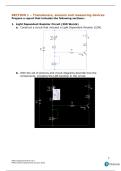
a. Construct a circuit that includes a Light Dependent Resistor (LDR).
b. With the aid of pictures and circuit diagrams describe how the
components, including the LDR function in the circuit.
7
BTEC Assignment Brief v2.0
BTEC Internal Assessment January 2020
,The circuit has a light-dependent resistor (LDR), which causes the LED to turn
on when the amount of light (lux) increases.
When the LDR's light intensity is reduced, the LED will get less bright until the
light intensity is so low that it will switch off. For example, at 0 lux, the LED
won't turn on because of increased resistance and no current flowing to the
light. The LDR modifies the resistance; in the presence of low light, it
generates high resistance; in the presence of high light, resistivity is reduced
and more current flows through.
This diagram illustrates an LDR circuit in action, but unlike the circuit wizard
circuit that operates when light intensity is higher, the LED turns on when the
sensor detects little or no light intensity. This demonstrates that LDRs can
function in both directions and be built to meet the need to switch on in both
low and high light intensity situations.
8
BTEC Assignment Brief v2.0
BTEC Internal Assessment January 2020
, c. Suggest a possible real-world application for this device and discuss its
suitability.
LDRs are light sensors that are used in a variety of everyday devices, including
street lights, alarm clocks, light intensity meters, and anti-theft alarm circuits
(Bureau, E., 2024). LDR sensors can be used in anti-theft alarms. They work
by detecting light, which lowers resistance. The current is then sent to the
security alert device, activating it. Thus, the alert goes off (Study Mind, n.d).
Similarly, street lamps' resistance varies with light intensity; when light
intensity decreases, resistance decreases as well, allowing power to flow to the
lamps and turning them on. When light intensity rises, it will switch off the
lights since it will become more resistant (India, T., 2021).
2. Thermistor Circuit (200 Words)
a. Construct a circuit that includes a thermistor.
b. With the aid of pictures and circuit diagrams describe how the
components, including the thermistor function in the circuit.
A resistance thermometer, the thermistor adjusts the resistance level in
response to temperature changes. In the circuit above, which was created
using Circuit Wizard, an LED bulb illuminates when the temperature rises and
the resistance falls. As soon as the transistor detects heat, it activates the
output, which causes current to flow both above and below the LED bulb,
illuminating it.
The LED light dims until it completely shuts off when the temperature drops.
9
BTEC Assignment Brief v2.0
BTEC Internal Assessment January 2020
Prepare a report that includes the following sections :
1. Light Dependent Resistor Circuit (200 Words)
a. Construct a circuit that includes a Light Dependent Resistor (LDR).
b. With the aid of pictures and circuit diagrams describe how the
components, including the LDR function in the circuit.
7
BTEC Assignment Brief v2.0
BTEC Internal Assessment January 2020
,The circuit has a light-dependent resistor (LDR), which causes the LED to turn
on when the amount of light (lux) increases.
When the LDR's light intensity is reduced, the LED will get less bright until the
light intensity is so low that it will switch off. For example, at 0 lux, the LED
won't turn on because of increased resistance and no current flowing to the
light. The LDR modifies the resistance; in the presence of low light, it
generates high resistance; in the presence of high light, resistivity is reduced
and more current flows through.
This diagram illustrates an LDR circuit in action, but unlike the circuit wizard
circuit that operates when light intensity is higher, the LED turns on when the
sensor detects little or no light intensity. This demonstrates that LDRs can
function in both directions and be built to meet the need to switch on in both
low and high light intensity situations.
8
BTEC Assignment Brief v2.0
BTEC Internal Assessment January 2020
, c. Suggest a possible real-world application for this device and discuss its
suitability.
LDRs are light sensors that are used in a variety of everyday devices, including
street lights, alarm clocks, light intensity meters, and anti-theft alarm circuits
(Bureau, E., 2024). LDR sensors can be used in anti-theft alarms. They work
by detecting light, which lowers resistance. The current is then sent to the
security alert device, activating it. Thus, the alert goes off (Study Mind, n.d).
Similarly, street lamps' resistance varies with light intensity; when light
intensity decreases, resistance decreases as well, allowing power to flow to the
lamps and turning them on. When light intensity rises, it will switch off the
lights since it will become more resistant (India, T., 2021).
2. Thermistor Circuit (200 Words)
a. Construct a circuit that includes a thermistor.
b. With the aid of pictures and circuit diagrams describe how the
components, including the thermistor function in the circuit.
A resistance thermometer, the thermistor adjusts the resistance level in
response to temperature changes. In the circuit above, which was created
using Circuit Wizard, an LED bulb illuminates when the temperature rises and
the resistance falls. As soon as the transistor detects heat, it activates the
output, which causes current to flow both above and below the LED bulb,
illuminating it.
The LED light dims until it completely shuts off when the temperature drops.
9
BTEC Assignment Brief v2.0
BTEC Internal Assessment January 2020