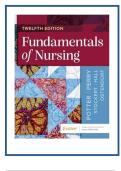
,Chapter 1 — Nursing Today
1. Question /stem
Chapter 1 — Nursing as a Profession
Key Concept: Professional identity
ANA Standard(s): ANA Scope & Standards of Nursing
Practice (5th Ed.) — professional practice/ethics.
Nursing Process: Assessment
Stem: Which action best reflects the professional role of a
registered nurse in promoting health equity for a diverse
patient population?
Options:
A. Referring all patients with language barriers to a family
member for interpretation.
B. Asking each patient about cultural or spiritual needs and
documenting preferences.
C. Using the same patient education handout for every
patient to ensure consistency.
D. Delegating cultural assessment to social work and
focusing solely on physical assessment.
Correct Answer: B — asking about cultural/spiritual
needs and documenting
Rationale:
Correct (2–3 sentences): Asking about cultural and
spiritual needs is a core component of holistic assessment
and professional nursing practice; documentation supports
individualized care planning (Fundamentals of Nursing,
, 12th Ed., Ch. 1). This aligns with ANA expectations for
culturally competent assessment and patient-centered
care.
A (incorrect): Relying on family interpreters risks
miscommunication and breaches confidentiality.
C (incorrect): One-size-fits-all education ignores cultural,
literacy, and learning preferences.
D (incorrect): Delegating entirely abdicates the RN’s
responsibility for holistic assessment.
Teaching Point: Always assess and document cultural and
spiritual needs for individualized care.
2. Question /stem
Chapter 1 — Historical Influences
Key Concept: Florence Nightingale’s contributions
ANA Standard(s): Professional Practice — historical context
informs ethics and standards.
Nursing Process: Assessment
Stem: Which historical contribution by Florence
Nightingale most directly influences modern nursing’s
focus on environment and infection prevention?
Options:
A. Establishing nursing as a religious vocation.
B. Emphasizing sanitation, ventilation, and cleanliness in
care settings.
C. Creating standardized nursing licensure exams.
, D. Introducing strict hierarchical physician-led care models.
Correct Answer: B — emphasis on sanitation, ventilation,
cleanliness
Rationale:
Correct (2–3 sentences): Nightingale’s work linking the
environment to patient outcomes shaped nursing’s
emphasis on sanitation and infection control, foundational
to modern practice (Fundamentals of Nursing, 12th Ed.,
Ch. 1). Her environmental theory underpins current
infection-prevention standards.
A (incorrect): Nightingale professionalized nursing but did
not solely define it as religious.
C (incorrect): Standardized licensure developed much later
through regulatory bodies.
D (incorrect): Nightingale advocated nursing’s unique
contributions rather than strict physician hierarchy.
Teaching Point: History informs modern infection control
and environmental safety.
3. Question /stem
Chapter 1 — Contemporary Influences
Key Concept: Technology’s impact on nursing
ANA Standard(s): Informatics and documentation (ANA).
Nursing Process: Implementation
Stem: When implementing a new electronic health record
(EHR) system, which RN action best demonstrates
1. Question /stem
Chapter 1 — Nursing as a Profession
Key Concept: Professional identity
ANA Standard(s): ANA Scope & Standards of Nursing
Practice (5th Ed.) — professional practice/ethics.
Nursing Process: Assessment
Stem: Which action best reflects the professional role of a
registered nurse in promoting health equity for a diverse
patient population?
Options:
A. Referring all patients with language barriers to a family
member for interpretation.
B. Asking each patient about cultural or spiritual needs and
documenting preferences.
C. Using the same patient education handout for every
patient to ensure consistency.
D. Delegating cultural assessment to social work and
focusing solely on physical assessment.
Correct Answer: B — asking about cultural/spiritual
needs and documenting
Rationale:
Correct (2–3 sentences): Asking about cultural and
spiritual needs is a core component of holistic assessment
and professional nursing practice; documentation supports
individualized care planning (Fundamentals of Nursing,
, 12th Ed., Ch. 1). This aligns with ANA expectations for
culturally competent assessment and patient-centered
care.
A (incorrect): Relying on family interpreters risks
miscommunication and breaches confidentiality.
C (incorrect): One-size-fits-all education ignores cultural,
literacy, and learning preferences.
D (incorrect): Delegating entirely abdicates the RN’s
responsibility for holistic assessment.
Teaching Point: Always assess and document cultural and
spiritual needs for individualized care.
2. Question /stem
Chapter 1 — Historical Influences
Key Concept: Florence Nightingale’s contributions
ANA Standard(s): Professional Practice — historical context
informs ethics and standards.
Nursing Process: Assessment
Stem: Which historical contribution by Florence
Nightingale most directly influences modern nursing’s
focus on environment and infection prevention?
Options:
A. Establishing nursing as a religious vocation.
B. Emphasizing sanitation, ventilation, and cleanliness in
care settings.
C. Creating standardized nursing licensure exams.
, D. Introducing strict hierarchical physician-led care models.
Correct Answer: B — emphasis on sanitation, ventilation,
cleanliness
Rationale:
Correct (2–3 sentences): Nightingale’s work linking the
environment to patient outcomes shaped nursing’s
emphasis on sanitation and infection control, foundational
to modern practice (Fundamentals of Nursing, 12th Ed.,
Ch. 1). Her environmental theory underpins current
infection-prevention standards.
A (incorrect): Nightingale professionalized nursing but did
not solely define it as religious.
C (incorrect): Standardized licensure developed much later
through regulatory bodies.
D (incorrect): Nightingale advocated nursing’s unique
contributions rather than strict physician hierarchy.
Teaching Point: History informs modern infection control
and environmental safety.
3. Question /stem
Chapter 1 — Contemporary Influences
Key Concept: Technology’s impact on nursing
ANA Standard(s): Informatics and documentation (ANA).
Nursing Process: Implementation
Stem: When implementing a new electronic health record
(EHR) system, which RN action best demonstrates