

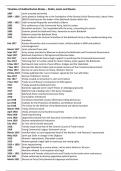
Timeline of Authoritarian States – Stalin, Lenin and Russia
1897 Lenin arrested and exiled
1899 – 1903 Lenin played a leading role in the foundation of the Russian Social-Democractic Labour Party
(RSDLP) and became the leader of the Bolshevik faction within this
1902 – 1913 Stalin arrested frequently and exiled to Siberia
1903 First conference of the Communist Party, held in London
1905 Revolution protests. Tsar responded with the army, reasserting his control
1905 Zinoviev joined the Bolshevik Party. Kamenev an active Bolshevik
1906 Bukharin joined the Bolshevik Party
1912 Stalin invited to the Central Committee of the Bolshevik Party as they needed working class
members
Feb 1917 Russian Revolution due to economic chaos, military defeat in WWI and political
mismanagement
March 1917 Lenin returned from exile
Sept 1917 Army troops marched to Moscow to destroy the Bolsheviks and Provisional Government
Sept 1917 Bolshevik majorities in Petrograd and Moscow states
Oct 1917 Lenin and Bolsheviks had enough support to overthrow the Provisional Government
Nov 1917 ‘Morning Post’ in London called for direct military action against the Bolsheviks
6 Nov 1917 Red Guards took control of post offices, bridges and the State Bank
7 Nov 1917 Stormed the Winter Palace and arrested ministers of the Provisional Government
8 Nov 1917 Decree on Land, Decree on Peace, Workers’ Decree
23 Nov 1917 Trotsky published the ‘secret treaties’ signed by the Tsar with Allies
Nov 1917 Decree of Workers’ Control
Dec 1917 Cheka created as Sovnarkom’s own secret police
2 Dec 1917 Treaty to end Russia’s involvement in WWI signed
1917 Trotsky joined the Bolshevik Party
1917 Kamenev opposed Lenin’s April Theses on ideological grounds
1917 Bukharin had a leading role in the party newspaper
1918 Bolshevik Party renamed Communist Party
1918 Conscription introduced
Jan 1918 Constituent Assembly closed, effectively ending democracy
Jan 1918 Institute for the Protection of Mothers and Children formed
Jan 1918 The Union for the Defence of the Motherland and Liberty founded
March 1918 Treaty of Brest-Litovsk
April 1918 Cheka arrested several hundred anarchists
May 1918 Food requisitioning
June 1918 Opponents banned from the Executive Committee of the Soviets
June 1918 Decree nationalised all industries
July 1918 Ex-Tsar and his family executed
1918 Tomsky made Chairman of the Central Council of Trade Unions
1918 Young Communist League, Komsomol set up
March 1919 Sverdlov died, so Lenin appointed head of the Workers’ and Peasants’ Inspectorate
May 1919 Lenin put Stalin in charge of the Orgburo
1919 Women’s department, Zhenotdel created
1919 Women gained a legal right to equal pay and voting rights
1919 + 1920 Grain requisitioning
1920 Drought followed by a severe winter, led to worst famine in 30 years
1920 Abortion allowed. Contraception also legal
1920 – 1921 Bukharin and Tomsky criticised Lenin and Trotsky in the trade-union controversy
Feb 1921 Cheka authorised to destroy opposition political parties
March 1921 Decree on Party Unity banned all subgroups and factions
1897 Lenin arrested and exiled
1899 – 1903 Lenin played a leading role in the foundation of the Russian Social-Democractic Labour Party
(RSDLP) and became the leader of the Bolshevik faction within this
1902 – 1913 Stalin arrested frequently and exiled to Siberia
1903 First conference of the Communist Party, held in London
1905 Revolution protests. Tsar responded with the army, reasserting his control
1905 Zinoviev joined the Bolshevik Party. Kamenev an active Bolshevik
1906 Bukharin joined the Bolshevik Party
1912 Stalin invited to the Central Committee of the Bolshevik Party as they needed working class
members
Feb 1917 Russian Revolution due to economic chaos, military defeat in WWI and political
mismanagement
March 1917 Lenin returned from exile
Sept 1917 Army troops marched to Moscow to destroy the Bolsheviks and Provisional Government
Sept 1917 Bolshevik majorities in Petrograd and Moscow states
Oct 1917 Lenin and Bolsheviks had enough support to overthrow the Provisional Government
Nov 1917 ‘Morning Post’ in London called for direct military action against the Bolsheviks
6 Nov 1917 Red Guards took control of post offices, bridges and the State Bank
7 Nov 1917 Stormed the Winter Palace and arrested ministers of the Provisional Government
8 Nov 1917 Decree on Land, Decree on Peace, Workers’ Decree
23 Nov 1917 Trotsky published the ‘secret treaties’ signed by the Tsar with Allies
Nov 1917 Decree of Workers’ Control
Dec 1917 Cheka created as Sovnarkom’s own secret police
2 Dec 1917 Treaty to end Russia’s involvement in WWI signed
1917 Trotsky joined the Bolshevik Party
1917 Kamenev opposed Lenin’s April Theses on ideological grounds
1917 Bukharin had a leading role in the party newspaper
1918 Bolshevik Party renamed Communist Party
1918 Conscription introduced
Jan 1918 Constituent Assembly closed, effectively ending democracy
Jan 1918 Institute for the Protection of Mothers and Children formed
Jan 1918 The Union for the Defence of the Motherland and Liberty founded
March 1918 Treaty of Brest-Litovsk
April 1918 Cheka arrested several hundred anarchists
May 1918 Food requisitioning
June 1918 Opponents banned from the Executive Committee of the Soviets
June 1918 Decree nationalised all industries
July 1918 Ex-Tsar and his family executed
1918 Tomsky made Chairman of the Central Council of Trade Unions
1918 Young Communist League, Komsomol set up
March 1919 Sverdlov died, so Lenin appointed head of the Workers’ and Peasants’ Inspectorate
May 1919 Lenin put Stalin in charge of the Orgburo
1919 Women’s department, Zhenotdel created
1919 Women gained a legal right to equal pay and voting rights
1919 + 1920 Grain requisitioning
1920 Drought followed by a severe winter, led to worst famine in 30 years
1920 Abortion allowed. Contraception also legal
1920 – 1921 Bukharin and Tomsky criticised Lenin and Trotsky in the trade-union controversy
Feb 1921 Cheka authorised to destroy opposition political parties
March 1921 Decree on Party Unity banned all subgroups and factions


