
CHSE Exam
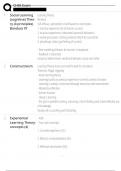
1. Social Learning Learning Theory
(cognitive) Theo- Bandura
ry (4 principles) Self-efficacy -perception of self-based on 4 principles
Bandura 97 1. mastery experience (hx of learner success)
2. vicarious experiences (observed successful behaviors)
3. verbal persuasion- (telling someone they'll be successful)
4. physiologic states (gut feeling of success)
- Role modeling behavior for learners is important
- feedback is important
reciprocal determinism: world and behavior cause each other
2. Constructivism Learning Theory-most used and fits well for simulation
Theorists: Piaget, Vygotsky
- Active learning theory
- Learning builds on previous experience-connects unknot to known
- Learning is actively constructed through interaction with environment
- Marked by reflection
- learner focused
- doing is learning
- the goal is problem-solving, reasoning, critical thinking and active/reflective use
of knowledge
faculty role is coaching and facilitating
3. Experiential - Kolb
Learning Theory- - Four main concepts:
concepts (4)
1. Concrete experience (CE)
2. Abstract conceptualization (AC)
3. Reflective observation (RO)
, CHSE Exam
4. Active experimentation (AE)
4. Bloom's Taxono- Hierarchy of Learning:
my- cognitive (6)
2.1 Knowledge- Remembering (memory)- repetition
2.2 Comprehension/ Understanding (knowledge, clarification and explanation)-
explain, identify, locate
2.3 Application/ Applying: (clin decision- interpret, operate, practice, demonstrate
and choose)
2.4 Analysis/ Analyzing- categorize experiment, question, compare, criticize
2.5 Synthesis/ Creating: productive thinking (create, design, develop, formulate,
manage, organize, plan) -- novelty
2.6 Evaluation: Appraise, argue, assess, attach, compare, defend, predict, -- make
a diagnosis. -- judgement
5. Essentialism
1. Social Learning Learning Theory
(cognitive) Theo- Bandura
ry (4 principles) Self-efficacy -perception of self-based on 4 principles
Bandura 97 1. mastery experience (hx of learner success)
2. vicarious experiences (observed successful behaviors)
3. verbal persuasion- (telling someone they'll be successful)
4. physiologic states (gut feeling of success)
- Role modeling behavior for learners is important
- feedback is important
reciprocal determinism: world and behavior cause each other
2. Constructivism Learning Theory-most used and fits well for simulation
Theorists: Piaget, Vygotsky
- Active learning theory
- Learning builds on previous experience-connects unknot to known
- Learning is actively constructed through interaction with environment
- Marked by reflection
- learner focused
- doing is learning
- the goal is problem-solving, reasoning, critical thinking and active/reflective use
of knowledge
faculty role is coaching and facilitating
3. Experiential - Kolb
Learning Theory- - Four main concepts:
concepts (4)
1. Concrete experience (CE)
2. Abstract conceptualization (AC)
3. Reflective observation (RO)
, CHSE Exam
4. Active experimentation (AE)
4. Bloom's Taxono- Hierarchy of Learning:
my- cognitive (6)
2.1 Knowledge- Remembering (memory)- repetition
2.2 Comprehension/ Understanding (knowledge, clarification and explanation)-
explain, identify, locate
2.3 Application/ Applying: (clin decision- interpret, operate, practice, demonstrate
and choose)
2.4 Analysis/ Analyzing- categorize experiment, question, compare, criticize
2.5 Synthesis/ Creating: productive thinking (create, design, develop, formulate,
manage, organize, plan) -- novelty
2.6 Evaluation: Appraise, argue, assess, attach, compare, defend, predict, -- make
a diagnosis. -- judgement
5. Essentialism


