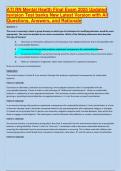
ATI RN Mental Health Final Exam 2025 Updated
revision Test banks New Latest Version with All
Questions, Answers, and Rationale
Question 1:
The nurse is assessing a client in group therapy on which type of techniques for modifying behaviors would be most
appropriate. The nurse has decided to use covert sensitization. Which of the following statements best describes
this type of therapy?
A. Decreases or eliminates a behavior by introducing a more adaptive behavior that is incompatible with
the unacceptable behavior.
B. Is an aversion therapy that produces unpleasant consequences for undesirable behavior.
C. An aversive stimulus or punishment during which the client is removed from the environment where
the unacceptable behavior is being exhibited.
D. Relies on individual's imagination rather than medication for unpleasant symptoms.
Show correct answer and explanation
Explanation
The correct answer is choice B: Is an aversion therapy that produces unpleasant consequences for undesirable
behavior.
Choice A rationale:
Decreases or eliminates a behavior by introducing a more adaptive behavior that is incompatible with the
unacceptable behavior. Choice A refers to the technique of "differential reinforcement," where an undesirable
behavior is replaced by a more appropriate behavior. This technique involves reinforcing positive behaviors while
ignoring or providing minimal attention to negative behaviors. It is not the same as covert sensitization.
Choice B rationale:
Is an aversion therapy that produces unpleasant consequences for undesirable behavior. Covert sensitization is a form
of aversion therapy used to eliminate unwanted behaviors by associating them with unpleasant imagery or thoughts.
It's based on the principle that if a person can associate a negative response with a certain behavior, they will be less
likely to engage in that behavior. This technique is used for behaviors like addiction or certain compulsive behaviors.
Choice C rationale:
An aversive stimulus or punishment during which the client is removed from the environment where the unacceptable
behavior is being exhibited. Choice C refers to "time-out," a technique used to decrease undesirable behaviors by
removing the individual from the environment where the behavior is occurring. This is often used with children and
involves giving them a brief break from a situation to help them calm down. It's not the same as covert sensitization.
Choice D rationale:
,Relies on an individual's imagination rather than medication for unpleasant symptoms. Choice D is not directly related
to covert sensitization. Covert sensitization involves creating a negative association with a behavior using mental
imagery. It's not about relying on imagination instead of medication.
Question 2:
A nurse is interviewing a client during admission to an alcohol treatment center. Which of the following approaches
should the nurse take?
A. Verbalize disapproval of the client's substance abuse.
B. Maintain a nonjudgmental attitude.
C. Offer sympathetic support.
D. Avoid displaying an emotional response.
Show correct answer and explanation Explanation
The correct answer is choice B: Maintain a nonjudgmental attitude.
Choice A rationale:
Verbalize disapproval of the client's substance abuse. Expressing disapproval can create a negative environment and
hinder the therapeutic relationship. Judgmental attitudes can make clients feel defensive and less likely to open up
about their struggles.
Choice B rationale:
,Maintain a nonjudgmental attitude. Maintaining a nonjudgmental attitude is crucial in building trust and
rapport with clients. It creates an environment where clients feel safe discussing their issues without
fear of criticism. A nonjudgmental attitude encourages open communication and helps the nurse gather
relevant information to provide appropriate care.
Choice C rationale:
Offer sympathetic support. While offering support is important, sympathy might inadvertently convey
pity or enable the client's behavior. Empathy, where the nurse understands and shares the client's
feelings without judgment, is more effective in building a therapeutic relationship.
Choice D rationale:
Avoid displaying an emotional response. While it's important for the nurse to maintain professionalism,
avoiding any emotional response might come across as cold or detached. Expressing appropriate
empathy and emotions can actually enhance the therapeutic relationship.
Question 3:
A nurse in an emergency department is performing an assessment on a client who reports being
sexually assaulted. Which of the following actions should the nurse take first?
A. Ask the client for permission to take photographs.
B. Provide community sexual assault support contacts.
C. Document the client's verbatim statements.
D. Determine any physical signs of injury.
Show correct answer and explanation Explanation
The correct answer is choice D: Determine any physical signs of injury.
Choice A rationale:
Ask the client for permission to take photographs. While documenting evidence is important, the
nurse's initial priority is to ensure the client's safety and well-being. Taking photographs can be done
later, but assessing for physical injuries takes precedence.
Provide community sexual assault support contacts. While connecting the client with support resources
is essential, the nurse's first step should be to address immediate medical needs and safety concerns.
Assessing for physical injuries and ensuring the client's well-being come before providing community
support contacts.
Choice C rationale:
, Choice B rationale:
Document the client's verbatim statements. Documentation is important for legal and medical
purposes, but it's not the first action the nurse should take in this situation. Ensuring the client's safety
and assessing for injuries are more urgent.
Choice D rationale:
Determine any physical signs of injury. In cases of sexual assault, the nurse's priority is to assess the
client's physical condition for signs of injury, potential trauma, and immediate medical needs. This
assessment forms the basis for subsequent care and support.
Question 4:
A nurse is taking care of a client who is cognitively impaired. The nurse recognizes that which of the
following rooms will provide a therapeutic environment for this client?
A. A room without a window.
B. A room containing personal belongings.
C. A room adjacent to the nursing station.
D. A room with dim lighting.
Show correct answer and explanation Explanation
The correct answer is choice B. A room containing personal belongings.
Choice A rationale:
A room without a window would likely be isolating and could contribute to feelings of confusion and
disorientation in a cognitively impaired individual. Natural light from windows helps regulate the
circadian rhythm and provides a sense of time, which is crucial for maintaining a therapeutic
environment.
A room containing personal belongings is the correct choice. Familiar items from home can provide
comfort and a sense of familiarity, reducing anxiety and agitation in cognitively impaired individuals.
These belongings can act as cues for memory recall and assist in maintaining a connection to their
personal identity.
Choice C rationale:
A room adjacent to the nursing station might lead to increased noise and disruption for the client.
Cognitively impaired individuals often benefit from a quiet and calm environment, which would not be
ensured in a room close to a potentially busy nursing station.
Choice D rationale:
revision Test banks New Latest Version with All
Questions, Answers, and Rationale
Question 1:
The nurse is assessing a client in group therapy on which type of techniques for modifying behaviors would be most
appropriate. The nurse has decided to use covert sensitization. Which of the following statements best describes
this type of therapy?
A. Decreases or eliminates a behavior by introducing a more adaptive behavior that is incompatible with
the unacceptable behavior.
B. Is an aversion therapy that produces unpleasant consequences for undesirable behavior.
C. An aversive stimulus or punishment during which the client is removed from the environment where
the unacceptable behavior is being exhibited.
D. Relies on individual's imagination rather than medication for unpleasant symptoms.
Show correct answer and explanation
Explanation
The correct answer is choice B: Is an aversion therapy that produces unpleasant consequences for undesirable
behavior.
Choice A rationale:
Decreases or eliminates a behavior by introducing a more adaptive behavior that is incompatible with the
unacceptable behavior. Choice A refers to the technique of "differential reinforcement," where an undesirable
behavior is replaced by a more appropriate behavior. This technique involves reinforcing positive behaviors while
ignoring or providing minimal attention to negative behaviors. It is not the same as covert sensitization.
Choice B rationale:
Is an aversion therapy that produces unpleasant consequences for undesirable behavior. Covert sensitization is a form
of aversion therapy used to eliminate unwanted behaviors by associating them with unpleasant imagery or thoughts.
It's based on the principle that if a person can associate a negative response with a certain behavior, they will be less
likely to engage in that behavior. This technique is used for behaviors like addiction or certain compulsive behaviors.
Choice C rationale:
An aversive stimulus or punishment during which the client is removed from the environment where the unacceptable
behavior is being exhibited. Choice C refers to "time-out," a technique used to decrease undesirable behaviors by
removing the individual from the environment where the behavior is occurring. This is often used with children and
involves giving them a brief break from a situation to help them calm down. It's not the same as covert sensitization.
Choice D rationale:
,Relies on an individual's imagination rather than medication for unpleasant symptoms. Choice D is not directly related
to covert sensitization. Covert sensitization involves creating a negative association with a behavior using mental
imagery. It's not about relying on imagination instead of medication.
Question 2:
A nurse is interviewing a client during admission to an alcohol treatment center. Which of the following approaches
should the nurse take?
A. Verbalize disapproval of the client's substance abuse.
B. Maintain a nonjudgmental attitude.
C. Offer sympathetic support.
D. Avoid displaying an emotional response.
Show correct answer and explanation Explanation
The correct answer is choice B: Maintain a nonjudgmental attitude.
Choice A rationale:
Verbalize disapproval of the client's substance abuse. Expressing disapproval can create a negative environment and
hinder the therapeutic relationship. Judgmental attitudes can make clients feel defensive and less likely to open up
about their struggles.
Choice B rationale:
,Maintain a nonjudgmental attitude. Maintaining a nonjudgmental attitude is crucial in building trust and
rapport with clients. It creates an environment where clients feel safe discussing their issues without
fear of criticism. A nonjudgmental attitude encourages open communication and helps the nurse gather
relevant information to provide appropriate care.
Choice C rationale:
Offer sympathetic support. While offering support is important, sympathy might inadvertently convey
pity or enable the client's behavior. Empathy, where the nurse understands and shares the client's
feelings without judgment, is more effective in building a therapeutic relationship.
Choice D rationale:
Avoid displaying an emotional response. While it's important for the nurse to maintain professionalism,
avoiding any emotional response might come across as cold or detached. Expressing appropriate
empathy and emotions can actually enhance the therapeutic relationship.
Question 3:
A nurse in an emergency department is performing an assessment on a client who reports being
sexually assaulted. Which of the following actions should the nurse take first?
A. Ask the client for permission to take photographs.
B. Provide community sexual assault support contacts.
C. Document the client's verbatim statements.
D. Determine any physical signs of injury.
Show correct answer and explanation Explanation
The correct answer is choice D: Determine any physical signs of injury.
Choice A rationale:
Ask the client for permission to take photographs. While documenting evidence is important, the
nurse's initial priority is to ensure the client's safety and well-being. Taking photographs can be done
later, but assessing for physical injuries takes precedence.
Provide community sexual assault support contacts. While connecting the client with support resources
is essential, the nurse's first step should be to address immediate medical needs and safety concerns.
Assessing for physical injuries and ensuring the client's well-being come before providing community
support contacts.
Choice C rationale:
, Choice B rationale:
Document the client's verbatim statements. Documentation is important for legal and medical
purposes, but it's not the first action the nurse should take in this situation. Ensuring the client's safety
and assessing for injuries are more urgent.
Choice D rationale:
Determine any physical signs of injury. In cases of sexual assault, the nurse's priority is to assess the
client's physical condition for signs of injury, potential trauma, and immediate medical needs. This
assessment forms the basis for subsequent care and support.
Question 4:
A nurse is taking care of a client who is cognitively impaired. The nurse recognizes that which of the
following rooms will provide a therapeutic environment for this client?
A. A room without a window.
B. A room containing personal belongings.
C. A room adjacent to the nursing station.
D. A room with dim lighting.
Show correct answer and explanation Explanation
The correct answer is choice B. A room containing personal belongings.
Choice A rationale:
A room without a window would likely be isolating and could contribute to feelings of confusion and
disorientation in a cognitively impaired individual. Natural light from windows helps regulate the
circadian rhythm and provides a sense of time, which is crucial for maintaining a therapeutic
environment.
A room containing personal belongings is the correct choice. Familiar items from home can provide
comfort and a sense of familiarity, reducing anxiety and agitation in cognitively impaired individuals.
These belongings can act as cues for memory recall and assist in maintaining a connection to their
personal identity.
Choice C rationale:
A room adjacent to the nursing station might lead to increased noise and disruption for the client.
Cognitively impaired individuals often benefit from a quiet and calm environment, which would not be
ensured in a room close to a potentially busy nursing station.
Choice D rationale: