
Stuvia.com - The Marketplace to Buy and Sell your Study Material
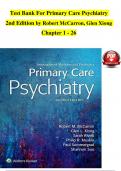
Test Bank For Primary Care Psychiatry
2nd Edition by Robert McCarron, Glen Xiong
Chapter 1 - 26
, Stuvia.com - The Marketplace to Buy and Sell your Study Material
Primary Care Psychiatry 2nd Edition McCarron Xiong Test Bank
Table of Contents:
Chapter 1. The Primary Care Psychiatric Interview
Chapter 2. Primary Care and Psychiatry: An Overview of the Collaborative Care Model
Chapter 3. Preventive Medicine and Behavioral Health
Chapter 4. The Patient and You: Psychological and Cultural Consideration
Chapter 5. Anxiety Disorders
Chapter 6. Obsessive–Compulsive and Related Disorders
Chapter 7. Trauma-Related Disorders
Chapter 8. Mood Disorders—Depression
Chapter 9. Treatment-Resistant Depression
Chapter 10. Psychiatric Disorders: Bipolar and Related Disorders
Chapter 11. Psychotic Disorders
Chapter 12. Neurocognitive Disorders
Chapter 13. Substance Use Disorders—Alcohol
Chapter 14. Substance Use Disorders—Illicit and Prescription Drugs
Chapter 15. Personality Disorders
Chapter 16. Cognitive Behavioral Therapy
Chapter 17. Supportive Psychotherapy in Primary Care
Chapter 18. Motivational Interviewing
Chapter 19. Fundamentals of Psychopharmacology
Chapter 20. Geriatric Behavioral Health
Chapter 21. Child and Adolescent Behavioral Health
Chapter 22. Suicide and Violence Risk Assessment
Chapter 23. Somatic Symptom and Related Disorders
Chapter 24. Insomnia
Chapter 25. Sexual Dysfunction
Chapter 26. Eating Disorders
, Stuvia.com - The Marketplace to Buy and Sell your Study Material
Chapter 1: The Primary Care Psychiatric Interview
Primary Care Psychiatry 2nd Edition McCarron Xiong Test Bank
MULTIPLE CHOICE
1. A patient says to the nurse, I dreamed I was stoned. When I woke up, I felt emotionally
drained, as though I hadnt rested well. Which response should the nurse use to clarify the
patients comment?
a. It sounds as though you were uncomfortable with the content of your dream.
b. I understand what youre saying. Bad dreams leave me feeling tired, too.
c. So you feel as though you did not get enough quality sleep last night?
d. Can you give me an example of what you mean by stoned?
ANSWER: D
The technique of clarification is therapeutic and helps the nurse examine the meaning of the
patients statement. Asking for a definition of stoned directly asks for clarification. Restating that
the patient is uncomfortable with the dreams content is parroting, a non-therapeutic technique.
The other responses fail to clarify the meaning of the patients comment.
PTS: 1 DIF: Cognitive Level: Apply (Application)
REF: mcs 154 (dm 9-2) TOP: Nursing Process: Implementation
MSC: Client Needs: Psychosocial Integrity
2. A patient ddiagnosed dwith dschizophrenia dtells dthe dnurse, dThe dCIA dis dmonitoring dus
dthrough dthe dfluorescent dlights din dthis droom. dBe dcareful dwhat dyou dsay. dWhich dresponse
dby dthe dnurse dwould dbe dmost dtherapeutic?
a. Lets dtalk dabout dsomething dother dthan dthe dCIA.
b. It dsounds dlike dyoure dconcerned dabout dyour dprivacy.
, Stuvia.com - The Marketplace to Buy and Sell your Study Material
c. The dCIA dis dprohibited dfrom doperating din dhealth dcare dfacilities.
d. You dhave dlost dtouch dwith dreality, dwhich dis da dsymptom dof dyour dillness.
ANSWER: dB
It dis dimportant dnot dto dchallenge dthe dpatients dbeliefs, deven dif dthey dare dunrealistic.
dChallenging dundermines dthe dpatients dtrust din dthe dnurse. dThe dnurse dshould dtry dto
dunderstand dthe dunderlying dfeelings dor dthoughts dthe dpatients dmessage dconveys. dThe dcorrect
dresponse duses dthe dtherapeutic dtechnique dof dreflection. dThe dother dcomments dare dnon-
therapeutic. dAsking dto dtalk dabout dsomething dother dthan dthe dconcern dat dhand dis dchanging
dthe dsubject. dSaying dthat dthe dCIA dis dprohibited dfrom doperating din dhealth dcare dfacilities
dgives dfalse dreassurance. dStating dthat dthe dpatient dhas dlost dtouch dwith dreality dis dtruthful,
dbut duncompassionate.
PTS: d1 dDIF: dCognitive dLevel: dApply d(Application)
REF: dmcs d154 d(dm d9-2) dTOP: dNursing dProcess:
dImplementation dMSC: dClient dNeeds: dPsychosocial dIntegrity
3. The dpatient dsays, dMy dmarriage dis djust dgreat. dMy dspouse dand dI dalways dagree. dThe dnurse
dobserves dthe dpatients dfoot dmoving dcontinuously das dthe dpatient dtwirls da dshirt dbutton. dThe
dconclusion dthe dnurse dcan ddraw dis dthat dthe dpatients dcommunication dis:
a. clear. c. d precise.
b. mixed. d. d inadequate.
ANSWER: dB
Mixed dmessages dinvolve dthe dtransmission dof dconflicting dor dincongruent dmessages dby dthe
dspeaker. dThe dpatients dverbal dmessage dthat dall dwas dwell din dthe drelationship dwas dmodified
dby dthe dnonverbal dbehaviors ddenoting danxiety. dData dare dnot dpresent dto dsupport dthe dchoice
dof dthe dverbal dmessage dbeing dclear, dexplicit, dor dinadequate.
PTS: d1 dDIF: dCognitive dLevel: dUnderstand d(Comprehension)
dREF: dmcs d150-151 dTOP: dNursing dProcess: dAssessment
Test Bank For Primary Care Psychiatry
2nd Edition by Robert McCarron, Glen Xiong
Chapter 1 - 26
, Stuvia.com - The Marketplace to Buy and Sell your Study Material
Primary Care Psychiatry 2nd Edition McCarron Xiong Test Bank
Table of Contents:
Chapter 1. The Primary Care Psychiatric Interview
Chapter 2. Primary Care and Psychiatry: An Overview of the Collaborative Care Model
Chapter 3. Preventive Medicine and Behavioral Health
Chapter 4. The Patient and You: Psychological and Cultural Consideration
Chapter 5. Anxiety Disorders
Chapter 6. Obsessive–Compulsive and Related Disorders
Chapter 7. Trauma-Related Disorders
Chapter 8. Mood Disorders—Depression
Chapter 9. Treatment-Resistant Depression
Chapter 10. Psychiatric Disorders: Bipolar and Related Disorders
Chapter 11. Psychotic Disorders
Chapter 12. Neurocognitive Disorders
Chapter 13. Substance Use Disorders—Alcohol
Chapter 14. Substance Use Disorders—Illicit and Prescription Drugs
Chapter 15. Personality Disorders
Chapter 16. Cognitive Behavioral Therapy
Chapter 17. Supportive Psychotherapy in Primary Care
Chapter 18. Motivational Interviewing
Chapter 19. Fundamentals of Psychopharmacology
Chapter 20. Geriatric Behavioral Health
Chapter 21. Child and Adolescent Behavioral Health
Chapter 22. Suicide and Violence Risk Assessment
Chapter 23. Somatic Symptom and Related Disorders
Chapter 24. Insomnia
Chapter 25. Sexual Dysfunction
Chapter 26. Eating Disorders
, Stuvia.com - The Marketplace to Buy and Sell your Study Material
Chapter 1: The Primary Care Psychiatric Interview
Primary Care Psychiatry 2nd Edition McCarron Xiong Test Bank
MULTIPLE CHOICE
1. A patient says to the nurse, I dreamed I was stoned. When I woke up, I felt emotionally
drained, as though I hadnt rested well. Which response should the nurse use to clarify the
patients comment?
a. It sounds as though you were uncomfortable with the content of your dream.
b. I understand what youre saying. Bad dreams leave me feeling tired, too.
c. So you feel as though you did not get enough quality sleep last night?
d. Can you give me an example of what you mean by stoned?
ANSWER: D
The technique of clarification is therapeutic and helps the nurse examine the meaning of the
patients statement. Asking for a definition of stoned directly asks for clarification. Restating that
the patient is uncomfortable with the dreams content is parroting, a non-therapeutic technique.
The other responses fail to clarify the meaning of the patients comment.
PTS: 1 DIF: Cognitive Level: Apply (Application)
REF: mcs 154 (dm 9-2) TOP: Nursing Process: Implementation
MSC: Client Needs: Psychosocial Integrity
2. A patient ddiagnosed dwith dschizophrenia dtells dthe dnurse, dThe dCIA dis dmonitoring dus
dthrough dthe dfluorescent dlights din dthis droom. dBe dcareful dwhat dyou dsay. dWhich dresponse
dby dthe dnurse dwould dbe dmost dtherapeutic?
a. Lets dtalk dabout dsomething dother dthan dthe dCIA.
b. It dsounds dlike dyoure dconcerned dabout dyour dprivacy.
, Stuvia.com - The Marketplace to Buy and Sell your Study Material
c. The dCIA dis dprohibited dfrom doperating din dhealth dcare dfacilities.
d. You dhave dlost dtouch dwith dreality, dwhich dis da dsymptom dof dyour dillness.
ANSWER: dB
It dis dimportant dnot dto dchallenge dthe dpatients dbeliefs, deven dif dthey dare dunrealistic.
dChallenging dundermines dthe dpatients dtrust din dthe dnurse. dThe dnurse dshould dtry dto
dunderstand dthe dunderlying dfeelings dor dthoughts dthe dpatients dmessage dconveys. dThe dcorrect
dresponse duses dthe dtherapeutic dtechnique dof dreflection. dThe dother dcomments dare dnon-
therapeutic. dAsking dto dtalk dabout dsomething dother dthan dthe dconcern dat dhand dis dchanging
dthe dsubject. dSaying dthat dthe dCIA dis dprohibited dfrom doperating din dhealth dcare dfacilities
dgives dfalse dreassurance. dStating dthat dthe dpatient dhas dlost dtouch dwith dreality dis dtruthful,
dbut duncompassionate.
PTS: d1 dDIF: dCognitive dLevel: dApply d(Application)
REF: dmcs d154 d(dm d9-2) dTOP: dNursing dProcess:
dImplementation dMSC: dClient dNeeds: dPsychosocial dIntegrity
3. The dpatient dsays, dMy dmarriage dis djust dgreat. dMy dspouse dand dI dalways dagree. dThe dnurse
dobserves dthe dpatients dfoot dmoving dcontinuously das dthe dpatient dtwirls da dshirt dbutton. dThe
dconclusion dthe dnurse dcan ddraw dis dthat dthe dpatients dcommunication dis:
a. clear. c. d precise.
b. mixed. d. d inadequate.
ANSWER: dB
Mixed dmessages dinvolve dthe dtransmission dof dconflicting dor dincongruent dmessages dby dthe
dspeaker. dThe dpatients dverbal dmessage dthat dall dwas dwell din dthe drelationship dwas dmodified
dby dthe dnonverbal dbehaviors ddenoting danxiety. dData dare dnot dpresent dto dsupport dthe dchoice
dof dthe dverbal dmessage dbeing dclear, dexplicit, dor dinadequate.
PTS: d1 dDIF: dCognitive dLevel: dUnderstand d(Comprehension)
dREF: dmcs d150-151 dTOP: dNursing dProcess: dAssessment


