ATI Peds Practice B
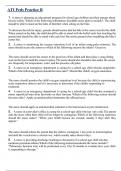
1. A nurse is planning an educational program for school-age children and their parents about
bicycle safety. Which of the following information shouldthe nurse plan to include?: The child
should be able to stand on the balls of theirfeet when sitting on the bike.
To decrease the risk for injury, parents should ensure that the bike is the correct size for the child.
When seated on the bike, the child should be able to stand with the ball of each foot touching the
ground and should be able to stand with each foot flat on the ground when straddling the bike's
center bar.
2. A nurse is monitoring the oxygen saturation level of an infant using pulse oximetry. The
nurse should secure the sensor to which of the following areason the infant?: Great toe
The nurse should secure the sensor to the great toe of the infant and then place a snug-fitting
sock on the foot to hold the sensor in place. The nurse should also checkthe skin under the sensor
site frequently for temperature, color, and the presence ofa pulse.
3. A nurse in an emergency department is caring for a school-age child who has epiglottitis.
Which of the following actions should the nurse take?: Monitorthe child's oxygen saturation.
The nurse should monitor the child's oxygen saturation level because the child is experiencing
acute respiratory distress and it is necessary to determine if the childis responding to
treatment.
4. A nurse in an emergency department is caring for a school-age child who has sustained a
minor superficial burn from fireworks on their forearm. Which of the following actions should
the nurse take?: Apply an antimicrobial ointmentto the affected area.
The nurse should apply an antimicrobial ointment to the burned area to preventinfection.
5. A nurse in a provider's office is caring for a school-age child who has vari- cella. The parent
asks the nurse when their child will no longer be contagious. Which of the following responses
should the nurse make?: "When your child's lesions are crusted, usually 6 days after they
appear."
The nurse should inform the parent that the child is contagious 1 day prior to lesioneruption
and until the vesicles have crusted over, which usually takes about 6 days.
6. A nurse is providing discharge teaching to the parent of a school-age child who has
moderate persistent asthma. Which of the following instructionsshould the nurse include?:
"Pulmonary function tests will be performed every 12to 24 months to evaluate how your child
is responding to therapy."
, The nurse should inform the parent that their child will need pulmonary function testsevery 12 to
24 months to evaluate the presence of lung disease and how the childis responding to the
current treatment regimen. As children grow, sometimes their manifestations can improve or
decline, and treatment needs to change accordingly.
7. A nurse is admitting an infant who has intussusception. Which of the following findings
should the nurse expect? (Select all that apply.): Steatorrheais INcorrect. The nurse should
expect an infant who has intussusception to have bloody stools that are currant jelly-like in
appearance. Steatorrhea is bulky, fatty stools, and is a manifestation of cystic fibrosis.
Vomiting is correct. The nurse should expect an infant who has intussusception toexhibit
vomiting due to the obstruction that occurs when a segment of the bowel telescopes within
another segment of the bowel.
Lethargy is correct. The nurse should expect an infant who has intussusceptionto exhibit
lethargy due to episodes of severe pain during which the infant cries inconsolably, leading to
exhaustion and decreased nutritional intake.
Constipation is INcorrect. The nurse should expect an infant who has intussuscep- tion to have
mucus-filled and red jelly-like diarrhea due to the leaking of blood and mucus into the
intestinal lumen.
Weight gain is INcorrect. The nurse should expect an infant who has intussusception to have
weight loss due to anorexia and episodes of vomiting and diarrhea.
8. A nurse is reviewing the laboratory results of a school-age child who is 1week
postoperative following an open fracture repair. Which of the followingfindings should the
nurse identify as an indication of a potential complica- tion?: Erythrocyte sedimentation rate
18 mm/hr
The nurse should identify that an erythrocyte sedimentation rate of 18 mm/hr isabove the
expected reference range of up to 10 mm/hr and is an indication of osteomyelitis.
9. A nurse is providing discharge teaching to the parents of a 3-month-old infant following a
cheiloplasty. Which of the following instructions should thenurse include?: "Apply a thin layer
of antibiotic ointment on your baby's suture linedaily for the next 3 days."
The nurse should instruct the parents to apply a thin layer of antibiotic ointment on the infant's
suture line daily for 3 days and then continue to apply petroleum jelly to the area for several
weeks to promote healing.
10. A nurse is planning care for a newly admitted school-age child who has generalized
seizure disorder. Which of the following interventions should thenurse plan to include?: Ensure
the oxygen source is functioning in the child's room.
1. A nurse is planning an educational program for school-age children and their parents about
bicycle safety. Which of the following information shouldthe nurse plan to include?: The child
should be able to stand on the balls of theirfeet when sitting on the bike.
To decrease the risk for injury, parents should ensure that the bike is the correct size for the child.
When seated on the bike, the child should be able to stand with the ball of each foot touching the
ground and should be able to stand with each foot flat on the ground when straddling the bike's
center bar.
2. A nurse is monitoring the oxygen saturation level of an infant using pulse oximetry. The
nurse should secure the sensor to which of the following areason the infant?: Great toe
The nurse should secure the sensor to the great toe of the infant and then place a snug-fitting
sock on the foot to hold the sensor in place. The nurse should also checkthe skin under the sensor
site frequently for temperature, color, and the presence ofa pulse.
3. A nurse in an emergency department is caring for a school-age child who has epiglottitis.
Which of the following actions should the nurse take?: Monitorthe child's oxygen saturation.
The nurse should monitor the child's oxygen saturation level because the child is experiencing
acute respiratory distress and it is necessary to determine if the childis responding to
treatment.
4. A nurse in an emergency department is caring for a school-age child who has sustained a
minor superficial burn from fireworks on their forearm. Which of the following actions should
the nurse take?: Apply an antimicrobial ointmentto the affected area.
The nurse should apply an antimicrobial ointment to the burned area to preventinfection.
5. A nurse in a provider's office is caring for a school-age child who has vari- cella. The parent
asks the nurse when their child will no longer be contagious. Which of the following responses
should the nurse make?: "When your child's lesions are crusted, usually 6 days after they
appear."
The nurse should inform the parent that the child is contagious 1 day prior to lesioneruption
and until the vesicles have crusted over, which usually takes about 6 days.
6. A nurse is providing discharge teaching to the parent of a school-age child who has
moderate persistent asthma. Which of the following instructionsshould the nurse include?:
"Pulmonary function tests will be performed every 12to 24 months to evaluate how your child
is responding to therapy."
, The nurse should inform the parent that their child will need pulmonary function testsevery 12 to
24 months to evaluate the presence of lung disease and how the childis responding to the
current treatment regimen. As children grow, sometimes their manifestations can improve or
decline, and treatment needs to change accordingly.
7. A nurse is admitting an infant who has intussusception. Which of the following findings
should the nurse expect? (Select all that apply.): Steatorrheais INcorrect. The nurse should
expect an infant who has intussusception to have bloody stools that are currant jelly-like in
appearance. Steatorrhea is bulky, fatty stools, and is a manifestation of cystic fibrosis.
Vomiting is correct. The nurse should expect an infant who has intussusception toexhibit
vomiting due to the obstruction that occurs when a segment of the bowel telescopes within
another segment of the bowel.
Lethargy is correct. The nurse should expect an infant who has intussusceptionto exhibit
lethargy due to episodes of severe pain during which the infant cries inconsolably, leading to
exhaustion and decreased nutritional intake.
Constipation is INcorrect. The nurse should expect an infant who has intussuscep- tion to have
mucus-filled and red jelly-like diarrhea due to the leaking of blood and mucus into the
intestinal lumen.
Weight gain is INcorrect. The nurse should expect an infant who has intussusception to have
weight loss due to anorexia and episodes of vomiting and diarrhea.
8. A nurse is reviewing the laboratory results of a school-age child who is 1week
postoperative following an open fracture repair. Which of the followingfindings should the
nurse identify as an indication of a potential complica- tion?: Erythrocyte sedimentation rate
18 mm/hr
The nurse should identify that an erythrocyte sedimentation rate of 18 mm/hr isabove the
expected reference range of up to 10 mm/hr and is an indication of osteomyelitis.
9. A nurse is providing discharge teaching to the parents of a 3-month-old infant following a
cheiloplasty. Which of the following instructions should thenurse include?: "Apply a thin layer
of antibiotic ointment on your baby's suture linedaily for the next 3 days."
The nurse should instruct the parents to apply a thin layer of antibiotic ointment on the infant's
suture line daily for 3 days and then continue to apply petroleum jelly to the area for several
weeks to promote healing.
10. A nurse is planning care for a newly admitted school-age child who has generalized
seizure disorder. Which of the following interventions should thenurse plan to include?: Ensure
the oxygen source is functioning in the child's room.