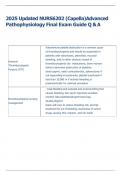
2025 Updated NURS6202 (Capella)Advanced
Pathophysiology Final Exam Guide Q & A
Autoimmune platelet destruction is a common cause
of thrombocytopenia and should be supsected in
patients with echymoses, petechiae, mucosal
bleeding, and no other obvious causes of
Immune
thrombocytopenia (ex- medications, bone marrow
Thrombocytopenic
failure) abnormal destruction of platelets
Purpura (ITP)
avoid aspirin, need corticosteroids, splenectomy if
not responding to treatments, platelet transfusion if
less than 10,000 or if actively bleeding or
prophylactically for planned procedure
- treat bleeding and evaluate and avoid anything that
causes bleeding, like sq/im injections avoided,
monitor labs-platelets/pt/aptt time/coag
thrombocytopenia nursing
studies,hbg/hct
management
teach self care to reduce bleeding risk, prompt
treatment for s/s of bleeding, awareness of cancer
drugs causing this, heparin, and otc meds
, cancer of white blood cells, affects bone marrow,
lymph, and spleen
acute: immature hematopoietic cells proliferate,
abrupt onset
chronic: more mature form of WBCs, gradual onset
acute myelogenous (usually presents as bleeding or
infection, hyperplasia of bone marrow and spleen,
80%, 1 in 4 survive), acute lymphocytic, chronic
leukemia
myelogenous, chronic lymphocytic (CLL
complications may develop w time, lymph nodes
enlarge and cause pain and paralysis from pressure)
acutes in kids and chronics in elderly usually
acute: myeloblasts and lymphocytes: rapid onset,
fatal in days to months, need bone marrow biopsy to
dx
chronic: granulocytes and b lymphocytes
, - Anemia
- Bruising , thrombocyopenia
- Bleeding (epistaxis)
- Fatigue
- Bone pain
- Headache
- Visual disturbances
- Nausea/vomiting
- Weight loss
- Fever
- Lymph node and organ enlargement
Leukemia Clinical decreased # and function of WBCs
Manifestations infiltration by leukemic cells- splenomegaly,
hepatomegaly, lymphadenopathy, meningeal
irritation, oral lesions
dx w blood counts and bone marrow biopsy
initial goal: attain remission, bone marrow transplants,
chemo, radiation, HSCT
monitor bone marrow suppression (bleeding, anemia,
infection), manage drugs and treatment side effects,
monitor labs, support knowledge of disease and
stress, know s/s of relapse
need PT, immunizations, vocational retraining,
reproductive concerns
MCV (mean corpuscular 80-100 fL
volume)
MCHC (mean corpuscular 32 - 36 g/dL
hemoglobin
concentration) Concentration of hemoglobin per RBC
diseases characterizied by uncontrolled cell growth,
approx 30% of Americans
cancer
veteran risk bc herbicides, agent orange, chemicals,
paints,
, tumor ID: tissue of origin, the anatomic site, behavior-
benign or malignant
classification graded by severity
extent of disease: stage 0-IV
TNM classification tumor node and metastasis
Smoking - lung, mouth, bowel, stomach and cervical
cancer
Obesity - bowel, liver and kidney cancer
risk factors for cancer UV exposure - skin cancer
Viral infection - infection with hepatitis B/C can
increase the risk of developing liver cancer
secondhand smoke and chemical exposures
mammograms, pap, colonoscopy, PSA, healthy
secondary prevention
lifestyle and limit stressors, self exam, hpv vaccine
caution
change in bowel or bladder habits
a sore that doesn't heal
unusual bleeding or discharge
7 warning sides of cancer
thickening or lump in breast or elsewhere
indigestion or difficulty swallowing
obvious change in wart or mole
nagging cough or hoarseness
Goals of cancer treatment cure/catch early, control, palliation, prophylaxis
Pathophysiology Final Exam Guide Q & A
Autoimmune platelet destruction is a common cause
of thrombocytopenia and should be supsected in
patients with echymoses, petechiae, mucosal
bleeding, and no other obvious causes of
Immune
thrombocytopenia (ex- medications, bone marrow
Thrombocytopenic
failure) abnormal destruction of platelets
Purpura (ITP)
avoid aspirin, need corticosteroids, splenectomy if
not responding to treatments, platelet transfusion if
less than 10,000 or if actively bleeding or
prophylactically for planned procedure
- treat bleeding and evaluate and avoid anything that
causes bleeding, like sq/im injections avoided,
monitor labs-platelets/pt/aptt time/coag
thrombocytopenia nursing
studies,hbg/hct
management
teach self care to reduce bleeding risk, prompt
treatment for s/s of bleeding, awareness of cancer
drugs causing this, heparin, and otc meds
, cancer of white blood cells, affects bone marrow,
lymph, and spleen
acute: immature hematopoietic cells proliferate,
abrupt onset
chronic: more mature form of WBCs, gradual onset
acute myelogenous (usually presents as bleeding or
infection, hyperplasia of bone marrow and spleen,
80%, 1 in 4 survive), acute lymphocytic, chronic
leukemia
myelogenous, chronic lymphocytic (CLL
complications may develop w time, lymph nodes
enlarge and cause pain and paralysis from pressure)
acutes in kids and chronics in elderly usually
acute: myeloblasts and lymphocytes: rapid onset,
fatal in days to months, need bone marrow biopsy to
dx
chronic: granulocytes and b lymphocytes
, - Anemia
- Bruising , thrombocyopenia
- Bleeding (epistaxis)
- Fatigue
- Bone pain
- Headache
- Visual disturbances
- Nausea/vomiting
- Weight loss
- Fever
- Lymph node and organ enlargement
Leukemia Clinical decreased # and function of WBCs
Manifestations infiltration by leukemic cells- splenomegaly,
hepatomegaly, lymphadenopathy, meningeal
irritation, oral lesions
dx w blood counts and bone marrow biopsy
initial goal: attain remission, bone marrow transplants,
chemo, radiation, HSCT
monitor bone marrow suppression (bleeding, anemia,
infection), manage drugs and treatment side effects,
monitor labs, support knowledge of disease and
stress, know s/s of relapse
need PT, immunizations, vocational retraining,
reproductive concerns
MCV (mean corpuscular 80-100 fL
volume)
MCHC (mean corpuscular 32 - 36 g/dL
hemoglobin
concentration) Concentration of hemoglobin per RBC
diseases characterizied by uncontrolled cell growth,
approx 30% of Americans
cancer
veteran risk bc herbicides, agent orange, chemicals,
paints,
, tumor ID: tissue of origin, the anatomic site, behavior-
benign or malignant
classification graded by severity
extent of disease: stage 0-IV
TNM classification tumor node and metastasis
Smoking - lung, mouth, bowel, stomach and cervical
cancer
Obesity - bowel, liver and kidney cancer
risk factors for cancer UV exposure - skin cancer
Viral infection - infection with hepatitis B/C can
increase the risk of developing liver cancer
secondhand smoke and chemical exposures
mammograms, pap, colonoscopy, PSA, healthy
secondary prevention
lifestyle and limit stressors, self exam, hpv vaccine
caution
change in bowel or bladder habits
a sore that doesn't heal
unusual bleeding or discharge
7 warning sides of cancer
thickening or lump in breast or elsewhere
indigestion or difficulty swallowing
obvious change in wart or mole
nagging cough or hoarseness
Goals of cancer treatment cure/catch early, control, palliation, prophylaxis