
N322 Exam 1 Content (UTK ABSN Program) Questions
With Complete Solutions
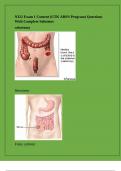
colostomy
Ileostomy
Foley catheter
,indwelling catheter inserted through the urethra and into the
bladder that includes a collection system allowing urine to be
drained into a bag; the catheter can remain in place for an
extended period; sterile technique used; assess for allergies
suprapubic catheter
catheter inserted into the bladder through a small abdominal
incision above the pubic area
nephrostomy tube
small tubes tunneled through the skin into the renal pelvis;
placed to drain the renal pelvis when the ureter is obstructed
ileal conduit
urinary diversion in which the ureters are connected to the ileum
with a stoma created on the abdominal wall
Indiana pouch
continent urinary diversion; must be intermittently catheterized
continuous bladder irrigation
strict intake and output; regulate flow according to the provider
order; empty catheter bag before beginning the irrigation to
monitor accurate output
peritoneal dialysis
removes waste from the body; monitor catheter site for signs and
symptoms of an infection; monitor intake and output.
hemodialysis
, the process by which waste products are filtered directly from
the patient's blood; the site is ONLY for dialysis; LIMB alert on
the side with arteriovenous fistula or graft.
arteriovenous fistula
type of vascular access for dialysis; created by surgically
connecting an artery to a vein
arteriovenous graft
type of surgically created vascular access for dialysis by which a
piece of biologic, semibiologic, or synthetic graft material
connects the patient's artery to a vein
peristalsis
under control of the nervous system; contractions occur every 3-
12 minutes; mass peristalsis sweeps occur one to four times
every 24 hours; 1/3 to 1/2 of food waste is excreted in stool
within 24 hours
constipation
infrequent or incomplete bowel movements characterized by
hardened, dry stool that is difficult to pass
impaction
a collection of hardened feces wedged in the rectum that a
person cannot expel
diarrhea
an increase in the number of stools and the passage of liquid,
unformed feces
With Complete Solutions
colostomy
Ileostomy
Foley catheter
,indwelling catheter inserted through the urethra and into the
bladder that includes a collection system allowing urine to be
drained into a bag; the catheter can remain in place for an
extended period; sterile technique used; assess for allergies
suprapubic catheter
catheter inserted into the bladder through a small abdominal
incision above the pubic area
nephrostomy tube
small tubes tunneled through the skin into the renal pelvis;
placed to drain the renal pelvis when the ureter is obstructed
ileal conduit
urinary diversion in which the ureters are connected to the ileum
with a stoma created on the abdominal wall
Indiana pouch
continent urinary diversion; must be intermittently catheterized
continuous bladder irrigation
strict intake and output; regulate flow according to the provider
order; empty catheter bag before beginning the irrigation to
monitor accurate output
peritoneal dialysis
removes waste from the body; monitor catheter site for signs and
symptoms of an infection; monitor intake and output.
hemodialysis
, the process by which waste products are filtered directly from
the patient's blood; the site is ONLY for dialysis; LIMB alert on
the side with arteriovenous fistula or graft.
arteriovenous fistula
type of vascular access for dialysis; created by surgically
connecting an artery to a vein
arteriovenous graft
type of surgically created vascular access for dialysis by which a
piece of biologic, semibiologic, or synthetic graft material
connects the patient's artery to a vein
peristalsis
under control of the nervous system; contractions occur every 3-
12 minutes; mass peristalsis sweeps occur one to four times
every 24 hours; 1/3 to 1/2 of food waste is excreted in stool
within 24 hours
constipation
infrequent or incomplete bowel movements characterized by
hardened, dry stool that is difficult to pass
impaction
a collection of hardened feces wedged in the rectum that a
person cannot expel
diarrhea
an increase in the number of stools and the passage of liquid,
unformed feces


