Lecture 7: Analyzing qualitative data
3-oktober-2019
We are right now at the stage of data collection / data analysis part. But
it is iterative!
The analysis of qualitative data:
It is a rigorous, logical process through which data is given meaning.
You are interpreting the data.
Be aware of different ways of explaining the quantitative data. There is
not one good. But, there are a few important principles. Different
disciplines have different procedures.
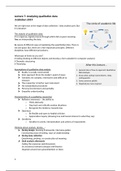
What type of items do you see?
X Coding (looking to different objects and develop a form suitable for computer-analysis)
X Thematic structuring
X Theorizing
Assumptions of qualitative data analysis
Reality is socially constructed)
Emic approach (from the insider’s point of view)
Variables are complex, interwoven and difficult to
measure
The researcher is his/her own instrument
No standardized procedures
Personal involvement and partiality
Empathic understanding
Characteristics of a qualitative researcher
Reflexive awareness – the ability to
o Think abstractly
o Step back and critically analyze situations
o Recognize the tendency towards bias
Openness
o Be flexible and open to helpful criticism
o Appreciative inquiry (showing true and honest interest in what they say)
Sensitivity
o Sensitive to words, interpretations and actions of respondents
Thinking about analysis, during … :
During design: Devising frameworks, interview guides
Constructing ways of looking, ways of understanding
During data collection
Questioning, probing, co-construction of meaning
Desk analysis afterwards
Coding the responses and discussions
(re-)construct relevant concepts and theories
Organize around core generalizations or ideas
1
,Principles of qualitative data analysis
1. Noticing concepts
2. Collecting examples of these concepts
3. Analyzing these concepts in order to find commonalities
Types of analysis (degrees):
Content analysis -It’s a more descriptive way of analyzing, it is almost quantitative.
The purpose is to describe the characteristics of the document’s content by examining who
says what, to whom and with what effect and make inferences (may contain quantitative
elements).
Thematic analysis - Identifying different core categories. Finding the different patterns
(themes) within data.
Thematic analysis as an independent qualitative descriptive approach is mainly described as
a method for identifying, analyzing and reporting patterns (themes) within data.
Grounded analysis - Open to interpretation, construction of theory through the open analysis
of data.
The construction of theory through the open analysis of data.
There are no clear boundaries in types of analysis!
Codes: word of short phrase that represent the essence or key attribute
of narrative / verbal information
Used to categorize data
Coding is the process of organizing the data into ‘chunks’
(segments) that are alike
Coded are developed into a ‘coding structure / guide’
Code structure / guide
Compilation of emerging codes
Brief definitions of properties for each code (can also include
illustrative codes)
Provides guidance for when and how to use the codes
Will evolve throughout the analyzing (refining)
You continuously have discussions with your research team
Add quotations in the report:
Bring the reader to reality of the situation
Support your analysis and findings
Illustrative
Range of issues
Opposing views (between stakeholders)
But always think of anonymity!
Qualitative data: not only interviews! Also …
Steps of coding:
1. Transcribe (interviews, field notes, etc.)
2. Collect – code – collect – code etc. (familiarization)
2
, 3. Read and re-read … suspend initial interpretation. Focused reading and open coding.
4. Close examination, label text with keywords
5. Modify codes, remove duplications, hierarchical order, integrate theory, generate theory.
6. Look for connections that emerge from the data.
Deductive research: use predefined codes
- Structured interviews
- Interview themes based on theoretical model
- Setup of analytical categories, based on the conceptual
framework of the study.
Inductive research: Iterative coding process
- Data collection and analysis are interrelated
- Coding process: Transcripts > concepts > categories
- Analytical concepts, connections and categories emerge
- Although open to the context, systematic procedures are
important: coding process
- Formulating theory (grounded theory approach (GTA))
GTA (Grounded-theory-approach), formulating theory is not doable in five months internship.
Three levels of coding:
Before coding, summarize:
- understand the narrative of your interview, what was most important (vertical analysis)?
Open coding:
- analytical process through which concepts are identified (sensitizing concepts)
- Their properties and dimensions are discovered in data
How:
- Ask the data specific set of questions
- Analyze the data minutely
- Comparing text fragments on similarities and differences
- What is the underlying concept?
- Labelling fragments with keywords: concepts and categories include as many as possible
- More a horizontal analysis is needed
Deductive research is guided by theory testing hypothesis
Inductive is open to all concepts
Pitfall deductive research: too much fitting in existing boxes (close mind)
Pitfall inductive research: too free in accepting all concepts (messy code block)
Axial coding:
- Process of relating categories to their subcategories
- Linking categories at the level of their properties and dimensions
How:
- Examine a phenomenon in terms of properties and dimensions
- What is the underlying pattern?
- Link categories on that level
- More a vertical analysis is needed
Deductive research is looking for relations as presented in theory
Inductive research is often difficult to find evidence for relations
Pitfall deductive research: too much looking for evidence for relation (close mind)
3
3-oktober-2019
We are right now at the stage of data collection / data analysis part. But
it is iterative!
The analysis of qualitative data:
It is a rigorous, logical process through which data is given meaning.
You are interpreting the data.
Be aware of different ways of explaining the quantitative data. There is
not one good. But, there are a few important principles. Different
disciplines have different procedures.
What type of items do you see?
X Coding (looking to different objects and develop a form suitable for computer-analysis)
X Thematic structuring
X Theorizing
Assumptions of qualitative data analysis
Reality is socially constructed)
Emic approach (from the insider’s point of view)
Variables are complex, interwoven and difficult to
measure
The researcher is his/her own instrument
No standardized procedures
Personal involvement and partiality
Empathic understanding
Characteristics of a qualitative researcher
Reflexive awareness – the ability to
o Think abstractly
o Step back and critically analyze situations
o Recognize the tendency towards bias
Openness
o Be flexible and open to helpful criticism
o Appreciative inquiry (showing true and honest interest in what they say)
Sensitivity
o Sensitive to words, interpretations and actions of respondents
Thinking about analysis, during … :
During design: Devising frameworks, interview guides
Constructing ways of looking, ways of understanding
During data collection
Questioning, probing, co-construction of meaning
Desk analysis afterwards
Coding the responses and discussions
(re-)construct relevant concepts and theories
Organize around core generalizations or ideas
1
,Principles of qualitative data analysis
1. Noticing concepts
2. Collecting examples of these concepts
3. Analyzing these concepts in order to find commonalities
Types of analysis (degrees):
Content analysis -It’s a more descriptive way of analyzing, it is almost quantitative.
The purpose is to describe the characteristics of the document’s content by examining who
says what, to whom and with what effect and make inferences (may contain quantitative
elements).
Thematic analysis - Identifying different core categories. Finding the different patterns
(themes) within data.
Thematic analysis as an independent qualitative descriptive approach is mainly described as
a method for identifying, analyzing and reporting patterns (themes) within data.
Grounded analysis - Open to interpretation, construction of theory through the open analysis
of data.
The construction of theory through the open analysis of data.
There are no clear boundaries in types of analysis!
Codes: word of short phrase that represent the essence or key attribute
of narrative / verbal information
Used to categorize data
Coding is the process of organizing the data into ‘chunks’
(segments) that are alike
Coded are developed into a ‘coding structure / guide’
Code structure / guide
Compilation of emerging codes
Brief definitions of properties for each code (can also include
illustrative codes)
Provides guidance for when and how to use the codes
Will evolve throughout the analyzing (refining)
You continuously have discussions with your research team
Add quotations in the report:
Bring the reader to reality of the situation
Support your analysis and findings
Illustrative
Range of issues
Opposing views (between stakeholders)
But always think of anonymity!
Qualitative data: not only interviews! Also …
Steps of coding:
1. Transcribe (interviews, field notes, etc.)
2. Collect – code – collect – code etc. (familiarization)
2
, 3. Read and re-read … suspend initial interpretation. Focused reading and open coding.
4. Close examination, label text with keywords
5. Modify codes, remove duplications, hierarchical order, integrate theory, generate theory.
6. Look for connections that emerge from the data.
Deductive research: use predefined codes
- Structured interviews
- Interview themes based on theoretical model
- Setup of analytical categories, based on the conceptual
framework of the study.
Inductive research: Iterative coding process
- Data collection and analysis are interrelated
- Coding process: Transcripts > concepts > categories
- Analytical concepts, connections and categories emerge
- Although open to the context, systematic procedures are
important: coding process
- Formulating theory (grounded theory approach (GTA))
GTA (Grounded-theory-approach), formulating theory is not doable in five months internship.
Three levels of coding:
Before coding, summarize:
- understand the narrative of your interview, what was most important (vertical analysis)?
Open coding:
- analytical process through which concepts are identified (sensitizing concepts)
- Their properties and dimensions are discovered in data
How:
- Ask the data specific set of questions
- Analyze the data minutely
- Comparing text fragments on similarities and differences
- What is the underlying concept?
- Labelling fragments with keywords: concepts and categories include as many as possible
- More a horizontal analysis is needed
Deductive research is guided by theory testing hypothesis
Inductive is open to all concepts
Pitfall deductive research: too much fitting in existing boxes (close mind)
Pitfall inductive research: too free in accepting all concepts (messy code block)
Axial coding:
- Process of relating categories to their subcategories
- Linking categories at the level of their properties and dimensions
How:
- Examine a phenomenon in terms of properties and dimensions
- What is the underlying pattern?
- Link categories on that level
- More a vertical analysis is needed
Deductive research is looking for relations as presented in theory
Inductive research is often difficult to find evidence for relations
Pitfall deductive research: too much looking for evidence for relation (close mind)
3