Antibiotics and Anti-Infectives Overview for NURS 3314 questions and answers
with solutions 2025/2026
.
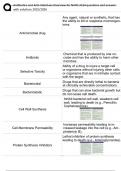
Any agent, natural or synthetic, that has
the ability to kill or suppress microorgan-
isms.
Antimicrobial drug
Chemical that is produced by one mi-
Antibiotic crobe and has the ability to harm other
microbes.
Ability of a drug to injure a target cell
or organisms without injuring other cells
Selective Toxicity
or organisms that are in intimate contact
with the target.
Drugs that are directly lethal to bacteria
Bactericidal
at clinically achievable concentrations.
Drugs that can slow bacterial growth but
Bacteriostatic
do not cause cell death.
Inhibit bacterial cell wall, weakens cell
wall, leading to death (e.g., Penicillin,
Cephalosporins).
Cell Wall Synthesis
Increases permeability leading to in-
Cell Membrane Permeability creased leakage into the cell (e.g., Am-
photericin B).
Lethal inhibition of protein synthesis
leading to death (e.g., Aminoglycosides).
Protein Synthesis Inhibitors
, Antibiotics and Anti-Infectives Overview for NURS 3314 questions and answers with
solutions 2025/2026
Study performace
Inhibit bacterial synthesis, slowing
micro-
Nonlethal Inhibitors of Protein Synthesis bial growth (e.g., Tetracyclines).
Inhibit bacterial synthesis of DNA and
RNA or disrupt DNA function
(e.g., Rifampin, metronidazole,
fluoroSynthesis of Nucleic Acids quinolones).
Decrease synthesis components or are
nonfunctional analogs of metabolites Antimetabolites (e.g.,
Trimethoprim, Sulfonamides).
Inhibit specific enzymes that are critical
Viral Enzyme Inhibitors
for viral replication.
Resistance developed over time by or-
Acquired Resistance to Antimicrobial ganisms, including common organisms
Drugs like MRSA, VRE, C. Diff, H. pylori.
Infections acquired in hospitals due to
Nosocomial Infections high antibiotic use leading to resistant
organisms.
New infection that appears during treat-
Superinfection ment for a primary infection.
Promote adherence to appropriate pre-
Delaying Emergence of Drug Resistance scribing guidelines and educate
patients about drug interactions.
Identify organisms, drug sensitivity, and
, Antibiotics and Anti-Infectives Overview for NURS 3314
Selection of Antibiotics host factors to match drug with bug.
Antibiotics can combine to create
antimi-
Antibiotic Combinations crobial effects.
The susceptibility of a microorganism to
Drug Sensitivity of organism a specific antibiotic.
Factors such as host defenses, site of
infection, previous allergic reactions,
and genetic factors that affect antibiotic
se-
Host Factors lection.
Considerations such as allergies and
ge-
Patient variables netics that may rule out certain antibi-
otics.
A combined effect of two drugs that en-
Synergistic effect hances their efficacy.
A combined effect of two drugs that di-
Antagonistic effect minishes their efficacy.
Reduced toxicity, reduced resistance,
re-
Advantages of combination therapy duced risk in severe infection.
Increased complexity due to needing to
check allergies and toxicities for two
Disadvantages of combination therapy
drugs, higher cost, higher risk of
superinfection, potential for antagonistic
effects.
Administration of medication to prevent
infection in situations such as surgery,
with solutions 2025/2026
.
Any agent, natural or synthetic, that has
the ability to kill or suppress microorgan-
isms.
Antimicrobial drug
Chemical that is produced by one mi-
Antibiotic crobe and has the ability to harm other
microbes.
Ability of a drug to injure a target cell
or organisms without injuring other cells
Selective Toxicity
or organisms that are in intimate contact
with the target.
Drugs that are directly lethal to bacteria
Bactericidal
at clinically achievable concentrations.
Drugs that can slow bacterial growth but
Bacteriostatic
do not cause cell death.
Inhibit bacterial cell wall, weakens cell
wall, leading to death (e.g., Penicillin,
Cephalosporins).
Cell Wall Synthesis
Increases permeability leading to in-
Cell Membrane Permeability creased leakage into the cell (e.g., Am-
photericin B).
Lethal inhibition of protein synthesis
leading to death (e.g., Aminoglycosides).
Protein Synthesis Inhibitors
, Antibiotics and Anti-Infectives Overview for NURS 3314 questions and answers with
solutions 2025/2026
Study performace
Inhibit bacterial synthesis, slowing
micro-
Nonlethal Inhibitors of Protein Synthesis bial growth (e.g., Tetracyclines).
Inhibit bacterial synthesis of DNA and
RNA or disrupt DNA function
(e.g., Rifampin, metronidazole,
fluoroSynthesis of Nucleic Acids quinolones).
Decrease synthesis components or are
nonfunctional analogs of metabolites Antimetabolites (e.g.,
Trimethoprim, Sulfonamides).
Inhibit specific enzymes that are critical
Viral Enzyme Inhibitors
for viral replication.
Resistance developed over time by or-
Acquired Resistance to Antimicrobial ganisms, including common organisms
Drugs like MRSA, VRE, C. Diff, H. pylori.
Infections acquired in hospitals due to
Nosocomial Infections high antibiotic use leading to resistant
organisms.
New infection that appears during treat-
Superinfection ment for a primary infection.
Promote adherence to appropriate pre-
Delaying Emergence of Drug Resistance scribing guidelines and educate
patients about drug interactions.
Identify organisms, drug sensitivity, and
, Antibiotics and Anti-Infectives Overview for NURS 3314
Selection of Antibiotics host factors to match drug with bug.
Antibiotics can combine to create
antimi-
Antibiotic Combinations crobial effects.
The susceptibility of a microorganism to
Drug Sensitivity of organism a specific antibiotic.
Factors such as host defenses, site of
infection, previous allergic reactions,
and genetic factors that affect antibiotic
se-
Host Factors lection.
Considerations such as allergies and
ge-
Patient variables netics that may rule out certain antibi-
otics.
A combined effect of two drugs that en-
Synergistic effect hances their efficacy.
A combined effect of two drugs that di-
Antagonistic effect minishes their efficacy.
Reduced toxicity, reduced resistance,
re-
Advantages of combination therapy duced risk in severe infection.
Increased complexity due to needing to
check allergies and toxicities for two
Disadvantages of combination therapy
drugs, higher cost, higher risk of
superinfection, potential for antagonistic
effects.
Administration of medication to prevent
infection in situations such as surgery,