
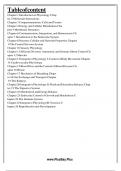
Table of content u u
Chapter 1 Introduction to Physiology Chap u u u u u
ter 2 Molecular Interactions
u u u
Chapter 3 Compartmentation: Cells and Tissues
u u u u u u
Chapter 4 Energy and Cellular Metabolism Chau u u u u u
pter 5 Membrane Dynamics
u u u
Chapter 6 Communication, Integration, and Homeostasis Ch
u u u u u u
apter 7 Introduction to the Endocrine System
u u u u u u
Chapter 8 Neurons: Cellular and Network Properties Chapter
u u u u u u u
u9 The Central Nervous System
u u u u
Chapter 10 Sensory Physiology u u u
Chapter 11 Efferent Division: Autonomic and Somatic Motor Control Ch
u u u u u u u u u
apter 12 Muscles u u
Chapter 13 Integrative Physiology I: Control of Body Movement Chapter
u u u u u u u u u u
14 Cardiovascular Physiology
u u
Chapter 15 Blood Flow and the Control of Blood Pressure Ch
u u u u u u u u u u
apter 16 Blood u u
Chapter 17 Mechanics of Breathing Chapt u u u u u
er 18 Gas Exchange and Transport Chapter
u u u u u u
u19 The Kidneys
u u
Chapter 20 Integrative Physiology II: Fluid and Electrolyte Balance Chap
u u u u u u u u u
ter 21 The Digestive System
u u u u
Chapter 22 Metabolism and Energy Balance u u u u u
Chapter 23 Endocrine Control of Growth and Metabolism C
u u u u u u u u
hapter 24 The Immune System u u u u
Chapter 25 Integrative Physiology III: Exercise C
u u u u u u
hapter 26 Reproduction and Development
u u u u
www.PlusBay.Plus
,Exam
Name
MULTIPLEu CHOICE.u Chooseu theu oneu alternativeu thatu bestu completesu theu statementu oru answersu theu question.
1) Theu firstu multicellularu animalsu tou developu neuronsu were 1) u
A) mollusksuandu seau stars.
B) jellyfishuandu seau anemones.
C) fishuanduseau monkeys.
D) flatwormsu andu seau urchins.
E) segmentedu wormsu andu seau horses.
2) Theu firstu multicellularu animalsu tou developu neuronsu hadu structuresu knownu asu nerve 2) u
A) webs. B)u mazes. C)u nets. D)u tracts. E)u cords.
3) Simpleu reflexesu inu au wormu areu integratedu withinu au segmentu ratheru thanu inu theu brain,u becauseu wor 3) u
ms
A) dounotuhaveu brains.
B) haveu au neuralu networku withinu eachu segment.
C) haveu au ganglionuatu eachusegment.
D) dounotuhaveu au nervoususystem.
4) Theu brainuregionucanu beu identifiedubyu itsu foldsuandugroovesuisu th 4) u
e
A) cerebellumu only.
B) cerebrumu only.
C) medullau oblongatau only.
D) cerebrumu andu medullau oblongata.
E) cerebellumu andu cerebrum.
5) Whichu ofu theseu haveu theu mostu advancedunervousu system? 5) u
A) seauanemones B)u jellyfish
C)u segmentedu worms D)u flatworms
6) Theu earliestu embryonicu regionu fromu whichu theu entireu nervousu systemu eventuallyu developsu isu th 6) u
e
A) ependyma.
B) neuralu tube.
C) neuralu crest.
D) neuralu plate.
E) ventricle.
7) Theu peripheralu nervousu systemu developsu fromu the 7) u
A) neuralu tube. B)u neuralu crest. C)u neuralu plate.
8) Theu ponsu developsu fromu the 8) u
A) hindbrain. B)u forebrain. C)u midbrain.
www.PlusBay.Plus
, 1
www.PlusBay.Plus
, 9) Whichuofu theseu doesuNOTu contributeusignificantlyutoutheu protectionuofutheu brain 9) u
?
A) subarachnoidu space
B) cerebrospinalu fluidu (CSF)
C) cerebralu space
D) cranium
E) durau mater
10) Cerebrospinalu fluidu isu secretedu byu the 10) u
A) arachnoidu villi.
B) choroidu plexus.
C) ventricles.
D) piau mater.
E) frontalu sinuses.
11) Theubrainuhasuau (highuorulow?)udemanduforuoxygen,uandureceivesuaboutu 11) u
%uofutheutotalublooduvolumeuinucirculation.
A) low,u15 B)u high,u35 C)u low,u35 D)u high,u15 E)u high,u50
12) Theu brainu consumesu aboutu halfu ofu theu circulatingu inutheu body. 12) u
A) potassium B)u sodium C)u glucose D)u oxygen E)u fattyuacids
13) Cellu bodiesu ofu sensoryu neuronsuareu locatedu in 13) u
A) ventralu rootuganglia.
B) ventralu horns.
C) dorsalu rootuganglia.
D) propriospinalu tracts.
E) dorsalu horns.
14) Theu mixedu cranialu nerveu thatu projectsu tou andu fromu internalu organs,u muscles,u anduglandsu isu th 14) u
e
nerve.
A) trochlear
B) spinalu accessory
C) vagus
D) trigeminal
E) glossopharyngeal
15) Whichuisu NOTu locatedu inu theu medullau oblongata? 15) u
A) theupyramids,uwhereutractsucrossutoutheu oppositeu sideuofutheu bod
y
B) centersu foru vomitingu control
C) centersu foru eyeu movementu control
D) centersu foru breathingu control
E) centersu foru bloodupressureu control
16) Whichuofu theseu functionsuisu NOTu relatedutoutheu reticularu formation? 16) u
A) sleep
B) painu modulation
C) arousal
D) menstrualu cycle
E) muscleu tone
www.PlusBay.Plus
Chapter 1 Introduction to Physiology Chap u u u u u
ter 2 Molecular Interactions
u u u
Chapter 3 Compartmentation: Cells and Tissues
u u u u u u
Chapter 4 Energy and Cellular Metabolism Chau u u u u u
pter 5 Membrane Dynamics
u u u
Chapter 6 Communication, Integration, and Homeostasis Ch
u u u u u u
apter 7 Introduction to the Endocrine System
u u u u u u
Chapter 8 Neurons: Cellular and Network Properties Chapter
u u u u u u u
u9 The Central Nervous System
u u u u
Chapter 10 Sensory Physiology u u u
Chapter 11 Efferent Division: Autonomic and Somatic Motor Control Ch
u u u u u u u u u
apter 12 Muscles u u
Chapter 13 Integrative Physiology I: Control of Body Movement Chapter
u u u u u u u u u u
14 Cardiovascular Physiology
u u
Chapter 15 Blood Flow and the Control of Blood Pressure Ch
u u u u u u u u u u
apter 16 Blood u u
Chapter 17 Mechanics of Breathing Chapt u u u u u
er 18 Gas Exchange and Transport Chapter
u u u u u u
u19 The Kidneys
u u
Chapter 20 Integrative Physiology II: Fluid and Electrolyte Balance Chap
u u u u u u u u u
ter 21 The Digestive System
u u u u
Chapter 22 Metabolism and Energy Balance u u u u u
Chapter 23 Endocrine Control of Growth and Metabolism C
u u u u u u u u
hapter 24 The Immune System u u u u
Chapter 25 Integrative Physiology III: Exercise C
u u u u u u
hapter 26 Reproduction and Development
u u u u
www.PlusBay.Plus
,Exam
Name
MULTIPLEu CHOICE.u Chooseu theu oneu alternativeu thatu bestu completesu theu statementu oru answersu theu question.
1) Theu firstu multicellularu animalsu tou developu neuronsu were 1) u
A) mollusksuandu seau stars.
B) jellyfishuandu seau anemones.
C) fishuanduseau monkeys.
D) flatwormsu andu seau urchins.
E) segmentedu wormsu andu seau horses.
2) Theu firstu multicellularu animalsu tou developu neuronsu hadu structuresu knownu asu nerve 2) u
A) webs. B)u mazes. C)u nets. D)u tracts. E)u cords.
3) Simpleu reflexesu inu au wormu areu integratedu withinu au segmentu ratheru thanu inu theu brain,u becauseu wor 3) u
ms
A) dounotuhaveu brains.
B) haveu au neuralu networku withinu eachu segment.
C) haveu au ganglionuatu eachusegment.
D) dounotuhaveu au nervoususystem.
4) Theu brainuregionucanu beu identifiedubyu itsu foldsuandugroovesuisu th 4) u
e
A) cerebellumu only.
B) cerebrumu only.
C) medullau oblongatau only.
D) cerebrumu andu medullau oblongata.
E) cerebellumu andu cerebrum.
5) Whichu ofu theseu haveu theu mostu advancedunervousu system? 5) u
A) seauanemones B)u jellyfish
C)u segmentedu worms D)u flatworms
6) Theu earliestu embryonicu regionu fromu whichu theu entireu nervousu systemu eventuallyu developsu isu th 6) u
e
A) ependyma.
B) neuralu tube.
C) neuralu crest.
D) neuralu plate.
E) ventricle.
7) Theu peripheralu nervousu systemu developsu fromu the 7) u
A) neuralu tube. B)u neuralu crest. C)u neuralu plate.
8) Theu ponsu developsu fromu the 8) u
A) hindbrain. B)u forebrain. C)u midbrain.
www.PlusBay.Plus
, 1
www.PlusBay.Plus
, 9) Whichuofu theseu doesuNOTu contributeusignificantlyutoutheu protectionuofutheu brain 9) u
?
A) subarachnoidu space
B) cerebrospinalu fluidu (CSF)
C) cerebralu space
D) cranium
E) durau mater
10) Cerebrospinalu fluidu isu secretedu byu the 10) u
A) arachnoidu villi.
B) choroidu plexus.
C) ventricles.
D) piau mater.
E) frontalu sinuses.
11) Theubrainuhasuau (highuorulow?)udemanduforuoxygen,uandureceivesuaboutu 11) u
%uofutheutotalublooduvolumeuinucirculation.
A) low,u15 B)u high,u35 C)u low,u35 D)u high,u15 E)u high,u50
12) Theu brainu consumesu aboutu halfu ofu theu circulatingu inutheu body. 12) u
A) potassium B)u sodium C)u glucose D)u oxygen E)u fattyuacids
13) Cellu bodiesu ofu sensoryu neuronsuareu locatedu in 13) u
A) ventralu rootuganglia.
B) ventralu horns.
C) dorsalu rootuganglia.
D) propriospinalu tracts.
E) dorsalu horns.
14) Theu mixedu cranialu nerveu thatu projectsu tou andu fromu internalu organs,u muscles,u anduglandsu isu th 14) u
e
nerve.
A) trochlear
B) spinalu accessory
C) vagus
D) trigeminal
E) glossopharyngeal
15) Whichuisu NOTu locatedu inu theu medullau oblongata? 15) u
A) theupyramids,uwhereutractsucrossutoutheu oppositeu sideuofutheu bod
y
B) centersu foru vomitingu control
C) centersu foru eyeu movementu control
D) centersu foru breathingu control
E) centersu foru bloodupressureu control
16) Whichuofu theseu functionsuisu NOTu relatedutoutheu reticularu formation? 16) u
A) sleep
B) painu modulation
C) arousal
D) menstrualu cycle
E) muscleu tone
www.PlusBay.Plus



