

Written by students who passed Immediately available after payment Read online or as PDF Wrong document? Swap it for free 4.6 TrustPilot
logo-home
Document preview thumbnail
Preview 3 out of 25 pages
Exam (elaborations)

WGU D027 Questions and Answers correct

Document preview thumbnail
Preview 3 out of 25 pages

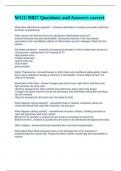
WGU D027 Questions and Answers correct What does aldosterone regulate? re-absorption of sodium and water (indirectly excretion of potassium) What causes the edema that occurs during the inflammatory process? Increased vascular permeability. Increased pressure in the vasculature secondary to the vasodilatory effects of inflammation result in leakage of fluid into 3rd spaces Klinefelter syndrome A chromosomal disorder in which males have an extra X chromosome, making them XXY instead of XY. High pitched voice mental impairment sparse body hair small testes gynecomastia Alpha Thalassemia Disease in which there are insufficient alpha-globin chains due to gene deletions causing a reduction in hemoglobin. Future offspring have 1/4 chance of disease. Blood flow of the heart -Oxygen poor blood enter right atrium and flows into right ventricle via vena cava -Blood is pumped from right ventricle into pulmonary artery (goes into lungs) -Oxygen rich blood returns to heart via pulmonary vein and enters left atrium and flows into left ventricle -Blood is pumped into the aorta and circulated to body What happens during diastole? the heart is relaxed, semilunar valves are closed and blood from atria fills ventricles; low pressure. What happens during systole? Heart muscles contract, creating pressure to open the pulmonary and aortic valves. Blood from R ventricle is pushed into the lungs to exchange O2 and CO2. Blood from the L ventricle is pushed thru the aorta to be distributed throughout the body. QRS complex ventricular depolarization and atrial repolarization What effect does atherosclerosis have on the development of an aneurysm? Erodes the vessel wall. Plaque formation makes vessel rigid and susceptible to rupture. low-density lipoprotein (LDL) blood fat that transports cholesterol to organs and tissues; excess amounts result in the accumulation of fatty deposits on artery walls. 100 Which factor is responsible for hypertrophy of the myocardium associated with HTN? Angiotensin II Stimulates increased cardiac preload and afterload leading to hypertrophy, poor myocardial compliance, and ventricular dilation. Causes sarcomere death, abnormal collagen matrices, and interstitial fibrosis. What gland produces Antidiuretic hormone? posterior pituitary gland T3 and T4 are regulated by TSH What causes SIADH? Too much ADH. Increased intravascular volume, decreased urine production, electrolyte disturbance. CNS - stroke, hemorrhage, infection, trauma Medications - narcotics, oxytocin, chlorpropamide, antiepileptic agents Trauma - pain is a powerful stimulus for ADH. What for post op pts who is receiving fluids Lung - simple pneumonia or ADH secreting small cell cancer of the lung. Hypothyroidism High TSH, low T3 and T4 During the body's inflammatory process, what causes edema? -Vasodilation of blood vessels -Emigration of neutrophils -Endothelial cell expansion -Increased capillary permeability Increased capillary permeability The increased flow and capillary permeability result in a leakage of plasma from the vessels causing swelling (edema) in the surrounding tissue and is solely responsible for inflammation induced edema A 56-year-old diabetic patient has not taken his insulin in 4 days due to him" feeling well without it". He is admitted to the ED with an elevated blood sugar. What electrolyte should be assessed FIRST? -Calcium -Sodium -Potassium -Chloride Potassium Insulin facilitates the intracellular transport of potassium, phosphate, and magnesium. Without insulin, potassium does not get transported to the intracellular environment and the serum potassium will rise. A 46-year-old woman is considering having another child. The healthcare providers are explaining to the woman that children born to women late in life have an increased rate of having children with this condition. -Kawasaki's disease -Down syndrome -Klinefelter syndrome -Turner syndrome Down syndrome risk increases with Maternal age. A patient with several risk factors is concerned about developing type 2 diabetes. The healthcare professional advises the patient to lose weight, explaining that obesity is an important risk factor for type 2 diabetes mellitus because it causes what? -Reduced insulin production by the pancreas -Increased resistance to insulin in the cells -Obstructed outflow of insulin from the pancreas -Stimulation of glucose production by the liver Increased resistance to insulin in the cells People with type 2 diabetes mellitus suffer from insulin resistance. Obesity causes this resistance so their cells have difficulty using insulin. Obesity does not lead to reduced insulin production, obstructed insulin outflow, or stimulation of glucose production. When evaluating a patient for hypertensive target organ damage, the APRN looks for evidence of: -Lipid abnormality -Insulin resistance -Left ventricular hypertrophy -Clotting disorder Left ventricular hypertrophy On ultrasound a patient had 4-chamber dilation with an ejection fraction of 15% and a pleural effusion on chest x-ray. Elevated liver function tests, hypokalemia, and hypomagnesema are seen on lab results. Blood pressure is 115/60 and heart rate is 110 bpm with regular rate and rhythm, respiratory rate 30 bpm and O2 saturation is 88% on room air. Initial therapy should include all of the following except: -Diuretic -ACE Inhibitor -Digoxin -Beta Blocker Digoxin A patient in the emergency department is suspected of having a myocardial infarction (MI). The initial cardiac troponin 1 level was negative. What action by the healthcare professional is best? -Administer thrombolytic therapy. -Discharge the patient. -Schedule repeat troponin within a few hours. -Prepare the patient for cardiac catheterization. Schedule repeat troponin within a few hours. Several cardiac biomarkers exist including the most specific, cardiac troponin 1 (cTnI), cTnI begins to rise within 2 to 4 hours after cardiac injury, so if the initial result is normal, the test should be repeated within 6 to 9 hours and again at 12 to 24 hours. It is not known yet if the patient has had an MI so treatment with thrombolytic therapy and/or catheterization would be premature. The patient should not be discharged since the professional suspected an MI. Which patient would the healthcare professional assess for elevated levels of antidiuretic hormone (ADH) secretion? -Being treated for small cell carcinoma of the stomach -Taking high dose acetaminophen (Tylenol) for arthritis -Had a hip replacement operation 14 days ago -Has long-standing kidney disease from diabetes Being treated for small cell carcinoma of the stomach A common cause of elevated levels of ADH secretion is ectopically produced ADH by tumors, such as small cell carcinoma of the duodenum, stomach, and pancreas; cancers of the bladder, prostate, and endometrium; lymphomas; and sarcomas. High doses of antiinflammatory medications are a risk factor, but acetaminophen is not an antiinflammatory medication. Surgery within the last 5 to 7 leads to increased ADH secretion. Kidney disease does not lead to excess levels of ADH. A post-operative patient with gallbladder surgery has an epidural infusion of Astramorph. The patients respiratory rate starts to decline to 9 breaths/minute. Which medication should the healthcare provider anticipate administering to this patient? -Protamine sulfate -Mucomyst -Naloxone -Solu-Medrol Naloxone is a narcotic antagonist that can reverse the effect of both adverse and therapeutic use of opioid narcotic analgesics. A patient is brought to the Emergency Department with a gunshot wound to the chest. The healthcare professional assesses an abnormality involving a pleural rupture that acts as a one-way valve, permitting air to enter on inspiration but preventing its escape by closing during expiration. What action by the healthcare professional is the priority? -Draw arterial blood gasses. -Assist with a chest tube insertion. -Give the patient low-flow oxygen. -Assess for clubbing of fingernails. Assist with a chest tube insertion. In a tension pneumothorax, the site of pleural rupture acts as a one-way valve, permitting air to enter on inspiration but preventing its escape by closing up during expiration. As more and more air enters the pleural space, air pressure in the pneumothorax begins to exceed barometric pressure. Air pressure in the pleural space pushes against the already recoiled lung, causing compression atelectasis, and against the mediastinum, compressing and displacing the heart, great vessels, and trachea. This is an emergency condition requiring chest tube insertion or immediate needle decompression. Arterial blood gas results will not change the treatment plan. This patient may need oxygen if definitive treatment is delayed, but it would need to be high-flow oxygen. Clubbing of fingernails occurs in chronic hypoxemic conditions. A 2-year-old pediatric patient with limited medical history available arrives to an urgent care with excessive irritability and crying. X-rays were obtained and noted to have fractures of the metatarsals of the foot and left tibia. On exam, the nurse notes that the patient seems to have a blue tint to both sclera, and she didn't seem to react normally when the nurse was talking to her. Which diagnosis is most likely in this case? -Osteogenesis imperfecta -Calcium deficiency -Non-accidental trauma (physical abuse) -Osteomyelitis Osteogenesis imperfecta Osteogenesis imperfecta (OI) is a genetic abnormality with predominant autosomal dominant inheritance. OI affects bone integrity through a variety of collagen defects. Depending on the type of OI, various manifestations may be concomitant such as appearance of blue sclera, hearing deficits, short stature and/or dental malformations. A patient who has chronic kidney disease has hemoglobin of 7.2 mg/dL. What treatment does the healthcare professional prepare the patient for? -Intrinsic factor -Vitamin B12 -Vitamin D -Erythropoietin Erythropoietin Anemia of chronic kidney disease can be successfully treated with erythropoietin. Reduced erythropoietin secretion and reduced red cell production are evident in anemia resulting from chronic kidney disease. Intrinsic factor is needed for the absorption of vitamin B12. Vitamin D is important for calcium absorption. A healthcare professional is assessing a patient who could have either pyelonephritis or cystitis. Which differentiating sign would assist the professional in making this diagnosis? -Difficulty initiating urine stream -Urinalysis confirmation of white blood cell casts -Spasmodic pain that radiates through the groin -Increased GFR Urinalysis confirmation of white blood cell casts. Clinical assessment alone is difficult to differentiate the symptoms of cystitis from those of pyelonephritis. Urine culture, urinalysis, and clinical signs and symptoms establish the specific diagnosis. When present, white blood cell casts indicate pyelonephritis. James, a 22-year-old firefighter, presents to your practice with dyspnea on exertion. He reports that he has trouble keeping up with his squad and can no longer carry his 40 lb. pack. He reports 2 months of nocturnal cough, a 10 lb. weight loss and fatigue. He denies any history of smoking and he drinks 2-3 six packs of beer daily. He presented 3 weeks ago to a primary care clinic where he was told he had pneumonia and asthma. He was started on antibiotics and a B-agonist, but still does not feel well. Which of the following findings is the least specific in making a diagnosis? -Elevated JVD -Wheezing -S3 gallop -Rales Wheezing is not a sign of heart failure. A patient with history of a hemithyroidectomy is attending her annual wellness exam. The healthcare provider orders a serum TSH. The results are 4.6 microunits/mL, with a normal range of 0.3 - 6 microunits/mL. The healthcare provider can draw the following conclusion about this patient's thyroid function. -TSH is normal indicating that the patient's thyroid hormone is normal. -TSH is normal indicating that the patient's thyroid level is low. -TSH is normal indicating that the patient's thyroid hormone is elevated. -TSH as a laboratory test alone is not enough data to draw a conclusion about thyroid function. TSH is normal indicating that the patient's thyroid hormone is normal. Feedback: The negative feedback loop, unique to the endocrine system allows laboratory evaluation by measuring various hormones involved in the feedback loop of the endocrine organ. Thyroid stimulation hormone will fluctuate as the body needs thyroid hormone. In cases where the thyroid is not functioning at an optimal state and thyroid hormone is not being produced, the anterior pituitary gland will continue to produce TSH in attempts to stimulate the thyroid. The more the thyroid does not produce thyroid hormone, the more TSH produced. In this case, the TSH level is normal suggesting that thyroid function is operating a normal rate in this patient. Lab results reveal that a 55-year-old male patient with insulin-dependent type 2 diabetes has a HgbA1c of 6.9%. A review of his medications reveals that he takes 60 units of Lantus SQ at night and covers his meals with Humalog insulin using a sliding scale. Based on this information alone, what changes to his treatment regimen should the provider recommend? -Increase his nightly Lantus dose -increases each dose of the Humalog sliding scale -Add metformin -Make no changes Make no changes Feedback: Make no changes because less than 7% is our HgbA1c goal in diabetics. Multiple Sclerosis (MS) -destruction of the myelin sheath on neurons in the CNS and its replacement by plaques of sclerotic (hard) tissue -autoimmune response -Tx: corticosteroids, immunosuppression, immune system modulators Transfusion Reaction -IgM (ABO incompatibility) -APAP, Benedryl -Steroids -Meperidine (rigors) Prinzmetal angina -Episodic chest pain unrelated to exertion -Due to coronary artery vasospasm -Represents reversible injury to myocytes -EKG shows ST-segment elevation due to transmural ischemia -Relieved by nitroglycerin or Calcium channel blockers *avoid beta blockers-cause more frequent episodes benign prostatic hyperplasia (BPH) -enlargement of the prostate gland, common in older men, causing urinary obstruction -Tx: Tamsulosin (Flomax) relaxes muscles of prostrate and bladder **Alpha 1 Antagonist-hypotension=education epidural hematoma (EDH) -Bleeding between the dura mater and the cranium -Usually MVA -arterial bleed usually w/ skull fx subdural hematoma -a hematoma located between the dura & brain -acute: rapid onset -subacute: slow onset 48 hrs to 2 weeks -chronic: weeks to months Stage 1 CKD -Kidney damage with normal GFR 90 -persistent albuminuria -normal renal fx w/ proteinuria for 3+ months Stage 2 CKD -mild kidney damage -GFR 60-89 -inc PTH -inc Cr & BUN -mild loss of renal fx w/ proteinuria Stage 3 CKD -GFR 30-59 -Alb A2 30-300 -mild HTN -inc Cr & BUN Stage 4 CKD -GFR 15-29 -A3 300 -inc triglycerides, potassium, Cr, & BUN -metabolic acidosis Na/H20 retention -mod HTN, hypophos., anemia Stage 5 CKD -ESRD -GFR 15 -uremia -severe HTN, anemia, hypophos. You are about to prescribe spironolactone (Aldactone) 25 mg. PO twice a day for a 74-year-old man with systolic heart failure. Which of the following is a priority for the APRN? -Order an electrolyte panel in 3 days -Order liver function tests in 3 days -Order a CBC/diff within a week -None of the above Order an electrolyte panel in 3 days Feedback: You will need to check potassium levels A pt with HF received furosemide. Which physical exam finding indicates effectiveness? -Urine output 15ml/hr -Improved lung sounds -Weight gain -Increased appetite Improved lung sounds Which diuretic is most effective in pt w/ renal insufficiency/failure? -Loop -Thiazide -Potassium-sparing -Diuretics not recommended Loop Rationale: most effective if nephrons are damaged Potassium sparing diuretics -Spironolactone (Aldactone) -Use: HTN, edema, HF-v mortality & v hospitalizations -MOA: blocks action of aldosterone in kidneys-K retention & Na excretion -AE: ^K retention, similar effects to steroids -Intx: Loop & TZ diuretics, K CI: ^K Loop Diuretics -Furosemide (Lasix) -most effective, even with v UOP. Preferred for renal impair -MOA: acts in loop of Henle to block reabsorption of Na & Cl-prevention of passive reabsor. of H20 -Use: pulm edema 2nd to HF, hepatic, cardiac, or renal edema unrespon to less eff diuretics, HTN not controlled with other diuretics -AE: v Na, v Cl, dehydration, vTN, v K, ototoxic, hyperglycemia, ^ uremia -Intx: Digoxin, gent, K sparing, lithium, NSAID, antiHTN -CI: auditory impair, v K Education: monitor BP, postural vTN, rise slowly Thiazide diuretics -Hydrochlorothiazide (HCTZ) -Uses: HTN (1st choice), HF (edema) MOA: ^ renal secretion of Na, K, & H20. Elevate plasma levels of uric acid & glucose. *main diff b/ loop is TZ is not as potent/effective AE: v Na, v Cl, dehydration, ^ lipids, v Mag Intx: Dig, lithium, NSAIDS CI: v K, gout, sulfa allergy Hypomagnesemia -Serum magnesium level lower than 1.6 mg/dL -Sx: muscle weakness, tremor, dysrhythmia, twitch A pt with HF received furosemide. Which physical exam finding indicates effectiveness? -Urine output 15ml/hr -Improved lung sounds -Weight gain -Increased appetite Improved lung sounds A patient receiving the loop diuretic furosemide may experience which 1st dose AR? -Hyperkalemia -Ototoxicity -Hypotension -Nephrotoxicity Hypotension A 44-year-old woman has recently been diagnosed with advanced metastatic non-small-cell lung cancer. Genetic testing is ordered to determine if the patient's tumor has any genomic alterations and to guide treatment decisions. A few weeks later, the patient's test results come back positive for a genetic mutation. The APN starts osimertinib (Tagrisso). Based on this information, what type of genetic mutation does this patient have? MET amplification mutation BRCA mutation EGFR mutation ALK mutation EGFR mutation A 45-year-old woman checks her blood pressure at home and is alarmed to see her blood pressure is 176/100 mm Hg. She feels very tired and has muscle weakness and a headache. She fears that she is suffering from a stroke and takes herself to an emergency room. After several diagnostic and laboratory tests, the patient is diagnosed with Cushing disease. Which lab abnormality would be present in this patient? Increased adrenocorticotropic hormone (ACTH) Decreased adrenocorticotropic hormone (ACTH) Decreased cortisol Increased cortisol Increased cortisol A two-year-old child presents with a clear runny nose and cough which has lasted 3 days. The child's mother reports the cough sounds like a barking noise. The child is sleeping in the mother's arms and appears to have stridor. The child's mother also reports an axillary temperature of 101 last night. What is the best management for this child's symptoms of croup? Oral steroids and breathing treatments Rest and the use of a warm humidifier Supportive care Antibiotics Oral steroids and breathing treatments

Content preview

WGU D027 Questions and Answers correct
What does aldosterone regulate? - answerre-absorption of sodium and water (indirectly
excretion of potassium)

What causes the edema that occurs during the inflammatory process? -
answerIncreased vascular permeability. Increased pressure in the vasculature
secondary to the vasodilatory effects of inflammation result in leakage of fluid into 3rd
spaces

Klinefelter syndrome - answerA chromosomal disorder in which males have an extra X
chromosome, making them XXY instead of XY.
High pitched voice
mental impairment
sparse body hair
small testes
gynecomastia

Alpha Thalassemia - answerDisease in which there are insufficient alpha-globin chains
due to gene deletions causing a reduction in hemoglobin. Future offspring have 1/4
chance of disease.

Blood flow of the heart - answer-Oxygen poor blood enter right atrium and flows into
right ventricle via vena cava
-Blood is pumped from right ventricle into pulmonary artery (goes into lungs)
-Oxygen rich blood returns to heart via pulmonary vein and enters left atrium and flows
into left ventricle
-Blood is pumped into the aorta and circulated to body

What happens during diastole? - answerthe heart is relaxed, semilunar valves are
closed and blood from atria fills ventricles; low pressure.

What happens during systole? - answerHeart muscles contract, creating pressure to
open the pulmonary and aortic valves.
Blood from R ventricle is pushed into the lungs to exchange O2 and CO2.
Blood from the L ventricle is pushed thru the aorta to be distributed throughout the body.

QRS complex - answerventricular depolarization and atrial repolarization

What effect does atherosclerosis have on the development of an aneurysm? -
answerErodes the vessel wall. Plaque formation makes vessel rigid and susceptible to
rupture.

,low-density lipoprotein (LDL) - answerblood fat that transports cholesterol to organs and
tissues; excess amounts result in the accumulation of fatty deposits on artery walls.
<100

Which factor is responsible for hypertrophy of the myocardium associated with HTN? -
answerAngiotensin II
Stimulates increased cardiac preload and afterload leading to hypertrophy, poor
myocardial compliance, and ventricular dilation. Causes sarcomere death, abnormal
collagen matrices, and interstitial fibrosis.

What gland produces Antidiuretic hormone? - answerposterior pituitary gland

T3 and T4 are regulated by - answerTSH

What causes SIADH? - answerToo much ADH.
Increased intravascular volume, decreased urine production, electrolyte disturbance.
CNS - stroke, hemorrhage, infection, trauma
Medications - narcotics, oxytocin, chlorpropamide, antiepileptic agents
Trauma - pain is a powerful stimulus for ADH. What for post op pts who is receiving
fluids
Lung - simple pneumonia or ADH secreting small cell cancer of the lung.

Hypothyroidism - answerHigh TSH, low T3 and T4

During the body's inflammatory process, what causes edema?
-Vasodilation of blood vessels
-Emigration of neutrophils
-Endothelial cell expansion
-Increased capillary permeability - answerIncreased capillary permeability
The increased flow and capillary permeability result in a leakage of plasma from the
vessels causing swelling (edema) in the surrounding tissue and is solely responsible for
inflammation induced edema

A 56-year-old diabetic patient has not taken his insulin in 4 days due to him" feeling well
without it". He is admitted to the ED with an elevated blood sugar. What electrolyte
should be assessed FIRST?
-Calcium
-Sodium
-Potassium
-Chloride - answerPotassium
Insulin facilitates the intracellular transport of potassium, phosphate, and magnesium.
Without insulin, potassium does not get transported to the intracellular environment and
the serum potassium will rise.

, A 46-year-old woman is considering having another child. The healthcare providers are
explaining to the woman that children born to women late in life have an increased rate
of having children with this condition.
-Kawasaki's disease
-Down syndrome
-Klinefelter syndrome
-Turner syndrome - answerDown syndrome risk increases with Maternal age.

A patient with several risk factors is concerned about developing type 2 diabetes. The
healthcare professional advises the patient to lose weight, explaining that obesity is an
important risk factor for type 2 diabetes mellitus because it causes what?
-Reduced insulin production by the pancreas
-Increased resistance to insulin in the cells
-Obstructed outflow of insulin from the pancreas
-Stimulation of glucose production by the liver - answerIncreased resistance to insulin in
the cells
People with type 2 diabetes mellitus suffer from insulin resistance. Obesity causes this
resistance so their cells have difficulty using insulin. Obesity does not lead to reduced
insulin production, obstructed insulin outflow, or stimulation of glucose production.

When evaluating a patient for hypertensive target organ damage, the APRN looks for
evidence of:
-Lipid abnormality
-Insulin resistance
-Left ventricular hypertrophy
-Clotting disorder - answerLeft ventricular hypertrophy

On ultrasound a patient had 4-chamber dilation with an ejection fraction of 15% and a
pleural effusion on chest x-ray. Elevated liver function tests, hypokalemia, and
hypomagnesema are seen on lab results. Blood pressure is 115/60 and heart rate is
110 bpm with regular rate and rhythm, respiratory rate 30 bpm and O2 saturation is
88% on room air. Initial therapy should include all of the following except:
-Diuretic
-ACE Inhibitor
-Digoxin
-Beta Blocker - answerDigoxin

A patient in the emergency department is suspected of having a myocardial infarction
(MI). The initial cardiac troponin 1 level was negative. What action by the healthcare
professional is best?
-Administer thrombolytic therapy.
-Discharge the patient.
-Schedule repeat troponin within a few hours.
-Prepare the patient for cardiac catheterization. - answerSchedule repeat troponin within
a few hours.


Document information

Uploaded on
August 3, 2025
Number of pages
25
Written in
2025/2026
Type
Exam (elaborations)
Contains
Questions & answers
$16.49

Wrong document? Swap it for free Within 14 days of purchase and before downloading, you can choose a different document. You can simply spend the amount again.
Written by students who passed
Immediately available after payment
Read online or as PDF

Seller avatar
Reputation scores are based on the amount of documents a seller has sold for a fee and the reviews they have received for those documents. There are three levels: Bronze, Silver and Gold. The better the reputation, the more your can rely on the quality of the sellers work.
Pogba119
3.9
(14)
Sold
62
Followers
2
Items
5517
Last sold
5 days ago


Why students choose Stuvia

Created by fellow students, verified by reviews

Quality you can trust: written by students who passed their tests and reviewed by others who've used these notes.

Didn't get what you expected? Choose another document

No worries! You can instantly pick a different document that better fits what you're looking for.

Pay as you like, start learning right away

No subscription, no commitments. Pay the way you're used to via credit card and download your PDF document instantly.

Student with book image

“Bought, downloaded, and aced it. It really can be that simple.”

Alisha Student

Working on your references?

Create accurate citations in APA, MLA and Harvard with our free citation generator.

Working on your references?

Frequently asked questions
