
• Wrong document? Swap it for free
  • Written by students who passed
  • Immediately available after payment
  • Read online or as PDF
Sell
Where do you study
Your language
Document preview thumbnail
Preview 2 out of 6 pages
Exam (elaborations)

NUR 604 Board Vitals week 7 Exam, Answered 100% Correct; updated Summer 2025/26.

Document preview thumbnail
Preview 2 out of 6 pages

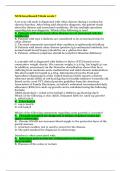
NUR 604 Board Vitals week 7 A 16-year-old male is diagnosed with celiac disease during a workup for chronic diarrhea. After being told about the diagnosis, the patient reads about the disease and associated conditions. He has multiple questions regarding his new diagnosis. Which of the following is true? A. Patients with untreated celiac disease are at increased risk for lymphoma B. Patients with type 2 diabetes are considered to be at increased risk for celiac disease C. The most commonly associated skin condition is epidermolysis bullosa D. Patients with latent celiac disease (positive IgA endomysial antibody, but normal small bowel biopsy) should be on a gluten-free diet E. Patients without symptoms should be tested for thiamine deficiency A 3-month-old is diagnosed with failure to thrive (FTT) based on two consecutive weight checks. His current weight is 3.6 kg, his length 57 cm. In addition, assessment via the Waterlow classification shows that he is suffering from moderate-acute malnutrition and mild-chronic malnutrition. His ideal weight for length is 4.8 kg. Information from the Food and Agriculture Organization of the United Nations (FAO) reports a dietary reference intake (DRI) of 108 kcal/kg/day for healthy infants 0-6 months old. Based on the 2016 FTT clinical practice guideline from the American Association of Family Physicians, an infant's estimated recommended daily allowance (RDA) for catch-up growth can be calculated using the following formula: {(RDA [kcal/day]) = (ideal wt for ht [kg]) x (DRI for age [kcal/kg/day]) Which of the following is this child's estimated RDA for catch-up growth? A. 388.8 kcal/d B. 518.4 kcal/d C. 129.6 kcal/d D. 108 kcal/d Which of the following statements regarding acute gastritis is accurate? A. The gold standard for diagnosis is biopsy of gastric tissue by upper endoscopy. B. Chronic NSAID use increases blood supply to the protective layer of the gastric mucosa. C. A barium swallow test is used to screen for the disease. D. The gold standard for diagnosis is colonoscopy. Diarrhea is often associated with: A. Infectious gastroenteritis, inflammatory bowel disease, diverticulitis B. Diseases of the colon or rectumC. Fever and abdominal pain in sexually transmitted diseases D. Dysuria and flank pain in urinary tract infections A 13-year-old female presents for evaluation of bloating, stomachache, and occasional loose stools. The patient is not gaining weight and is in the 10th percentile for height. Her mother says her gastric symptoms are worse after eating breads or cakes. She denies any blood in her stool and a stool sample is negative for occult blood or white blood cells. Which of the following conditions is most likely? A. Crohn’s disease B. Ulcerative colitis C. Celiac disease D. Acute viral diarrhea Which of the following is the most common cause of infant undernutrition or failure to thrive (FTT)? A. Renal failure causing caloric loss B. Malabsorption of nutrients due to gastrointestinal disorders C. Malignancy causing increased catabolism D. Lack of parental understanding of correct formula preparation A 3-year-old female with a history of abdominal pain and inconsolable crying presents to the clinic. After physical examination and review of symptoms the diagnosis of intussusception is made. Which of the following physical exam finding most contributed to the diagnosis? A. Rebound tenderness B. Vomiting and watery diarrhea C. Currant jelly stool D. Epigastric pain A 14-year-old patient presents to the emergency department with periumbilical pain localizing to the right lower quadrant of the abdomen, followed by vomiting that has gradually worsened over the last 16 hours. They also report nausea, diarrhea, and fevers. On physical examination, the patient has a temperature of 101.4° F (38.5° C) and involuntary guarding. Laboratory analysis shows white blood cell (WBC) count of 15,000 K/uL and a c-reactive protein (CRP) of 7 mg/L. The diagnosis of appendicitis is made. Which of the following signs is most confirmatory of this diagnosis when observed on patient examination? A. McBurneys sign B. Murphy's sign C. Positive Rovsing's sign D. Carnett's signA toddler presents with diarrhea for the last 48 hr. The caregiver reports that the child has had 7 to 10 loose stools. On physical examination, the child's vital signs are within expected range for age, and mucous membranes are moist. Bowel sounds are hyperactive, and there is no abdominal tenderness or guarding. The child is breastfeeding and receiving complementary foods, including fruits, vegetables, grains, and meats. Which of the following is the most appropriate first step in management for this child's suspected acute viral gastroenteritis? A. Recommend a BRAT diet (bananas, rice, applesauce, and toast). B. Recommend bismuth subsalicylate (Pepto-Bismol) for symptom relief. C. Recommend continued breastfeeding with an unrestricted diet. D. Recommend transition from breastmilk to formula until diarrhea resolves. A neonate presents for a 2-week well check. Per the caregiver's report, breastfeeding is going well and the patient has regained their birth weight. The NP reports to caregivers that breastfed babies are expected to regain their birth weight by 10 to 14 days. They ask what they can expect in terms of weight gain in the future. At what minimum age can most caregivers expect their baby to double their birth weight? A. By 2 months of age B. By 4 months of age C. By 7 months of age D. By 9 months of age An NP is evaluating a 2-week-old newborn who has jaundice. The infant is exclusively breastfed. Upon examination, the infant is awake, alert, and well appearing. They have regained their birth weight, and the hospital discharge summary reports normal bilirubin levels prior to discharge. Laboratory results now show elevated unconjugated bilirubin with conjugated bilirubin within normal limits. Based on this information, which of the following is the most likely differential diagnosis? A. Breast milk jaundice B. Extrahepatic biliary atresia C. Idiopathic neonatal hepatitis D. Inadequate milk intake A patient presents for evaluation of sudden onset vomiting and diarrhea. The symptoms began approximately 3 hr after eating deviled eggs at a family picnic. Several other family members have similar symptoms. Foodborne illness is suspected. Which of the following toxins is most likely based on this patient's presenting symptoms? A. Campylobacter B. Salmonella C. Staphylococcus aureusD. Shigella An infant presents to the clinic with vomiting and diarrhea. The caregiver reports that the infant has been urinating less than usual. On physical examination, skin turgor is slightly reduced, mucous membranes appear dry, the heart rate is increased, and mood is irritable. Based on this assessment, how should the NP characterize the degree of hypovolemia in this infant? A. Hypovolemia shock B. Mild dehydration C. Moderate dehydration D. Severe dehydration The NP is evaluating a neonate with jaundice three weeks after birth. Their unconjugated (indirect) bilirubin level is 15 mg/dL. Which of the following characteristics is most likely with persistent benign neonatal hyperbilirubinemia, often referred to as breast milk jaundice? A. It is most commonly caused by inadequate calories. B. Bilirubin levels typically decline over 3 to 12 weeks of life. C. Phototherapy is generally needed until cessation of breastfeeding. D. There is typically a component of conjugated (direct) bilirubinemia. A nurse practitioner is evaluating a 13-year-old female with abdominal pain. The patient has extreme tenderness and involuntary guarding at McBurney’s point. Which of the following is suggested by this finding? A. Pelvic inflammatory disease (PID) B. Ectopic pregnancy C. Appendicitis D. Cholecystitis A 35-year-old male presents with reports of one week of left testicular discomfort and swelling. He says he was carrying a pail of paint up a ladder when he suddenly felt pain in the region. That evening, he noticed a swelling there that was only mildly uncomfortable. He denies vomiting, fever, urinary symptoms, direct trauma, or other symptoms. He has no medical history except a tonsillectomy as a child. On arrival, his vitals are BP 124/84, HR 65, RR 16, temp 97.9, and O2 sats 100% on RA. On exam, there is moderate swelling of his left scrotum, which is non-tender but more prominent when he is standing and nearly resolves while lying flat. Cremaster reflex is present. The rest of his exam is unremarkable. What should be done for him? A. Order STAT testicular sonogramB. Refer to surgeon over the next week or so C. Check UA and treat with ciprofloxacin (Cipro) for 2 weeks D. Refer him to ER for immediate surgical treatment An adolescent patient who has intellectual development disorder and their caregiver presents for a long-acting reversible contraceptive (LARC) implant. After education on the device, the patient refuses. Which of the following is the best action in this situation? A. Implant the LARC with the caregiver's consent B. Respect the patient's wishes C. Obtain a court order D. Call child/adult protective services In most states, a 17-year-old can sign consent without parental consent for specific health care and procedures. In which of the following cases would a 17-year-old be able to sign consent without parental consent? A. Tubal ligation for contraception B. Prenatal care C. School physical D. Abortion The NP is caring for a 15 year old sexually active girl. She has received routine childhood immunization through age 6. Vaccines that should be updated at this visit include: A. Tdap, meningococcal, HPV and annual influenza B. Td and annual influenza C. Hepatitis B D. Measles, mumps, rubella, tetanus and diphtheria An NP is evaluating an adolescent with heavy menstrual bleeding. The adolescent reports that their cycles occur at regular intervals, but the bleeding has always been heavy since their first menses, affecting their activity and quality of life (QOL). They deny intermenstrual bleeding. Which of the following etiologies should be considered as a differential diagnosis? A. Bleeding disorder B. Cervical polyps C. Retained tampon D. Sexually transmitted infection An NP is providing education regarding breastfeeding to a patient in their third trimester of pregnancy. Which of the following is one of the few absolute contraindications to breastfeeding? A. The infant has hyperbilirubinemia and requires phototherapy. B. The infant is diagnosed with classic galactosemia.C. The lactating caregiver has dormant herpes simplex virus infection. D. The lactating caregiver has HIV and an undetectable viral load. An adult patient presents with a fever, cough, and muscle aches due to influenza. They are 10 days postpartum and successfully breastfeeding their newborn who is currently healthy. The patient received an influenza immunization during this pregnancy. Which of the following is the recommended next step in the management of this patient? A. Administer a booster influenza immunization. B. Prescribe antiviral medication as soon as possible. C. Recommend temporary cessation of breastfeeding. D. Suggest antiviral prophylaxis for the newborn. An NP receives a newborn screening result that indicates an elevated phenylalanine level. They are providing basic education to the caregiver after confirming a diagnosis of phenylketonuria (PKU). Which of the following is the most accurate statement regarding the management of this condition? A. Breastfeeding can continue in limited amounts with dietician guidance. B. Breastfeeding is only recommended if the lactating caregiver restricts phenylalanine. C. Breastfeeding should be alternated with soy formula. D. Breastfeeding should be avoided completely. An adult patient who is pregnant hopes to breastfeed their newborn. Which of the following medical conditions is a contraindication to breastfeeding? A. Dormant herpes simplex virus B. Hepatitis B virus C. Human T-lymphotropic virus D. Latent tuberculosis

Content preview

NUR 604 Board Vitals week 7

A 16-year-old male is diagnosed with celiac disease during a workup for
chronic diarrhea. After being told about the diagnosis, the patient reads
about the disease and associated conditions. He has multiple questions
regarding his new diagnosis. Which of the following is true?
A. Patients with untreated celiac disease are at increased risk for
lymphoma
B. Patients with type 2 diabetes are considered to be at increased risk for
celiac disease
C. The most commonly associated skin condition is epidermolysis bullosa
D. Patients with latent celiac disease (positive IgA endomysial antibody, but
normal small bowel biopsy) should be on a gluten-free diet
E. Patients without symptoms should be tested for thiamine deficiency


A 3-month-old is diagnosed with failure to thrive (FTT) based on two
consecutive weight checks. His current weight is 3.6 kg, his length 57 cm.
In addition, assessment via the Waterlow classification shows that he is
suffering from moderate-acute malnutrition and mild-chronic malnutrition.
His ideal weight for length is 4.8 kg. Information from the Food and
Agriculture Organization of the United Nations (FAO) reports a dietary
reference intake (DRI) of 108 kcal/kg/day for healthy infants 0-6 months old.
Based on the 2016 FTT clinical practice guideline from the American
Association of Family Physicians, an infant's estimated recommended daily
allowance (RDA) for catch-up growth can be calculated using the following
formula:
{(RDA [kcal/day]) = (ideal wt for ht [kg]) x (DRI for age [kcal/kg/day])
Which of the following is this child's estimated RDA for catch-up growth?
A. 388.8 kcal/d
B. 518.4 kcal/d
C. 129.6 kcal/d
D. 108 kcal/d

Which of the following statements regarding acute gastritis is accurate?
A. The gold standard for diagnosis is biopsy of gastric tissue by
upper endoscopy.
B. Chronic NSAID use increases blood supply to the protective layer of the
gastric mucosa.
C. A barium swallow test is used to screen for the disease.
D. The gold standard for diagnosis is colonoscopy.

Diarrhea is often associated with:
A. Infectious gastroenteritis, inflammatory bowel disease,
diverticulitis
B. Diseases of the colon or rectum

, C. Fever and abdominal pain in sexually transmitted diseases
D. Dysuria and flank pain in urinary tract infections


A 13-year-old female presents for evaluation of bloating, stomachache, and
occasional loose stools. The patient is not gaining weight and is in the 10th
percentile for height. Her mother says her gastric symptoms are worse after
eating breads or cakes. She denies any blood in her stool and a stool sample
is negative for occult blood or white blood cells. Which of the following
conditions is most likely?
A. Crohn’s disease
B. Ulcerative colitis
C. Celiac disease
D. Acute viral diarrhea

Which of the following is the most common cause of infant undernutrition or
failure to thrive (FTT)?
A. Renal failure causing caloric loss
B. Malabsorption of nutrients due to gastrointestinal disorders
C. Malignancy causing increased catabolism
D. Lack of parental understanding of correct formula preparation


A 3-year-old female with a history of abdominal pain and inconsolable
crying presents to the clinic. After physical examination and review of
symptoms the diagnosis of intussusception is made. Which of the following
physical exam finding most contributed to the diagnosis?
A. Rebound tenderness
B. Vomiting and watery diarrhea
C. Currant jelly stool
D. Epigastric pain

A 14-year-old patient presents to the emergency department with
periumbilical pain localizing to the right lower quadrant of the abdomen,
followed by vomiting that has gradually worsened over the last 16 hours.
They also report nausea, diarrhea, and fevers. On physical examination, the
patient has a temperature of 101.4° F (38.5° C) and involuntary guarding.
Laboratory analysis shows white blood cell (WBC) count of 15,000 K/uL and
a c-reactive protein (CRP) of 7 mg/L. The diagnosis of appendicitis is made.
Which of the following signs is most confirmatory of this diagnosis when
observed on patient examination?
A. McBurneys sign
B. Murphy's sign
C. Positive Rovsing's sign
D. Carnett's sign


Document information

Uploaded on
July 28, 2025
Number of pages
6
Written in
2024/2025
Type
Exam (elaborations)
Contains
Questions & answers
$15.54

Wrong document? Swap it for free Within 14 days of purchase and before downloading, you can choose a different document. You can simply spend the amount again.
Written by students who passed
Immediately available after payment
Read online or as PDF

Sold
0
Followers
0
Items
86
Last sold
-


Why students choose Stuvia

Created by fellow students, verified by reviews

Quality you can trust: written by students who passed their tests and reviewed by others who've used these notes.

Didn't get what you expected? Choose another document

No worries! You can instantly pick a different document that better fits what you're looking for.

Pay as you like, start learning right away

No subscription, no commitments. Pay the way you're used to via credit card and download your PDF document instantly.

Student with book image

“Bought, downloaded, and aced it. It really can be that simple.”

Alisha Student

Working on your references?

Create accurate citations in APA, MLA and Harvard with our free citation generator.

Working on your references?

Frequently asked questions
