
7/26/25, 11:20 AM Peds- ATI Practice Exam B Exam Questions with 100% Correct Answers | Verified | Latest Update 2025!! Flashcards | Quizlet
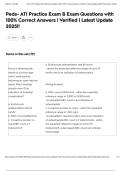
Peds- ATI Practice Exam B Exam Questions with
100% Correct Answers | Verified | Latest Update
2025!!
Save
Terms in this set (79)
a. Erythrocyte sedimentation rate 18 mm/hr
Nurse is reviewing lab - above the expected reference range of up to 10
results of a school age mm/hr and is an indication of osteomyelitis.
child 1 week postop
following an open fracture
repair. Which findings Wrong Answers:
should nurse ID as
indication of potential b. WBC count 6,200/mm3:- within the expected
complication? reference range of 5,000 to 10,000/mm3.
-An elevated WBC count is an indication of
a. Erythrocyte osteomyelitis.
sedimentation rate 18 c. C-reactive protein 1.4 mg/L:- within the expected
mm/hr reference range of <10.0 mg/L.
b. WBC count 6,200/mm3 -An elevated C-reactive protein level is an indication
c. C-reactive protein 1.4 of osteomyelitis.RBC count 4.7 million/mm3:- within
mg/LRBC count 4.7 the expected reference range of 4.0 to 5.5
million/mm3 million/mm3. A decreased RBC count can indicate
hemorrhage.
https://quizlet.com/1062310878/peds-ati-practice-exam-b-exam-questions-with-100-correct-answers-verified-latest-update-2025-flash-cards/?new 1/51
,7/26/25, 11:20 AM Peds- ATI Practice Exam B Exam Questions with 100% Correct Answers | Verified | Latest Update 2025!! Flashcards | Quizlet
d. Use a semipermeable transparent dressing to cover
Nurse planning care for
the site
school age child with
- The nurse should cover the site with a
tunneled CVA device.
semipermeable transparent dressing to reduce the
Which interventions
risk of infection.
should the nurse include
in plan?
Wrong Answers:
a. Use sterile scissors to
a. Use sterile scissors to remove the dressing from the
remove the dressing from
site
the site.
- The nurse should avoid the use of scissors when
b. Irrigate each lumen
performing dressing changes because this can result
weekly with 10 mL of 0.9%
in accidental cutting of the catheter.
sodium chloride solution
b. Irrigate each lumen weekly with 10 mL of 0.9%
when not in use
sodium chloride solution when not in use
c. Access the site using a
- The nurse should flush each lumen of the catheter
noncoring angled needle
with a heparin solution daily when not in use.
d. Use a semipermeable
c. Access the site using a noncoring angled needle
transparent dressing to
- The nurse should use a noncoring angled or straight
cover the site
needle when accessing an implanted port.
https://quizlet.com/1062310878/peds-ati-practice-exam-b-exam-questions-with-100-correct-answers-verified-latest-update-2025-flash-cards/?new 2/51
,7/26/25, 11:20 AM Peds- ATI Practice Exam B Exam Questions with 100% Correct Answers | Verified | Latest Update 2025!! Flashcards | Quizlet
d. Increase fat content in the child's diet to 40% of
total calories
- A child who has cystic fibrosis is unable to properly
digest fats due to fibrosis of the pancreas and limited
Nurse is planning care to secretion of pancreatic enzymes. The nurse should
address nutritional needs increase the child's fat intake to 35% to 40% of total
for preschooler with cystic caloric intake.
fibrosis. Which
interventions should the
nurse include in plans? Wrong Answers:
a. Administer pancreatic a. Administer pancreatic enzymes 2 hr after meals
enzymes 2 hr after meals. - The nurse should plan to administer pancreatic
b. Discontinue the use of enzymes within 30 min of meals and snacks to replace
pancreatic enzymes if the enzymes lost with cystic fibrosis.
steatorrhea develops. b. Discontinue the use of pancreatic enzymes if
c. Limit fluid intake to 750 steatorrhea develops
mL per day. - A child who has cystic fibrosis and develops
d. Increase fat content in steatorrhea, or fatty stools, might need to have their
the child's diet to 40% of dosage of pancreatic enzyme increased by their
total calories. provider until the steatorrhea resolves.
c. Limit fluid intake to 750 mL per day
- The nurse should encourage fluid intake, rather than
restrict it, to prevent dehydration caused by the loss
of sodium and chloride through perspiration.
https://quizlet.com/1062310878/peds-ati-practice-exam-b-exam-questions-with-100-correct-answers-verified-latest-update-2025-flash-cards/?new 3/51
, 7/26/25, 11:20 AM Peds- ATI Practice Exam B Exam Questions with 100% Correct Answers | Verified | Latest Update 2025!! Flashcards | Quizlet
a. Wheezes
- high-pitched, musical or whistling-like sounds heard
primarily on expiration as air passes through and
vibrates narrowed airways.
Wrong answers:
Nurse in ED auscultates
b. Crackles
lungs of adolescent
- high-pitched, short, and noncontinuous sounds
experiencing dyspnea.
usually heard at the end of inspiration. Crackles occur
Nurse should ID sound as
when air expands deflated alveoli or when the
what?
passage of air through small airways is disrupted.
c. Pleural friction rub
a. Wheezes
- a loud, rough, grating sound that can be heard
b. Crackles
during inspiration or expiration. A pleural friction rub
c. Pleural friction rub
occurs when the pleurae are inflamed and the
d. Rhonchi
surfaces rub together.
d. Rhonchi
- low-pitched, continuous sounds that have a snore-
like quality and are usually louder during expiration.
Rhonchi occur when the larger airways are
obstructed.
c. Difficulty concentrating
- The nurse should identify that irritability, inability to
Nurse assesses school follow commands, and difficulty concentrating are
age child with manifestations of IICP due to decreased blood flow
infratentorial brain tumor. within the brain and pressure on the brainstem.
Which findings should the
nurse ID as manifestation
of IICP? Wrong Answers:
a. Hypotension
a. Hypotension - HTN is a late manifestation of IICP due to
b. Reports insomnia compression of the brain vessels.
c. Difficulty concentrating b. Reports insomnia
d. Tachycardia - somnolence and lethargy are manifestations of IICP.
c. Tachycardia
- bradycardia is a late manifestation of IICP.
https://quizlet.com/1062310878/peds-ati-practice-exam-b-exam-questions-with-100-correct-answers-verified-latest-update-2025-flash-cards/?new 4/51
Peds- ATI Practice Exam B Exam Questions with
100% Correct Answers | Verified | Latest Update
2025!!
Save
Terms in this set (79)
a. Erythrocyte sedimentation rate 18 mm/hr
Nurse is reviewing lab - above the expected reference range of up to 10
results of a school age mm/hr and is an indication of osteomyelitis.
child 1 week postop
following an open fracture
repair. Which findings Wrong Answers:
should nurse ID as
indication of potential b. WBC count 6,200/mm3:- within the expected
complication? reference range of 5,000 to 10,000/mm3.
-An elevated WBC count is an indication of
a. Erythrocyte osteomyelitis.
sedimentation rate 18 c. C-reactive protein 1.4 mg/L:- within the expected
mm/hr reference range of <10.0 mg/L.
b. WBC count 6,200/mm3 -An elevated C-reactive protein level is an indication
c. C-reactive protein 1.4 of osteomyelitis.RBC count 4.7 million/mm3:- within
mg/LRBC count 4.7 the expected reference range of 4.0 to 5.5
million/mm3 million/mm3. A decreased RBC count can indicate
hemorrhage.
https://quizlet.com/1062310878/peds-ati-practice-exam-b-exam-questions-with-100-correct-answers-verified-latest-update-2025-flash-cards/?new 1/51
,7/26/25, 11:20 AM Peds- ATI Practice Exam B Exam Questions with 100% Correct Answers | Verified | Latest Update 2025!! Flashcards | Quizlet
d. Use a semipermeable transparent dressing to cover
Nurse planning care for
the site
school age child with
- The nurse should cover the site with a
tunneled CVA device.
semipermeable transparent dressing to reduce the
Which interventions
risk of infection.
should the nurse include
in plan?
Wrong Answers:
a. Use sterile scissors to
a. Use sterile scissors to remove the dressing from the
remove the dressing from
site
the site.
- The nurse should avoid the use of scissors when
b. Irrigate each lumen
performing dressing changes because this can result
weekly with 10 mL of 0.9%
in accidental cutting of the catheter.
sodium chloride solution
b. Irrigate each lumen weekly with 10 mL of 0.9%
when not in use
sodium chloride solution when not in use
c. Access the site using a
- The nurse should flush each lumen of the catheter
noncoring angled needle
with a heparin solution daily when not in use.
d. Use a semipermeable
c. Access the site using a noncoring angled needle
transparent dressing to
- The nurse should use a noncoring angled or straight
cover the site
needle when accessing an implanted port.
https://quizlet.com/1062310878/peds-ati-practice-exam-b-exam-questions-with-100-correct-answers-verified-latest-update-2025-flash-cards/?new 2/51
,7/26/25, 11:20 AM Peds- ATI Practice Exam B Exam Questions with 100% Correct Answers | Verified | Latest Update 2025!! Flashcards | Quizlet
d. Increase fat content in the child's diet to 40% of
total calories
- A child who has cystic fibrosis is unable to properly
digest fats due to fibrosis of the pancreas and limited
Nurse is planning care to secretion of pancreatic enzymes. The nurse should
address nutritional needs increase the child's fat intake to 35% to 40% of total
for preschooler with cystic caloric intake.
fibrosis. Which
interventions should the
nurse include in plans? Wrong Answers:
a. Administer pancreatic a. Administer pancreatic enzymes 2 hr after meals
enzymes 2 hr after meals. - The nurse should plan to administer pancreatic
b. Discontinue the use of enzymes within 30 min of meals and snacks to replace
pancreatic enzymes if the enzymes lost with cystic fibrosis.
steatorrhea develops. b. Discontinue the use of pancreatic enzymes if
c. Limit fluid intake to 750 steatorrhea develops
mL per day. - A child who has cystic fibrosis and develops
d. Increase fat content in steatorrhea, or fatty stools, might need to have their
the child's diet to 40% of dosage of pancreatic enzyme increased by their
total calories. provider until the steatorrhea resolves.
c. Limit fluid intake to 750 mL per day
- The nurse should encourage fluid intake, rather than
restrict it, to prevent dehydration caused by the loss
of sodium and chloride through perspiration.
https://quizlet.com/1062310878/peds-ati-practice-exam-b-exam-questions-with-100-correct-answers-verified-latest-update-2025-flash-cards/?new 3/51
, 7/26/25, 11:20 AM Peds- ATI Practice Exam B Exam Questions with 100% Correct Answers | Verified | Latest Update 2025!! Flashcards | Quizlet
a. Wheezes
- high-pitched, musical or whistling-like sounds heard
primarily on expiration as air passes through and
vibrates narrowed airways.
Wrong answers:
Nurse in ED auscultates
b. Crackles
lungs of adolescent
- high-pitched, short, and noncontinuous sounds
experiencing dyspnea.
usually heard at the end of inspiration. Crackles occur
Nurse should ID sound as
when air expands deflated alveoli or when the
what?
passage of air through small airways is disrupted.
c. Pleural friction rub
a. Wheezes
- a loud, rough, grating sound that can be heard
b. Crackles
during inspiration or expiration. A pleural friction rub
c. Pleural friction rub
occurs when the pleurae are inflamed and the
d. Rhonchi
surfaces rub together.
d. Rhonchi
- low-pitched, continuous sounds that have a snore-
like quality and are usually louder during expiration.
Rhonchi occur when the larger airways are
obstructed.
c. Difficulty concentrating
- The nurse should identify that irritability, inability to
Nurse assesses school follow commands, and difficulty concentrating are
age child with manifestations of IICP due to decreased blood flow
infratentorial brain tumor. within the brain and pressure on the brainstem.
Which findings should the
nurse ID as manifestation
of IICP? Wrong Answers:
a. Hypotension
a. Hypotension - HTN is a late manifestation of IICP due to
b. Reports insomnia compression of the brain vessels.
c. Difficulty concentrating b. Reports insomnia
d. Tachycardia - somnolence and lethargy are manifestations of IICP.
c. Tachycardia
- bradycardia is a late manifestation of IICP.
https://quizlet.com/1062310878/peds-ati-practice-exam-b-exam-questions-with-100-correct-answers-verified-latest-update-2025-flash-cards/?new 4/51


