

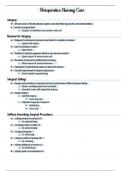
Perioperative Nursing Care
Surgery
• Art and science of treating diseases, injuries, and deformities by operation and instrumentation
• Involves a surgical team
o Surgeon, pt, anesthesia care provider, nurse, etc.
Reasons for Surgery
• Diagnosis: to determine the presence and extent of a condition or disease
o Lymph node biopsy
• Cure: to eliminate or repair
o Appendicitis
• Palliation: to alleviate symptoms without a cure (provide comfort)
o Spinal cancerà remove nerve root
• Prevention: to prevent a condition from occurring
o Mole removalà prevent melanoma
• Exploration: to determine the nature or extent of the disease
• Cosmetic improvement: to improve appearance
o Breast implants, appendectomy
Surgical Seings
• Surgery can be elective or emergent and can be performed in different surgical seings:
o Elective: carefully planned and scheduled
o Emergent: occurs with unexpected urgency
• Surgical seing
o Inpatient surgery
§ Same-day adm.
o Outpatient (majority of surgeries)
§ Ambulatory
§ Same-day
Suffixes Describing Surgical Procedures
• -ectomy: excision or removal of
o Ex. appendectomy
• -orrhaphy: repair or suture of
o Ex. herniorrhaphy
• -oscopy: looking into
o E.x. endoscopy
• -ostomy: creation of opening into
o Ex. colostomy
• -otomy: cuing into or incision of
o Ex. tracheotomy
• -plasty: repair or reconstruction of
, o Ex. mammoplasty
• Lysis: destruction of
o Electrolysis
Role of RN: Preop
• Patient interview
o Can occur in advance or the day of surgery
o Primary purpose:
§ Obtain the pts health info and past med hx (food/drug allergies)
§ Provide clarification and insights about the planned surgery
• DO NOT educate on risks and benefitsà surgeons job
§ Assess the pts emotional state and readiness for surgery
§ Offer the pt and family an opportunity to ask questions
Complete a Nursing Assessment of Pre-op pt
• Why complete a nursing assessment?
o The overall goal is to identify risk factors and plan care to ensure pt safety
§ Establish a baseline for comparison
§ Identify risk factors
§ Plan care to ensure pt safety
Components of Nursing Assessment
• Psychosocial assessment
o Anxiety
o Common fears
o Hope
• Health history
o Diagnosed medical conditions (previous and current)
o Previous surgeries and problems
o Current need for surgery
o Menstrual/obstetric hx (date of last period)
o Familial diseases
o Reactions/ problems to anesthesia (pt or family)
• Current medications
o Prescription and OTC
§ Antihypertensives: increased risk of shock because of anesthetic
§ Anticoagulants: increases bleeding time
o Herbs
§ Ginseng can increase BP
§ Garlic, Vitamin E, Ginkgo, Fish oil can increase bleeding
• Older adults are more likely to use because of cardiovascular effects
o Dietary supplements
o Recreational
§ Drugs
§ Alcohol à can go into withdrawal during or after surgery
Surgery
• Art and science of treating diseases, injuries, and deformities by operation and instrumentation
• Involves a surgical team
o Surgeon, pt, anesthesia care provider, nurse, etc.
Reasons for Surgery
• Diagnosis: to determine the presence and extent of a condition or disease
o Lymph node biopsy
• Cure: to eliminate or repair
o Appendicitis
• Palliation: to alleviate symptoms without a cure (provide comfort)
o Spinal cancerà remove nerve root
• Prevention: to prevent a condition from occurring
o Mole removalà prevent melanoma
• Exploration: to determine the nature or extent of the disease
• Cosmetic improvement: to improve appearance
o Breast implants, appendectomy
Surgical Seings
• Surgery can be elective or emergent and can be performed in different surgical seings:
o Elective: carefully planned and scheduled
o Emergent: occurs with unexpected urgency
• Surgical seing
o Inpatient surgery
§ Same-day adm.
o Outpatient (majority of surgeries)
§ Ambulatory
§ Same-day
Suffixes Describing Surgical Procedures
• -ectomy: excision or removal of
o Ex. appendectomy
• -orrhaphy: repair or suture of
o Ex. herniorrhaphy
• -oscopy: looking into
o E.x. endoscopy
• -ostomy: creation of opening into
o Ex. colostomy
• -otomy: cuing into or incision of
o Ex. tracheotomy
• -plasty: repair or reconstruction of
, o Ex. mammoplasty
• Lysis: destruction of
o Electrolysis
Role of RN: Preop
• Patient interview
o Can occur in advance or the day of surgery
o Primary purpose:
§ Obtain the pts health info and past med hx (food/drug allergies)
§ Provide clarification and insights about the planned surgery
• DO NOT educate on risks and benefitsà surgeons job
§ Assess the pts emotional state and readiness for surgery
§ Offer the pt and family an opportunity to ask questions
Complete a Nursing Assessment of Pre-op pt
• Why complete a nursing assessment?
o The overall goal is to identify risk factors and plan care to ensure pt safety
§ Establish a baseline for comparison
§ Identify risk factors
§ Plan care to ensure pt safety
Components of Nursing Assessment
• Psychosocial assessment
o Anxiety
o Common fears
o Hope
• Health history
o Diagnosed medical conditions (previous and current)
o Previous surgeries and problems
o Current need for surgery
o Menstrual/obstetric hx (date of last period)
o Familial diseases
o Reactions/ problems to anesthesia (pt or family)
• Current medications
o Prescription and OTC
§ Antihypertensives: increased risk of shock because of anesthetic
§ Anticoagulants: increases bleeding time
o Herbs
§ Ginseng can increase BP
§ Garlic, Vitamin E, Ginkgo, Fish oil can increase bleeding
• Older adults are more likely to use because of cardiovascular effects
o Dietary supplements
o Recreational
§ Drugs
§ Alcohol à can go into withdrawal during or after surgery


