Combat Lifesaver Course Study Guide.
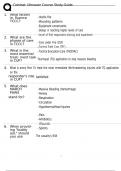
1. What factors
in- fluence -Hostile fire
TCCC? -Wounding patterns
-Equipment constraints
-Delays in reaching higher levels of care
-Level of first responders training and experience
2. What are the
phases of care
in TCCC? -Care under Fire (CUF)
-Tactical Field Care (TFC)
3. What is the -Tactical Evacuation Care (TACEVAC)
most essential
treat- ment task
in CUF? Tourniquet (TQ) application to stop massive bleeding
4. What is every first To treat the most immediate life-threatening injuries with TQ application
on the
responder's role battlefield
in CUF?
5. What does
MARCH -Massive Bleeding (Hemorrhage)
PAWS -Airway
stand for? -Respiration
-Circulation
-Hypothermia/Head Injuries
-Pain
-Antibiotics
-Wounds
6. When provid- -Splints
ing "buddy
aid," should
you use The casualty's JFAK
1/
15
, Combat Lifesaver Course
2021
Study online at https://quizlet.com/_9id5di
your JFAK or
the casualty's
JFAK?
Tourniquet (TQ)
7. What is the
most important
lifesav- ing item
in the JFAK?
8. When should
medications All medication and medical-garde items should be replaced if expired or
and medical- the expiration date is before your expected deployment timeframe
grade
equipment be
replaced in the
JFAK?
9. What is Care
Un- der Fire?
Care Under Fire is the care given by the first responder at the scene of the
injury while they and the casualty are still under ettective hostile fire or
near the threat. Available medical equipment is limited to that carried
10. What
are the in the individual Service member's JFAK
signs
of life-threaten- Bright red blood is pooling on the
ing bleeding? ground The overlying clothes are soaked
11. How long with blood
does it take There is a traumatic AMPUTATION of the arm or leg
to bleed to There is a pulsatile (pulsing) or steady bleeding from the
death
from a
complete wound 3 minutes
femoral artery
and vein
disrup- tion?
2/
15
1. What factors
in- fluence -Hostile fire
TCCC? -Wounding patterns
-Equipment constraints
-Delays in reaching higher levels of care
-Level of first responders training and experience
2. What are the
phases of care
in TCCC? -Care under Fire (CUF)
-Tactical Field Care (TFC)
3. What is the -Tactical Evacuation Care (TACEVAC)
most essential
treat- ment task
in CUF? Tourniquet (TQ) application to stop massive bleeding
4. What is every first To treat the most immediate life-threatening injuries with TQ application
on the
responder's role battlefield
in CUF?
5. What does
MARCH -Massive Bleeding (Hemorrhage)
PAWS -Airway
stand for? -Respiration
-Circulation
-Hypothermia/Head Injuries
-Pain
-Antibiotics
-Wounds
6. When provid- -Splints
ing "buddy
aid," should
you use The casualty's JFAK
1/
15
, Combat Lifesaver Course
2021
Study online at https://quizlet.com/_9id5di
your JFAK or
the casualty's
JFAK?
Tourniquet (TQ)
7. What is the
most important
lifesav- ing item
in the JFAK?
8. When should
medications All medication and medical-garde items should be replaced if expired or
and medical- the expiration date is before your expected deployment timeframe
grade
equipment be
replaced in the
JFAK?
9. What is Care
Un- der Fire?
Care Under Fire is the care given by the first responder at the scene of the
injury while they and the casualty are still under ettective hostile fire or
near the threat. Available medical equipment is limited to that carried
10. What
are the in the individual Service member's JFAK
signs
of life-threaten- Bright red blood is pooling on the
ing bleeding? ground The overlying clothes are soaked
11. How long with blood
does it take There is a traumatic AMPUTATION of the arm or leg
to bleed to There is a pulsatile (pulsing) or steady bleeding from the
death
from a
complete wound 3 minutes
femoral artery
and vein
disrup- tion?
2/
15