NGN NCLEX Review Study Complete Test.
\
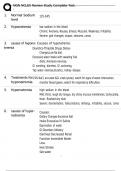
1. Normal Sodium 135-145
level
2. Hyponatremia low sodium in the blood
Chronic: Anorexia, Nausea, Emesis, Muscular, Weakness, Irritability
Severe: gait changes, stupor, seizures, coma
3. causes of hypona- Causes of hyponatremia:
tremia Diuretics-Thiazide Drugs Dietary
Changes,Low Na diet,
Excessive water intake with sweating Fad
diets, Anorexia nervosa.
GI vomiting, diarrhea, GI suctioning,
Tap water enemas,diuretics, kidney disease
4. Treatments for 0.9% NaCl, accurate I&O, vitals (pulse), watch for signs of water intoxication,
hyponatremia monitor blood gases, watch for respiratory diflculties
5. Hypernatremia high sodium in the blood
Mild: thirst, rough dry tongue, dry sticky mucous membranes, tachycardia,
fever, flushed dry skin
Severe: disorientation, hallucinations, lethargy, irritability, seizure, coma
6. causes of hyper- Causes:
natremia Dietary Changes-Excessive Salt
intake Excessive IV Saline
Deprivation of water
GI Disorders (Watery
Diarrhea) Decreased Renal
Function Insensible Water
Loss
Heat Stroke
Salt water
1/
42
, NGN NCLEX Review Study Complete Test.
\
d
r
o
w
n
i
n
g
H
e
a
d
I
n
j
u
r
y
T
r
a
u
m
a
2/
42
, NGN NCLEX Review Study Complete Test.
\
7. treatments for hy- restrict sodium intake, identify drugs that are sodium retaining, monitor
Na levels
pernatremia daily, check for rales, edema in lower extremities, I&O, Urine specific gravity
8. urine >1.015
specific
gravity level
3.5-5.0 mEq/L
9. normal
potassi- um
levels
10. hypokalemia low potassium
nausea, vomiting, diarrhea, vertigo, ventricular arrhythmias,
hypotension, polyuria, muscle cramps, alkalosis, lethargy
11. causes of hypona- Malnutrition; Alcoholism
tremia Potassium wasting diuretics
Renal Failure, Hyperaldosteronism Steroids
GI Losses;laxative abuse,diarrhea,vomiting, gastric
suctioning
Trauma & injury, excessive sweating
Alkalosis, Insulin
12. treatments for hy- oral supplements or food replacement, K Cl(20-40) meq, Kay Ciel,
Kaochlor, oral
pokalemia potassium is extremely irritating to the stomach and should be diluted
in water
13. hyperkalemia high potassium
Abd cramps
Tachycardia
Widened QRS
3/
42
, NGN NCLEX Review Study Complete Test.
\
Ventricular arrhythmia
Cardiac Arrest
4/
42
\
1. Normal Sodium 135-145
level
2. Hyponatremia low sodium in the blood
Chronic: Anorexia, Nausea, Emesis, Muscular, Weakness, Irritability
Severe: gait changes, stupor, seizures, coma
3. causes of hypona- Causes of hyponatremia:
tremia Diuretics-Thiazide Drugs Dietary
Changes,Low Na diet,
Excessive water intake with sweating Fad
diets, Anorexia nervosa.
GI vomiting, diarrhea, GI suctioning,
Tap water enemas,diuretics, kidney disease
4. Treatments for 0.9% NaCl, accurate I&O, vitals (pulse), watch for signs of water intoxication,
hyponatremia monitor blood gases, watch for respiratory diflculties
5. Hypernatremia high sodium in the blood
Mild: thirst, rough dry tongue, dry sticky mucous membranes, tachycardia,
fever, flushed dry skin
Severe: disorientation, hallucinations, lethargy, irritability, seizure, coma
6. causes of hyper- Causes:
natremia Dietary Changes-Excessive Salt
intake Excessive IV Saline
Deprivation of water
GI Disorders (Watery
Diarrhea) Decreased Renal
Function Insensible Water
Loss
Heat Stroke
Salt water
1/
42
, NGN NCLEX Review Study Complete Test.
\
d
r
o
w
n
i
n
g
H
e
a
d
I
n
j
u
r
y
T
r
a
u
m
a
2/
42
, NGN NCLEX Review Study Complete Test.
\
7. treatments for hy- restrict sodium intake, identify drugs that are sodium retaining, monitor
Na levels
pernatremia daily, check for rales, edema in lower extremities, I&O, Urine specific gravity
8. urine >1.015
specific
gravity level
3.5-5.0 mEq/L
9. normal
potassi- um
levels
10. hypokalemia low potassium
nausea, vomiting, diarrhea, vertigo, ventricular arrhythmias,
hypotension, polyuria, muscle cramps, alkalosis, lethargy
11. causes of hypona- Malnutrition; Alcoholism
tremia Potassium wasting diuretics
Renal Failure, Hyperaldosteronism Steroids
GI Losses;laxative abuse,diarrhea,vomiting, gastric
suctioning
Trauma & injury, excessive sweating
Alkalosis, Insulin
12. treatments for hy- oral supplements or food replacement, K Cl(20-40) meq, Kay Ciel,
Kaochlor, oral
pokalemia potassium is extremely irritating to the stomach and should be diluted
in water
13. hyperkalemia high potassium
Abd cramps
Tachycardia
Widened QRS
3/
42
, NGN NCLEX Review Study Complete Test.
\
Ventricular arrhythmia
Cardiac Arrest
4/
42