

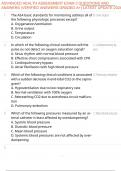
ADVANCED HEALTH ASSESSMENT EXAM 3 QUESTIONS AND
Advanced Health Assessments Exam 3
ANSWERS (VERIFIED ANSWERS GRADED A+) LATEST UPDATE 2024
Study online at https://quizlet.com/_h15in0
1. The ASA basic standards for monitoring address all of B. Urine Output
the following physiologic processes except?
A. Oxygenation/ventilation
B. Urine output
C. Temperature
D. Circulation
2. In which of the following clinical conditions will the C. Cardiopulmonary by-
pulse ox not detect an oxygen saturation signal? pass
A. Sinus rhythm with normal blood pressure
B. Effective chest compressions associated with CPR
C. Cardiopulmonary bypass
D. Atrial fibrillation with high blood pressure
3. Which of the following clinical conditions is associated D. Pulmonary embolism
with a sudden decrease in end-tidal CO2 on the capno-
gram?
A. Hypoventilation due to low respiratory rate
B. Normal ventilation with 100% oxygen
C. Rebreathing CO2 due to anesthesia circuit malfunc-
tion
D. Pulmonary embolism
4. Which of the following pressures measured by an ar- C. Mean blood pressure
terial catheter is least affected by overdampening?
A. Systolic blood pressure
B. Diastolic blood pressure
C. Mean blood pressure
D. Systemic blood pressures are not affected by over-
dampening
5.
, Advanced Health Assessments Exam 3
Study online at https://quizlet.com/_h15in0
Which of the following is a 'dynamic' technique for B. Pulse pressure variation
measuring volume status? with respiratory cycle
A. Central venous pressure
B. Pulse pressure variation with respiratory cycle
C. Pulmonary artery pressure
D. Urine output
6. When should a patient's vital signs, O2 saturation, and D. Upon arrival, 3 times
level of pain be documented in PACU? every 5 minutes, then
A. Upon arrival and at discharge every 15 minutes, then at
B. Upon arrival and three times every 5 minutes discharge
C. Upon arrival, every 15 minutes, and at discharge
D. Upon arrival, 3 times every 5 minutes, then every 15
minutes, then at discharge
7. Regarding urination in the PACU, which of the follow- B. Some patients can be
ing statements is correct? discharged before they
A. It is mandatory for a patient to void prior to PACU void if urination is carefully
discharge tracked
B. Some patients can be discharged before they void
if urination is carefully tracked
C. Only patients with urogenital pathology should be
tracked for voiding
D. All patients can be discharged safely without check-
ing urination
8. Which of the following can mask hypovolemia if urine C. Both
output is assessed?
A. Impaired renal tubular function
B. Glycosuria
C. Both
D. None
, Advanced Health Assessments Exam 3
Study online at https://quizlet.com/_h15in0
9. Which of the following can exacerbate myocardial is- D. All of the above
chemia?
A. Anemia
B. Hypoxemia
C. Inadequate diastolic pressure
D. All of the above
10. Which of the following statements is correct? C. Sepsis may generate
A. Regional anesthesia can produce increased SVR hypotension
B. Alpha-adrenergic blockade can provoke hyperten-
sion
C. Sepsis may generate hypotension
D. Acute steroid deficiency often provokes hyperten-
sion
11. Which of the following is the least likely cause of hy- B. Warming
pertension in the PACU?
A. Anxiety
B. Warming
C. Full bladder
D. Pain
12. Which of the following factors can predispose patients D. All of the above
to laryngospasm?
A. Smoking
B. Recent URI
C. Upper airway surgery
D. All of the above
13. Which of the following drugs can prolong neuromus- A. Antibiotics
cular blockade?
A. Antibiotics
B. Antiemetics
, Advanced Health Assessments Exam 3
Study online at https://quizlet.com/_h15in0
C. Vasopressors
D. All of the above
14. Which of the following best reflects inadequate tissue C. Lactic acidemia
oxygenation?
A. PaO2
B. PaCO2
C. Lactic acidemia
D. None of the above
15. Which of the following factors does not affect FRC B. Rate of ventilation
during surgery?
A. Obesity
B. Rate of ventilation
C. Peritoneal insufflation
D. Unusual positioning
16. Which of the following is a side effect of droperidol? A. QT prolongation
A. QT prolongation
B. Hypertension
C. Both
D. None
17. Which of the following statements is correct? A. Oliguria in PACU usually
A. Oliguria in PACU usually reflects a normal renal reflects a normal renal re-
response to hypovolemia sponse to hypovolemia
B. Oliguria in PACU usually indicates an abnormal re-
nal function
C. Oliguria in PACU usually indicates urinary retention
after opioids
D. None of the above
18. D. All of the above
Advanced Health Assessments Exam 3
ANSWERS (VERIFIED ANSWERS GRADED A+) LATEST UPDATE 2024
Study online at https://quizlet.com/_h15in0
1. The ASA basic standards for monitoring address all of B. Urine Output
the following physiologic processes except?
A. Oxygenation/ventilation
B. Urine output
C. Temperature
D. Circulation
2. In which of the following clinical conditions will the C. Cardiopulmonary by-
pulse ox not detect an oxygen saturation signal? pass
A. Sinus rhythm with normal blood pressure
B. Effective chest compressions associated with CPR
C. Cardiopulmonary bypass
D. Atrial fibrillation with high blood pressure
3. Which of the following clinical conditions is associated D. Pulmonary embolism
with a sudden decrease in end-tidal CO2 on the capno-
gram?
A. Hypoventilation due to low respiratory rate
B. Normal ventilation with 100% oxygen
C. Rebreathing CO2 due to anesthesia circuit malfunc-
tion
D. Pulmonary embolism
4. Which of the following pressures measured by an ar- C. Mean blood pressure
terial catheter is least affected by overdampening?
A. Systolic blood pressure
B. Diastolic blood pressure
C. Mean blood pressure
D. Systemic blood pressures are not affected by over-
dampening
5.
, Advanced Health Assessments Exam 3
Study online at https://quizlet.com/_h15in0
Which of the following is a 'dynamic' technique for B. Pulse pressure variation
measuring volume status? with respiratory cycle
A. Central venous pressure
B. Pulse pressure variation with respiratory cycle
C. Pulmonary artery pressure
D. Urine output
6. When should a patient's vital signs, O2 saturation, and D. Upon arrival, 3 times
level of pain be documented in PACU? every 5 minutes, then
A. Upon arrival and at discharge every 15 minutes, then at
B. Upon arrival and three times every 5 minutes discharge
C. Upon arrival, every 15 minutes, and at discharge
D. Upon arrival, 3 times every 5 minutes, then every 15
minutes, then at discharge
7. Regarding urination in the PACU, which of the follow- B. Some patients can be
ing statements is correct? discharged before they
A. It is mandatory for a patient to void prior to PACU void if urination is carefully
discharge tracked
B. Some patients can be discharged before they void
if urination is carefully tracked
C. Only patients with urogenital pathology should be
tracked for voiding
D. All patients can be discharged safely without check-
ing urination
8. Which of the following can mask hypovolemia if urine C. Both
output is assessed?
A. Impaired renal tubular function
B. Glycosuria
C. Both
D. None
, Advanced Health Assessments Exam 3
Study online at https://quizlet.com/_h15in0
9. Which of the following can exacerbate myocardial is- D. All of the above
chemia?
A. Anemia
B. Hypoxemia
C. Inadequate diastolic pressure
D. All of the above
10. Which of the following statements is correct? C. Sepsis may generate
A. Regional anesthesia can produce increased SVR hypotension
B. Alpha-adrenergic blockade can provoke hyperten-
sion
C. Sepsis may generate hypotension
D. Acute steroid deficiency often provokes hyperten-
sion
11. Which of the following is the least likely cause of hy- B. Warming
pertension in the PACU?
A. Anxiety
B. Warming
C. Full bladder
D. Pain
12. Which of the following factors can predispose patients D. All of the above
to laryngospasm?
A. Smoking
B. Recent URI
C. Upper airway surgery
D. All of the above
13. Which of the following drugs can prolong neuromus- A. Antibiotics
cular blockade?
A. Antibiotics
B. Antiemetics
, Advanced Health Assessments Exam 3
Study online at https://quizlet.com/_h15in0
C. Vasopressors
D. All of the above
14. Which of the following best reflects inadequate tissue C. Lactic acidemia
oxygenation?
A. PaO2
B. PaCO2
C. Lactic acidemia
D. None of the above
15. Which of the following factors does not affect FRC B. Rate of ventilation
during surgery?
A. Obesity
B. Rate of ventilation
C. Peritoneal insufflation
D. Unusual positioning
16. Which of the following is a side effect of droperidol? A. QT prolongation
A. QT prolongation
B. Hypertension
C. Both
D. None
17. Which of the following statements is correct? A. Oliguria in PACU usually
A. Oliguria in PACU usually reflects a normal renal reflects a normal renal re-
response to hypovolemia sponse to hypovolemia
B. Oliguria in PACU usually indicates an abnormal re-
nal function
C. Oliguria in PACU usually indicates urinary retention
after opioids
D. None of the above
18. D. All of the above


