

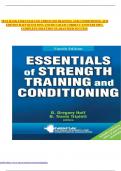
TEST BANK ESSENTIALS OF STRENGTH TRAINING AND CONDITIONING 4TH
EDITION HAFF QUESTIONS AND DETAILED CORRECT ANSWERS 100%
COMPLETE SOLUTION GUARANTEED SUCCESS
mailto:https://www.stuvia.com/en-us/user/techgrades
, TABLE OF CONTENT
1. Chapter 1 - Structure and Function of Body Systems
2. Chapter 2 - Biomechanics of Resistance Exercise
3. Chapter 3 - Bioenergetics of Exercise and Training
4. Chapter 4 - Endocrine Responses to Resistance Exercise
5. Chapter 5 - Adaptations to Anaerobic Training Programs
6. Chapter 6 - Adaptations to aerobic Endurance Training Programs
7. Chapter 7 - Age- and Sex-Related Differences and Their Implications for Resistance Exercise
8. Chapter 8 - Psychology of Athletic Preparation and Performance
9. Chapter 9 - Basic Nutrition Factors in Health
10. Chapter 10 - Nutrition Strategies for Maximizing Performance
11. Chapter 11 - Performance-Enhancing Substances and Methods
12. Chapter 12 - Principles of Test Selection and Administration
13. Chapter 13 - Administration, Scoring, and Interpretation of Selected Tests
14. Chapter 14 - Warm-Up and Flexibility Training
15. Chapter 15 - Exercise Technique for Free Weight and Machine Training
16. Chapter 16 - Exercise Technique for Alternative Modes and Nontraditional Implement Training
17. Chapter 17 - Program Design for Resistance Training
18. Chapter 18 - Program Design and Technique for Plyometric Training
mailto:https://www.stuvia.com/en-us/user/techgrades
, 1. The pelvis is located to the patella.
a. inferior
b. medial
ANS >>c.
superior
d. lateral
2. Which of the following is the smallest contractile unit of skeletal muscle?
a. myosin
ANS >>b.
sarcomere
c. epimysium
d. sarcolemma
T E S T B A N K S
E L L E R . C O M
3. Which of the following describes Type I muscle fibers?
a. inefficient and easily fatigable
b. rapid force development capabilities
c. high myosin ATPase activity
mailto:https://www.stuvia.com/en-us/user/techgrades
, ANS >>d. fatigue resistant with high aerobic energy supply
4. Which of the following describes the flow of blood?
ANS >>a. right atrium, right ventricle, lungs, left atrium, left ventricle, body
b. left ventricle, left atrium, body, right ventricle, right atrium, lungs
c. body, right ventricle, left ventricle, lungs, right atrium, left atrium
d. right ventricle, right atrium, body, left ventricle, left atrium, lungs
5. On average, how many times per minute does the SA node discharge at rest? a. 10-30
b. 35-55 ANS >>c. 60-80
d. 85-105
T E S T B A N K S E L L E R . C O M
6. Which of the following are the two main divisions of the skeletal system?
a. upper and lower body ANS >>b. appendicular and axial
c. medial and lateral
d. endergonic and exergonic
7. Some of the highest bone mineral densities have been seen in which of the following types
ofathletes?
mailto:https://www.stuvia.com/en-us/user/techgrades
EDITION HAFF QUESTIONS AND DETAILED CORRECT ANSWERS 100%
COMPLETE SOLUTION GUARANTEED SUCCESS
mailto:https://www.stuvia.com/en-us/user/techgrades
, TABLE OF CONTENT
1. Chapter 1 - Structure and Function of Body Systems
2. Chapter 2 - Biomechanics of Resistance Exercise
3. Chapter 3 - Bioenergetics of Exercise and Training
4. Chapter 4 - Endocrine Responses to Resistance Exercise
5. Chapter 5 - Adaptations to Anaerobic Training Programs
6. Chapter 6 - Adaptations to aerobic Endurance Training Programs
7. Chapter 7 - Age- and Sex-Related Differences and Their Implications for Resistance Exercise
8. Chapter 8 - Psychology of Athletic Preparation and Performance
9. Chapter 9 - Basic Nutrition Factors in Health
10. Chapter 10 - Nutrition Strategies for Maximizing Performance
11. Chapter 11 - Performance-Enhancing Substances and Methods
12. Chapter 12 - Principles of Test Selection and Administration
13. Chapter 13 - Administration, Scoring, and Interpretation of Selected Tests
14. Chapter 14 - Warm-Up and Flexibility Training
15. Chapter 15 - Exercise Technique for Free Weight and Machine Training
16. Chapter 16 - Exercise Technique for Alternative Modes and Nontraditional Implement Training
17. Chapter 17 - Program Design for Resistance Training
18. Chapter 18 - Program Design and Technique for Plyometric Training
mailto:https://www.stuvia.com/en-us/user/techgrades
, 1. The pelvis is located to the patella.
a. inferior
b. medial
ANS >>c.
superior
d. lateral
2. Which of the following is the smallest contractile unit of skeletal muscle?
a. myosin
ANS >>b.
sarcomere
c. epimysium
d. sarcolemma
T E S T B A N K S
E L L E R . C O M
3. Which of the following describes Type I muscle fibers?
a. inefficient and easily fatigable
b. rapid force development capabilities
c. high myosin ATPase activity
mailto:https://www.stuvia.com/en-us/user/techgrades
, ANS >>d. fatigue resistant with high aerobic energy supply
4. Which of the following describes the flow of blood?
ANS >>a. right atrium, right ventricle, lungs, left atrium, left ventricle, body
b. left ventricle, left atrium, body, right ventricle, right atrium, lungs
c. body, right ventricle, left ventricle, lungs, right atrium, left atrium
d. right ventricle, right atrium, body, left ventricle, left atrium, lungs
5. On average, how many times per minute does the SA node discharge at rest? a. 10-30
b. 35-55 ANS >>c. 60-80
d. 85-105
T E S T B A N K S E L L E R . C O M
6. Which of the following are the two main divisions of the skeletal system?
a. upper and lower body ANS >>b. appendicular and axial
c. medial and lateral
d. endergonic and exergonic
7. Some of the highest bone mineral densities have been seen in which of the following types
ofathletes?
mailto:https://www.stuvia.com/en-us/user/techgrades


