Ch.7. Ionic Bonding
CHEMICAL BOND:- “The attractive force present between molecules or compounds to keep them together is called
chemical bond”.
WHY DO ATOMS FORM A BOND?:- Atoms form bonds because of two reasons.
i. To get stability ii. To lower their energy
NOBLE GASES AND STABILITY:- It is a universal rule that everything in this universe tends to become more stable.
They do so by completing their outermost shell by having eight electrons. The noble gases have ns2np6 electronic
configuration in the outermost shell (except helium). Their outermost shell are complete so they do not react with other
elements hence they are stable. They are also called noble gases. Atoms other than noble gases have a tendency to react
with other elements. They gain stability by gaining, losing or sharing electrons.
OCTET RULE:- “ The tendency of atoms to acquire eight electron configuration in their outermost shell, when bonding
is called octet rule”.
Except helium, all other noble gases have eight electrons in their outermost shell. Their octet is complete so they are stable.
DUPLET RULE:- “The tendency of some atoms to acquire two electron configuration in their outermost shell, when
bonding is called duplet rule”.
Helium has two electrons in its valence shell and it is chemically inert. Some other elements like hydrogen, lithium, and
beryllium tend to achieve two electron configuration in the valence shell and thus they become stable.
Ionic bond:- In 1916, W. Kossal and G.N. Lewis gave the idea of ionic bond formation.
“A bond which is formed by gaining or losing the electrons is called ionic bond”.
This bond is formed between a metal and a non-metal.
Metal loses the electron and non-metal gains the electron.
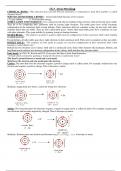
Cation:- The atom that loses the electrons acquires a positive charge and it is called cation. For example, sodium loses one
electron and acquires a positive charge. Thus it becomes a cation.
Similarly, magnesium also forms a cation by losing two electrons.
Anion:- The atom that gains the electrons acquires a negative charge and it is called an anion. For example, oxygen gains
two electrons and becomes negatively charged. Thus it becomes an anion.
+ 2e-
Similarly, fluorine gains one electron and becomes negatively charge. Thus, it becomes a anion.
+ 1e-
CHEMICAL BOND:- “The attractive force present between molecules or compounds to keep them together is called
chemical bond”.
WHY DO ATOMS FORM A BOND?:- Atoms form bonds because of two reasons.
i. To get stability ii. To lower their energy
NOBLE GASES AND STABILITY:- It is a universal rule that everything in this universe tends to become more stable.
They do so by completing their outermost shell by having eight electrons. The noble gases have ns2np6 electronic
configuration in the outermost shell (except helium). Their outermost shell are complete so they do not react with other
elements hence they are stable. They are also called noble gases. Atoms other than noble gases have a tendency to react
with other elements. They gain stability by gaining, losing or sharing electrons.
OCTET RULE:- “ The tendency of atoms to acquire eight electron configuration in their outermost shell, when bonding
is called octet rule”.
Except helium, all other noble gases have eight electrons in their outermost shell. Their octet is complete so they are stable.
DUPLET RULE:- “The tendency of some atoms to acquire two electron configuration in their outermost shell, when
bonding is called duplet rule”.
Helium has two electrons in its valence shell and it is chemically inert. Some other elements like hydrogen, lithium, and
beryllium tend to achieve two electron configuration in the valence shell and thus they become stable.
Ionic bond:- In 1916, W. Kossal and G.N. Lewis gave the idea of ionic bond formation.
“A bond which is formed by gaining or losing the electrons is called ionic bond”.
This bond is formed between a metal and a non-metal.
Metal loses the electron and non-metal gains the electron.
Cation:- The atom that loses the electrons acquires a positive charge and it is called cation. For example, sodium loses one
electron and acquires a positive charge. Thus it becomes a cation.
Similarly, magnesium also forms a cation by losing two electrons.
Anion:- The atom that gains the electrons acquires a negative charge and it is called an anion. For example, oxygen gains
two electrons and becomes negatively charged. Thus it becomes an anion.
+ 2e-
Similarly, fluorine gains one electron and becomes negatively charge. Thus, it becomes a anion.
+ 1e-