
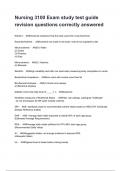
Nursing 3100 Exam study test guide
revision questions correctly answered
Nutrient - ANSchemical substance that the body uses from consumed food
Essential Nutrient - ANSnutrients not made in the body- need to be supplied by diet
Macronutrients - ANS(1) Water
(2) Carbs
(3) Proteins
(4) Fats
Micronutrients - ANS(1) Vitamins
(2) Minerals
Skinfold - ANShigh variability and often not used when measuring body composition in nursin
Bioelectrical Impedance - ANSIons react with muscle more than fat
Biochemical Analyses - ANS(1) blood urine assays
(2) Bone/live biopsies
Diabetic Urine (has high level of _____? ) - ANSkeytones
Worthless measures of Nutritional Status - ANSHair, nail cuttings, sublingual "challenge"
- do not encompass fat OR water soluble nutrients
DRI - ANS- standards used for recommended nutrient intake based on HEALTHY individuals
(Dietary Reference Intake)
EAR - ANS- Average daily intake expected to satisfy 50% of each age group
(Estimated Average Requirements)
RDA - ANSAverage daily intake sufficient for 97%-98% each age group
(Recommended Daily Value)
AI - ANSSuggested intake- not enough evidence to become RDA
(Adequate Intake)
UL - ANShighest level of intake before risking toxicity
,(tolerable upper level intake)
Problems with RDA - ANS-set by a committee
-knowledge limited for some populations
-safety margins vary
-Vary by country
DRV - ANS- replace RDA's on food labels, based on MALE RDA's (except iron-female)
Required DRV - ANSVitamin A-VitaminC-Calcium-Iron-Folate
or with nutritional claims/fortification
Carbohydrate (kcals/gram?) - ANS4 kcals/gram (c)
Protein (kcals/gram?) - ANS4 kcals/gram (p)
Fat (kcal's/gram?) - ANS9 kcals/gram
Alcohol (kclas/gram?) - ANS7 kcals/gram
"Organic" - ANSproduced without genetic engineering, with materials on the USDA 'organic' list
"natural" - ANSno regulation as with "organic"- could just mean that its whole wheat
"high" - ANSnutrient > 20%
"low" - ANSNutrient<5%
"reduced" - ANSNutrient< 25% standard product
"light" - ANSNutrient < 50% standard product
"Enriched" - ANSadding nutrients BACK INTO product that may have been lost during
production
"Fortified" - ANSAdding a nutrient that was never originally in the food.
Calorie - ANSAmount of energy required to raise the temperature of 1g of H2O by 1 Degree
Celsius
Recommended Exercise - ANS2hours30mins exercise a week
(1hour15minutes vigorous exercise a week)
,Half of Starches should be _____ - ANSwhole grain
Half of plate should be _____ - ANSFruits/Vegetables
MyPyramid primary message - ANSbalance calories
(MyPyramid) Avoid _____ - ANSSodium
Fat Soluble Vitamins - ANSADEK
Retinol - ANSPreformed vitamin A.
makes up 2/3 of US Vitamin A intake
Retinol Function - ANSspermatogenesis, embryonic development, proliferation
Retinol Sources - ANS(Animal) yolk, liver, fat
NOT fruits/vegetables
Beta-Carotene - ANSPrecursor to Vitamin A
Beta-Carotene Function - ANSAntioxidant- reduces risk to cancer, heart disease, macular
degeneration
Beta-Carotene Sources (good) - ANSDark green, orange/red fruits/veg
NON-CITRUS
Beta-Carotene Sources (poor) - ANScorn, pears, summer squash, iceberg lettuce
Beta-Carotene Supplements - ANSIncreased risk of cancer, much higher dose than getting
from food
Retinaldehyde - ANSactive form of retinol- necessary in transmission between eyes and brain
Retinoic Acid - ANSActive form of retinol- used in embryogenesis/DNA binding/transmission.
Used for mild acne cremes.
Retinoic Acid Sources - ANSNO DIETARY SOURCES- converted in body
Retinoic Acid Functions - ANS-Topical Rx for mild acne
- Oral Rx for leukemia (70% survival rate)
, 13-Cis-Retinoic Acid - ANSchemically modified retinoic acid
13-cis-retinoic acid function - ANS-Oral Rx for cystic acne (acutane/isotretinoin)
reduces sebum production
13-cis-retinoic acid risks - ANS-increased risk of suicide
- teratogenic
Increases Retinoid Absorption - ANS-bile salts
- Pancreatic Lipase
-simultaneous fat ingestion
-cooking plant foods/homogenation
Decreases Retinoid Absorption - ANS-hepatitis (inflates liver)
-bile duct obstruction
-cirrhosis
-cystic fibrosis (decrease in pancreatic lipase)
-Olestra (cant be digested)
Hypovitaminosis A - ANS-effects epithelial cells (eye, resp/GI/GU tracts, skin
-delayed closure @ epiphysis
-teratogenic
- increased risk of HIV transmission
Xerophthalmia - ANSsevere hypovitaminosis- leads to blindness, abnormal tear prod/cornea
damage
Hypervitaminosis A - ANS-teratogenicity
-premature closure of epiphysis
-thickening of long bones/joint pain
-liver damage
Lycopene - ANS-carotinoid that prevents cervical/prostate cancer
Lycopene Sources - ANSwatermelon and tomatoes
Lutein - ANS-reduces risks of cataract and molecular degeneration. found in leafy greens
Vitamin D Function - ANS-regulate Ca/P levels in blood
- regulate bone mineralization/Ca absorption
-Regulate intestinal absorption
-cancer prevention
revision questions correctly answered
Nutrient - ANSchemical substance that the body uses from consumed food
Essential Nutrient - ANSnutrients not made in the body- need to be supplied by diet
Macronutrients - ANS(1) Water
(2) Carbs
(3) Proteins
(4) Fats
Micronutrients - ANS(1) Vitamins
(2) Minerals
Skinfold - ANShigh variability and often not used when measuring body composition in nursin
Bioelectrical Impedance - ANSIons react with muscle more than fat
Biochemical Analyses - ANS(1) blood urine assays
(2) Bone/live biopsies
Diabetic Urine (has high level of _____? ) - ANSkeytones
Worthless measures of Nutritional Status - ANSHair, nail cuttings, sublingual "challenge"
- do not encompass fat OR water soluble nutrients
DRI - ANS- standards used for recommended nutrient intake based on HEALTHY individuals
(Dietary Reference Intake)
EAR - ANS- Average daily intake expected to satisfy 50% of each age group
(Estimated Average Requirements)
RDA - ANSAverage daily intake sufficient for 97%-98% each age group
(Recommended Daily Value)
AI - ANSSuggested intake- not enough evidence to become RDA
(Adequate Intake)
UL - ANShighest level of intake before risking toxicity
,(tolerable upper level intake)
Problems with RDA - ANS-set by a committee
-knowledge limited for some populations
-safety margins vary
-Vary by country
DRV - ANS- replace RDA's on food labels, based on MALE RDA's (except iron-female)
Required DRV - ANSVitamin A-VitaminC-Calcium-Iron-Folate
or with nutritional claims/fortification
Carbohydrate (kcals/gram?) - ANS4 kcals/gram (c)
Protein (kcals/gram?) - ANS4 kcals/gram (p)
Fat (kcal's/gram?) - ANS9 kcals/gram
Alcohol (kclas/gram?) - ANS7 kcals/gram
"Organic" - ANSproduced without genetic engineering, with materials on the USDA 'organic' list
"natural" - ANSno regulation as with "organic"- could just mean that its whole wheat
"high" - ANSnutrient > 20%
"low" - ANSNutrient<5%
"reduced" - ANSNutrient< 25% standard product
"light" - ANSNutrient < 50% standard product
"Enriched" - ANSadding nutrients BACK INTO product that may have been lost during
production
"Fortified" - ANSAdding a nutrient that was never originally in the food.
Calorie - ANSAmount of energy required to raise the temperature of 1g of H2O by 1 Degree
Celsius
Recommended Exercise - ANS2hours30mins exercise a week
(1hour15minutes vigorous exercise a week)
,Half of Starches should be _____ - ANSwhole grain
Half of plate should be _____ - ANSFruits/Vegetables
MyPyramid primary message - ANSbalance calories
(MyPyramid) Avoid _____ - ANSSodium
Fat Soluble Vitamins - ANSADEK
Retinol - ANSPreformed vitamin A.
makes up 2/3 of US Vitamin A intake
Retinol Function - ANSspermatogenesis, embryonic development, proliferation
Retinol Sources - ANS(Animal) yolk, liver, fat
NOT fruits/vegetables
Beta-Carotene - ANSPrecursor to Vitamin A
Beta-Carotene Function - ANSAntioxidant- reduces risk to cancer, heart disease, macular
degeneration
Beta-Carotene Sources (good) - ANSDark green, orange/red fruits/veg
NON-CITRUS
Beta-Carotene Sources (poor) - ANScorn, pears, summer squash, iceberg lettuce
Beta-Carotene Supplements - ANSIncreased risk of cancer, much higher dose than getting
from food
Retinaldehyde - ANSactive form of retinol- necessary in transmission between eyes and brain
Retinoic Acid - ANSActive form of retinol- used in embryogenesis/DNA binding/transmission.
Used for mild acne cremes.
Retinoic Acid Sources - ANSNO DIETARY SOURCES- converted in body
Retinoic Acid Functions - ANS-Topical Rx for mild acne
- Oral Rx for leukemia (70% survival rate)
, 13-Cis-Retinoic Acid - ANSchemically modified retinoic acid
13-cis-retinoic acid function - ANS-Oral Rx for cystic acne (acutane/isotretinoin)
reduces sebum production
13-cis-retinoic acid risks - ANS-increased risk of suicide
- teratogenic
Increases Retinoid Absorption - ANS-bile salts
- Pancreatic Lipase
-simultaneous fat ingestion
-cooking plant foods/homogenation
Decreases Retinoid Absorption - ANS-hepatitis (inflates liver)
-bile duct obstruction
-cirrhosis
-cystic fibrosis (decrease in pancreatic lipase)
-Olestra (cant be digested)
Hypovitaminosis A - ANS-effects epithelial cells (eye, resp/GI/GU tracts, skin
-delayed closure @ epiphysis
-teratogenic
- increased risk of HIV transmission
Xerophthalmia - ANSsevere hypovitaminosis- leads to blindness, abnormal tear prod/cornea
damage
Hypervitaminosis A - ANS-teratogenicity
-premature closure of epiphysis
-thickening of long bones/joint pain
-liver damage
Lycopene - ANS-carotinoid that prevents cervical/prostate cancer
Lycopene Sources - ANSwatermelon and tomatoes
Lutein - ANS-reduces risks of cataract and molecular degeneration. found in leafy greens
Vitamin D Function - ANS-regulate Ca/P levels in blood
- regulate bone mineralization/Ca absorption
-Regulate intestinal absorption
-cancer prevention


