WGU D459 AAN1 TASK 1 Applying Systems Thinking Basics
Complete Update
Case Study 1: Wilde’s Bramble - Organic Food Company
Analyze 1.
Key Events:
● Wilde’s Bramble grows rapidly in popularity.
● Increased demand leads to expanded operations: leasing land, purchasing
equipment, and building a new barn.
● The Wildes begin using credit cards and later take out a mortgage to
manage expenses.
● Calla takes a job outside the farm to help with cash flow.
● Mounting debt begins to threaten the business’s survival.
Patterns:
● Continuous pressure to expand in response to growing demand.
● Reliance on short-term financial fixes (credit cards, mortgage, and off farm
income.
● Increasing debt outpaces income, creating long-term financial instability.
Underlying Structure:
● Lack of a sustainable financial model for scaling the business.
● Decision made reactively instead of strategically.
● Absence of planning for seasonal or growth-related financial pressures.
● A mindset that immediate growth is necessary to meet demand, even at
significant financial risk.
2.
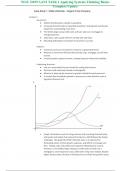
a. Graph 2 illustrates a cycle of rising pressure and increasing financial strain,
with peaks and valleys that represent temporary relief followed by deeper
challenges. This graph fits Wilde’s Bramble well, as it captures the
fluctuating nature of their growth, expenses, and efforts to manage cash
flow. Initially, sales and profits trend upward, reflecting early success.
However, as the Wildes begin relying on credit cards and take out a
mortgage to cover expansion costs, debt starts rising more steeply. Despite
higher product sales, the lack of infrastructure to handle the growth causes
Complete Update
Case Study 1: Wilde’s Bramble - Organic Food Company
Analyze 1.
Key Events:
● Wilde’s Bramble grows rapidly in popularity.
● Increased demand leads to expanded operations: leasing land, purchasing
equipment, and building a new barn.
● The Wildes begin using credit cards and later take out a mortgage to
manage expenses.
● Calla takes a job outside the farm to help with cash flow.
● Mounting debt begins to threaten the business’s survival.
Patterns:
● Continuous pressure to expand in response to growing demand.
● Reliance on short-term financial fixes (credit cards, mortgage, and off farm
income.
● Increasing debt outpaces income, creating long-term financial instability.
Underlying Structure:
● Lack of a sustainable financial model for scaling the business.
● Decision made reactively instead of strategically.
● Absence of planning for seasonal or growth-related financial pressures.
● A mindset that immediate growth is necessary to meet demand, even at
significant financial risk.
2.
a. Graph 2 illustrates a cycle of rising pressure and increasing financial strain,
with peaks and valleys that represent temporary relief followed by deeper
challenges. This graph fits Wilde’s Bramble well, as it captures the
fluctuating nature of their growth, expenses, and efforts to manage cash
flow. Initially, sales and profits trend upward, reflecting early success.
However, as the Wildes begin relying on credit cards and take out a
mortgage to cover expansion costs, debt starts rising more steeply. Despite
higher product sales, the lack of infrastructure to handle the growth causes