

Anatomy and physiology – HUB1019F
Neck and back anatomy – osteology
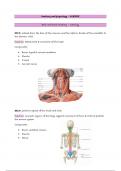
NECK: extends from the base of the cranium and the inferior border of the mandible to
the thoracic inlet
Function: attachment & movement of the head
Components:
• Bones: hyoid & cervical vertebrae
• Muscles
• Viscera
• Cervical nerves
BACK: posterior aspect of the trunk and neck
Function: connects regions of the body, supports movement of torso & limbs & protects
the nervous system
Components:
• Bones: vertebral column
• Muscles
• Nerves
, VERTEBRAL COULUMN
• 26 vertebrae
o 7 cervical
o 12 thoracic
o 5 lumbar
o 1 sacrum – actually made up of 5 but they fuse together
o 1 coccyx – actually made up of 3/4 but they fuse together
VERTEBRAE:
Irregular bones that from the vertebral
column
Common structure – vertebral body (anterior)
-Vertebral arch (posterior)
Spinous Transverse
process process
Projections
Inferior articular Superior articular
process process
Functions of vertebrae:
1. Attachment site for muscles and ligaments
2. Levers for the action of muscles
3. Site of articulation with adjacent vertebrae
, VERTEBRAL BODY:
• Weight bearing part of the vertebra
• Linked to adjacent vertebral bodies by intervertebral discs and ligaments
VERTEBRAL ARCH:
• Lateral and posterior parts of the vertebral foramen
• Consists of pedicles and laminae
Pedicles Laminae
Attach the vertebral arch to the Extend from each pedicle to meet in the
vertebral body midline and form the roof of the
vertebral arch
SPINOUS PROCESS:
• Projects posteriorly & inferiorly from the junction of the two laminae
• Site for muscle and ligament attachment
TRANSVERSE PROCESS:
• Extends posterolateral from the junction of the pedicle and lamina
• Site for muscle and ligament attachment
• Articulation with ribs in the thoracic region
Neck and back anatomy – osteology
NECK: extends from the base of the cranium and the inferior border of the mandible to
the thoracic inlet
Function: attachment & movement of the head
Components:
• Bones: hyoid & cervical vertebrae
• Muscles
• Viscera
• Cervical nerves
BACK: posterior aspect of the trunk and neck
Function: connects regions of the body, supports movement of torso & limbs & protects
the nervous system
Components:
• Bones: vertebral column
• Muscles
• Nerves
, VERTEBRAL COULUMN
• 26 vertebrae
o 7 cervical
o 12 thoracic
o 5 lumbar
o 1 sacrum – actually made up of 5 but they fuse together
o 1 coccyx – actually made up of 3/4 but they fuse together
VERTEBRAE:
Irregular bones that from the vertebral
column
Common structure – vertebral body (anterior)
-Vertebral arch (posterior)
Spinous Transverse
process process
Projections
Inferior articular Superior articular
process process
Functions of vertebrae:
1. Attachment site for muscles and ligaments
2. Levers for the action of muscles
3. Site of articulation with adjacent vertebrae
, VERTEBRAL BODY:
• Weight bearing part of the vertebra
• Linked to adjacent vertebral bodies by intervertebral discs and ligaments
VERTEBRAL ARCH:
• Lateral and posterior parts of the vertebral foramen
• Consists of pedicles and laminae
Pedicles Laminae
Attach the vertebral arch to the Extend from each pedicle to meet in the
vertebral body midline and form the roof of the
vertebral arch
SPINOUS PROCESS:
• Projects posteriorly & inferiorly from the junction of the two laminae
• Site for muscle and ligament attachment
TRANSVERSE PROCESS:
• Extends posterolateral from the junction of the pedicle and lamina
• Site for muscle and ligament attachment
• Articulation with ribs in the thoracic region


