

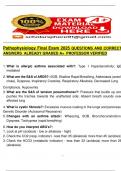
Pathophysiology Final Exam 2025 QUESTIONS AND CORRECT
ANSWERS ALREADY GRADED A+ PROFESSOR VERIFIED
1. What is allergic asthma associated with?: Type 1 Hypersensitivity; IgE
mediated
2. What are the S&S of ARDS?: SOB, Shallow Rapid Breathing, Atelectasis (aveoli
close), Dyspnea, Inspiratory Crackles, Respiratory Alkalosis, Decreased Lung
Compliance, Hypoxemia
3. What are the S&S of tension pneumothorax?: Pressure that builds up and
pushes the trachea towards the unaffected side; Absent breath sounds over
affected lung
4. What is cystic fibrosis?: Excessive mucous coating in the lungs and pancreas;
Genetic Disorder (Autosomal Recessive)
5. Changes with an asthma attack:: Wheezing, SOB, Bronchoconstriction,
Dyspnea, Tachypnea (rapid breathing)
6. How do you interpret ABG's?:
1. Look at pH (acidosis - low or alkalosis - high)
2. Check the CO2 (resp. indicator) - less than 35 (alkalosis) more than 45 (acidosis)
3. Check the HCO3 (metabolic indicator) - less than 22 (acidosis) more than 26
(alkalosis)
1/9
, .
4. Determine primary disorder (matches the pH)
5. Determine if its compensated (pH returns to normal or near normal)
7. Respiratory Acidosis: What happens to the pH/CO2?: Elevation (increase)
of pCO2 -- Decreased pH (acidosis)
8. Respiratory Alkalosis: What happens to the pH/CO2?: Depression
(decrease) of pCO2 -- Increased pH (alkalosis)
9. Metabolic Acidosis: What happens to the pH/HCO3?: Depression
(decrease) of HCO3 -- Decreased pH (acidosis)
10. Metabolic Alkalosis: What happens to the pH/HCO3?: Elevation (increase)
of HCO3 -- Increased pH (alkalosis)
11. What are signs of renal cancer?: No pain! Hematuria (Blood in the Urine)
12. How do you manage end stage renal disease?: Dialysis, Fluid Restriction,
Low Protein Diet, Decrease Medication Doses, Anti-hypertensive, Give Ca
Supplements, Give Erythropoietin Shot, Give Iron Supplements/Blood
Transfusion (anemic)
13. What do you call kidney pain?: Nephralgia
14. What is the most helpful test to determine renal function?: Creatinine
15. What bacteria is associated with acute pyelonephritis?: E. coli
16. What is the treatment for pre-renal kidney failure?: Hypovolemia - Give
Fluids
17. What causes acute intrarenal failure?: Kidney Stones (renal calculi), Renal
Ischemia
18. What do we see associated with SIADH?: Fluid Retention (edema), Crackles
in Lungs, Hypertension, Decreased Sodium (diluted)
19 What causes myxedema coma?: Hypothyroidism
20. What is the main underlying condition for Type I and Type II Diabetes?:
Impaired Glucose Transport
21. What is the difference between Type I and Type II Diabetes?: Type I -
Complete lack of insulin (Hyperglycemia) Type II - Insulin resistance on the
cells
2/9
ANSWERS ALREADY GRADED A+ PROFESSOR VERIFIED
1. What is allergic asthma associated with?: Type 1 Hypersensitivity; IgE
mediated
2. What are the S&S of ARDS?: SOB, Shallow Rapid Breathing, Atelectasis (aveoli
close), Dyspnea, Inspiratory Crackles, Respiratory Alkalosis, Decreased Lung
Compliance, Hypoxemia
3. What are the S&S of tension pneumothorax?: Pressure that builds up and
pushes the trachea towards the unaffected side; Absent breath sounds over
affected lung
4. What is cystic fibrosis?: Excessive mucous coating in the lungs and pancreas;
Genetic Disorder (Autosomal Recessive)
5. Changes with an asthma attack:: Wheezing, SOB, Bronchoconstriction,
Dyspnea, Tachypnea (rapid breathing)
6. How do you interpret ABG's?:
1. Look at pH (acidosis - low or alkalosis - high)
2. Check the CO2 (resp. indicator) - less than 35 (alkalosis) more than 45 (acidosis)
3. Check the HCO3 (metabolic indicator) - less than 22 (acidosis) more than 26
(alkalosis)
1/9
, .
4. Determine primary disorder (matches the pH)
5. Determine if its compensated (pH returns to normal or near normal)
7. Respiratory Acidosis: What happens to the pH/CO2?: Elevation (increase)
of pCO2 -- Decreased pH (acidosis)
8. Respiratory Alkalosis: What happens to the pH/CO2?: Depression
(decrease) of pCO2 -- Increased pH (alkalosis)
9. Metabolic Acidosis: What happens to the pH/HCO3?: Depression
(decrease) of HCO3 -- Decreased pH (acidosis)
10. Metabolic Alkalosis: What happens to the pH/HCO3?: Elevation (increase)
of HCO3 -- Increased pH (alkalosis)
11. What are signs of renal cancer?: No pain! Hematuria (Blood in the Urine)
12. How do you manage end stage renal disease?: Dialysis, Fluid Restriction,
Low Protein Diet, Decrease Medication Doses, Anti-hypertensive, Give Ca
Supplements, Give Erythropoietin Shot, Give Iron Supplements/Blood
Transfusion (anemic)
13. What do you call kidney pain?: Nephralgia
14. What is the most helpful test to determine renal function?: Creatinine
15. What bacteria is associated with acute pyelonephritis?: E. coli
16. What is the treatment for pre-renal kidney failure?: Hypovolemia - Give
Fluids
17. What causes acute intrarenal failure?: Kidney Stones (renal calculi), Renal
Ischemia
18. What do we see associated with SIADH?: Fluid Retention (edema), Crackles
in Lungs, Hypertension, Decreased Sodium (diluted)
19 What causes myxedema coma?: Hypothyroidism
20. What is the main underlying condition for Type I and Type II Diabetes?:
Impaired Glucose Transport
21. What is the difference between Type I and Type II Diabetes?: Type I -
Complete lack of insulin (Hyperglycemia) Type II - Insulin resistance on the
cells
2/9


