
Cell Division Unit Notes
SEMINAR PRESENTATION 1
Mitosis
Review terms:
● Monoploid: (haploid) a cell that contains only 1 set of chromosomes. (n) usually occurs in
gametes, created by meiosis
● Diploid: a cell that contains 2 sets of chromosomes. (2n) occurs due to fertilization or
mitosis. Somatic cells.
● For humans, 2n=46 and n=23
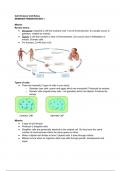
Types of cells:
● There are basically 2 types of cells in your body:
○ Gametes (sex cells, sperm and eggs) which are monoploid. Produced by meiosis
○ Somatic cells (regular body cells - not gametes) which are diploid. Produced by
mitosis
Mitosis:
● A type of cell division
● Produces 2 daughter cells
● Daughter cells are genetically identical to the original cell. So they have the same
number of chromosomes which the same genes on them
● When a diploid cell divides to form 2 diploid cells, it does through mitosis
● Mitosis occurs when an organism adds new cells through growth, development and
repair
,Interphase:
● G1 phase (first gap)
○ Stage of rapid growth; centrioles replicate
○ Organelles replicate
● S phase
○ Stage in which DNA duplicates
● G2 phase (second gap)
○ Growth and final preparation for cell division stage
- Only when the cell begins to divide does the chromatin condense to form distinct
chromosomes
Chromosomes:
● Packages of DNA
● Somatic cells have 2n=46 (humans)
● Sex cells have n=23 (humans)
● Contain DNA and proteins called histones
● Chromatin (uncondensed DNA) condenses during cell division to form chromosomes
, Mitotic cell division
● Mitosis refers to the division of the nucleus
● Occurs in 4 stages
○ Prophase
○ Metaphase
○ Anaphase
○ Telophase
● Division of the cytoplasm called cytokinesis occurs after the nucleus has divided -
usually during the telophase
● Daughter cells are identical
Early prophase: summary
● Nucleoli dissolve
● Chromatin condenses to form discrete chromosomes
● Spindle fibers form between the centrioles
● Centrioles begin to move opposite poles of the cell


