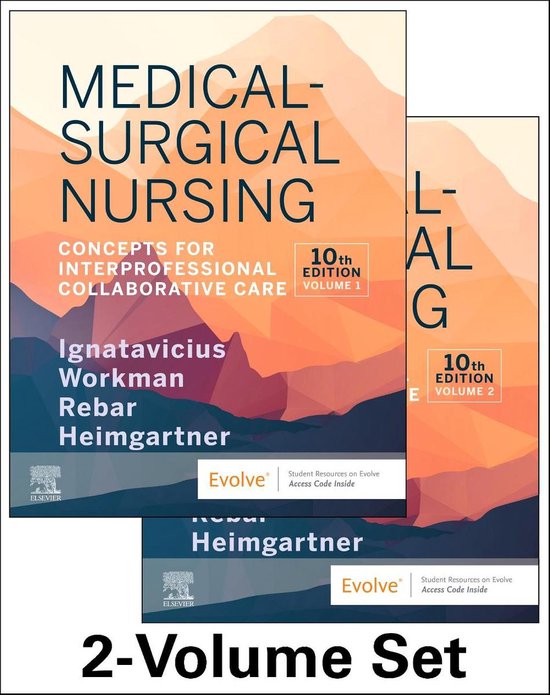
TEST BANK For Medical-Surgical Nursing
10th Edition Concepts for Interprofessional
Collaborative Care, by Donna D. Ignatavicius,
All chapters 1 – 69
,Chapter 01: Overview of Professional Nursing Concepts for Medical-Surgical Nursing
Ignatavicius: Medical-Surgical Nursing, 10th Edition
MULTIPLE CHOICE
1. A new nurse is working with a preceptor on a medical-surgical unit. The preceptor advises
the new nurse that which is the priority when working as a professional nurse?
a. Attending to holistic client needs
b. Ensuring client safety
c. Not making medication errors
d. Providing client-focused care
CORRECT ANSWER: B
All actions are appropriate for the professional nurse. However, ensuring client safety is the
priority. Health care errors have been widely reported for 25 years, many of which result in
client injury, death, and increased health care costs. There are several national and
international organizations that have either recommended or mandated safety initiatives.
Every nurse has the responsibility to guard the client’s safety. The other actions are
important for quality nursing, but they are not as vital as providing safety. Not making
medication errors does provide safety, but is too narrow in scope to be the best answer.
DIF: Understanding TOP: Integrated Process: Nursing Process: Intervention
KEY: Client safety
MSC: Client Needs Category: Safe and Effective Care Environment: Safety and Infection Control
2. A nurse is orienting a new client and family to the medical-surgical unit. What information
does the nurse provide to best help the client promote his or her own safety?
a. Encourage the client and family to be active partners.
b. Have the client monitor hand hygiene in caregivers.
c. Offer the family the opportunity to stay with the client.
d. Tell the client to always wear his or her armband.
CORRECT ANSWER: A
Each action could be important for the client or family to perform. However, encouraging the
, client to be active in his or her health care as a safety partner is the most critical. The other
actions are very limited in scope and do not provide the broad protection that being active
and involved does.
DIF: Understanding TOP: Integrated Process: Teaching/Learning
KEY: Client safety
MSC: Client Needs Category: Safe and Effective Care Environment: Safety and Infection Control
3. A nurse is caring for a postoperative client on the surgical unit. The client’s blood pressure
was 142/76 mm Hg 30 minutes ago, and now is 88/50 mm Hg. What action would the
nurse take first?
a. Call the Rapid Response Team.
b. Document and continue to monitor.
c. Notify the primary health care provider.
d. Repeat the blood pressure in 15 minutes.
CORRECT ANSWER: A
The purpose of the Rapid Response Team (RRT) is to intervene when clients are deteriorating
before they suffer either respiratory or cardiac arrest. Since the client has manifested a
significant change, the nurse would call the RRT. Changes in blood pressure, mental status,
heart rate, temperature, oxygen saturation, and last 2 hours’ urine output are particularly
significant and are part of the Modified Early Warning System guide. Documentation is vital,
but the nurse must do more than document. The primary health care provider would be
notified, but this is not more important than calling the RRT. The client’s blood pressure
would be reassessed frequently, but the priority is getting the rapid care to the client.
DIF: Applying TOP: Integrated Process: Communication and Documentation
KEY: Rapid Response Team (RRT), Clinical judgment
MSC: Client Needs Category: Physiological Integrity: Physiological Adaptation
4. A nurse wishes to provide client-centered care in all interactions. Which action by the nurse
best demonstrates this concept?
a. Assesses for cultural influences affecting health care.
b. Ensures that all the client’s basic needs are met.
c. Tells the client and family about all upcoming tests.
d. Thoroughly orients the client and family to the room.
CORRECT ANSWER: A
Showing respect for the client and family’s preferences and needs is essential to ensure a
, holistic or “whole-person” approach to care. By assessing the effect of the client’s culture on
health care, this nurse is practicing client-focused care. Providing for basic needs does not
demonstrate this competence. Simply telling the client about all upcoming tests is not
providing empowering education. Orienting the client and family to the room is an important
safety measure, but not directly related to demonstrating client-centered care.
DIF: Understanding TOP: Integrated Process: Culture and Spirituality
KEY: Client-centered care, Culture MSC: Client Needs Category: Psychosocial Integrity
5. A client is going to be admitted for a scheduled surgical procedure. Which action does
the nurse explain is the most important thing the client can do to protect against errors?
a. Bring a list of all medications and what they are for.
b. Keep the provider’s phone number by the telephone.
c. Make sure that all providers wash hands before entering the room.
d. Write down the name of each caregiver who comes in the room.
CORRECT vANSWER: v A
Medication vreconciliation vis va vformal vprocess vin vwhich vthe vclient’s vactual vcurrent
vmedications vare vcompared vto vthe vprescribed vmedications vat vthe vtime vof vadmission,
vtransfer, vor vdischarge. vThis vNational vclient vSafety vGoal vis vimportant vto vreduce
vmedication verrors. vThe vclient vwould vnot vhave vto vbe vresponsible vfor vproviders vwashing
vtheir vhands, vand veven vif vthe vclient vdoes vso, vthis vis vtoo vnarrow vto vbe vthe vmost
vimportant vaction vto vprevent verrors. vKeeping vthe vprovider’s vphone vnumber vnearby vand
vdocumenting veveryone vwho venters vthe vroom valso vdo vnot vguarantee vsafety.
DIF: Applying TOP: v Integrated vProcess:
vTeaching/Learning vKEY: vClient vsafety, vInformatics
MSC: v Client vNeeds vCategory: vSafe vand vEffective vCare vEnvironment: vSafety vand vInfection vControl
6. Which vaction vby vthe vnurse vworking vwith va vclient vbest vdemonstrates vrespect vfor
vautonomy?
a. Asks vif vthe vclient vhas vquestions vbefore vsigning va vconsent.
b. Gives vthe vclient vaccurate vinformation vwhen vquestioned.
c. Keeps vthe vpromises vmade vto vthe vclient vand vfamily.
d. Treats vthe vclient vfairly vcompared vto vother vclients.
CORRECT vANSWER: v A
Autonomy vis vself-determination. vThe vclient vwould vmake vdecisions vregarding vcare. vWhen
vthe vnurse vobtains va vsignature von vthe vconsent vform, vassessing vif vthe vclient vstill vhas
vquestions vis vvital, vbecause vwithout vfull vinformation vthe vclient vcannot vpractice
10th Edition Concepts for Interprofessional
Collaborative Care, by Donna D. Ignatavicius,
All chapters 1 – 69
,Chapter 01: Overview of Professional Nursing Concepts for Medical-Surgical Nursing
Ignatavicius: Medical-Surgical Nursing, 10th Edition
MULTIPLE CHOICE
1. A new nurse is working with a preceptor on a medical-surgical unit. The preceptor advises
the new nurse that which is the priority when working as a professional nurse?
a. Attending to holistic client needs
b. Ensuring client safety
c. Not making medication errors
d. Providing client-focused care
CORRECT ANSWER: B
All actions are appropriate for the professional nurse. However, ensuring client safety is the
priority. Health care errors have been widely reported for 25 years, many of which result in
client injury, death, and increased health care costs. There are several national and
international organizations that have either recommended or mandated safety initiatives.
Every nurse has the responsibility to guard the client’s safety. The other actions are
important for quality nursing, but they are not as vital as providing safety. Not making
medication errors does provide safety, but is too narrow in scope to be the best answer.
DIF: Understanding TOP: Integrated Process: Nursing Process: Intervention
KEY: Client safety
MSC: Client Needs Category: Safe and Effective Care Environment: Safety and Infection Control
2. A nurse is orienting a new client and family to the medical-surgical unit. What information
does the nurse provide to best help the client promote his or her own safety?
a. Encourage the client and family to be active partners.
b. Have the client monitor hand hygiene in caregivers.
c. Offer the family the opportunity to stay with the client.
d. Tell the client to always wear his or her armband.
CORRECT ANSWER: A
Each action could be important for the client or family to perform. However, encouraging the
, client to be active in his or her health care as a safety partner is the most critical. The other
actions are very limited in scope and do not provide the broad protection that being active
and involved does.
DIF: Understanding TOP: Integrated Process: Teaching/Learning
KEY: Client safety
MSC: Client Needs Category: Safe and Effective Care Environment: Safety and Infection Control
3. A nurse is caring for a postoperative client on the surgical unit. The client’s blood pressure
was 142/76 mm Hg 30 minutes ago, and now is 88/50 mm Hg. What action would the
nurse take first?
a. Call the Rapid Response Team.
b. Document and continue to monitor.
c. Notify the primary health care provider.
d. Repeat the blood pressure in 15 minutes.
CORRECT ANSWER: A
The purpose of the Rapid Response Team (RRT) is to intervene when clients are deteriorating
before they suffer either respiratory or cardiac arrest. Since the client has manifested a
significant change, the nurse would call the RRT. Changes in blood pressure, mental status,
heart rate, temperature, oxygen saturation, and last 2 hours’ urine output are particularly
significant and are part of the Modified Early Warning System guide. Documentation is vital,
but the nurse must do more than document. The primary health care provider would be
notified, but this is not more important than calling the RRT. The client’s blood pressure
would be reassessed frequently, but the priority is getting the rapid care to the client.
DIF: Applying TOP: Integrated Process: Communication and Documentation
KEY: Rapid Response Team (RRT), Clinical judgment
MSC: Client Needs Category: Physiological Integrity: Physiological Adaptation
4. A nurse wishes to provide client-centered care in all interactions. Which action by the nurse
best demonstrates this concept?
a. Assesses for cultural influences affecting health care.
b. Ensures that all the client’s basic needs are met.
c. Tells the client and family about all upcoming tests.
d. Thoroughly orients the client and family to the room.
CORRECT ANSWER: A
Showing respect for the client and family’s preferences and needs is essential to ensure a
, holistic or “whole-person” approach to care. By assessing the effect of the client’s culture on
health care, this nurse is practicing client-focused care. Providing for basic needs does not
demonstrate this competence. Simply telling the client about all upcoming tests is not
providing empowering education. Orienting the client and family to the room is an important
safety measure, but not directly related to demonstrating client-centered care.
DIF: Understanding TOP: Integrated Process: Culture and Spirituality
KEY: Client-centered care, Culture MSC: Client Needs Category: Psychosocial Integrity
5. A client is going to be admitted for a scheduled surgical procedure. Which action does
the nurse explain is the most important thing the client can do to protect against errors?
a. Bring a list of all medications and what they are for.
b. Keep the provider’s phone number by the telephone.
c. Make sure that all providers wash hands before entering the room.
d. Write down the name of each caregiver who comes in the room.
CORRECT vANSWER: v A
Medication vreconciliation vis va vformal vprocess vin vwhich vthe vclient’s vactual vcurrent
vmedications vare vcompared vto vthe vprescribed vmedications vat vthe vtime vof vadmission,
vtransfer, vor vdischarge. vThis vNational vclient vSafety vGoal vis vimportant vto vreduce
vmedication verrors. vThe vclient vwould vnot vhave vto vbe vresponsible vfor vproviders vwashing
vtheir vhands, vand veven vif vthe vclient vdoes vso, vthis vis vtoo vnarrow vto vbe vthe vmost
vimportant vaction vto vprevent verrors. vKeeping vthe vprovider’s vphone vnumber vnearby vand
vdocumenting veveryone vwho venters vthe vroom valso vdo vnot vguarantee vsafety.
DIF: Applying TOP: v Integrated vProcess:
vTeaching/Learning vKEY: vClient vsafety, vInformatics
MSC: v Client vNeeds vCategory: vSafe vand vEffective vCare vEnvironment: vSafety vand vInfection vControl
6. Which vaction vby vthe vnurse vworking vwith va vclient vbest vdemonstrates vrespect vfor
vautonomy?
a. Asks vif vthe vclient vhas vquestions vbefore vsigning va vconsent.
b. Gives vthe vclient vaccurate vinformation vwhen vquestioned.
c. Keeps vthe vpromises vmade vto vthe vclient vand vfamily.
d. Treats vthe vclient vfairly vcompared vto vother vclients.
CORRECT vANSWER: v A
Autonomy vis vself-determination. vThe vclient vwould vmake vdecisions vregarding vcare. vWhen
vthe vnurse vobtains va vsignature von vthe vconsent vform, vassessing vif vthe vclient vstill vhas
vquestions vis vvital, vbecause vwithout vfull vinformation vthe vclient vcannot vpractice