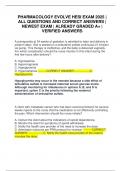
PHARMACOLOGY EVOLVE HESI EXAM 2025 |
ALL QUESTIONS AND CORRECT ANSWERS |
NEWEST EXAM | ALREADY GRADED A+ |
VERIFIED ANSWERS
A primigravida at 34 weeks of gestation is admitted to labor and delivery in
preterm labor. She is started on a terbutaline sulfate continuous IV infusion
via pump. This therapy is ineffective, and the baby is delivered vaginally.
For which complication should the nurse monitor in this infant during the
first few hours after delivery?
A. Hypokalemia
B. Hypermagnesia
C. Hypoglycemia
D. Hypernatremia ---------CORRECT ANSWER-----------------C.
Hypoglycemia
Hypoglycemia may occur in the neonate because a side effect of
terbutaline sulfate is increased maternal serum glucose levels.
Although monitoring for imbalances in options A, B, and D is
important, option C is the priority following the maternal
administration of terbutaline sulfate.
A client with metastatic cancer who has been receiving fentanyl for several
weeks reports to the nurse that the medication is not effectively controlling
the pain. Which intervention should the nurse initiate?
A. Instruct the client about the indications of opioid dependence.
B. Monitor the client for symptoms of opioid withdrawal.
C. Notify the health care provider of the need to increase the dose.
D. Administer naloxone per PRN protocol for reversal. ---------CORRECT
ANSWER-----------------C. Notify the health care provider of the need to
increase the dose.
,Clients can develop a tolerance to the analgesic effect of opioids and
may require an increased dose for effective long-term pain relief. The
client is not exhibiting indications of dependence, withdrawal, or
toxicity.
The charge nurse is reviewing the admission history and physical data for
four clients newly admitted to the unit. Which client is at greatest risk for
adverse reactions to medications?
A. 30-year-old man with a fracture
B. 7-year-old child with an ear infection
C. 75-year-old woman with liver disease
D. 50-year-old man with an upper respiratory tract infection ---------
CORRECT ANSWER-----------------C. 75-year-old woman with liver disease
Impaired hepatic metabolic pathways for drug and chemical
degradation place option C at greatest risk for adverse reactions to
medications based on advancing age and liver disease. Options A
and D have no predisposing factors, such as genetics,
pathophysiologic dysfunction, or drug allergies, that would increase
the risk for cumulative toxicity or adverse drug reactions. Option B is
at risk for dose-related adverse reactions but is at less risk than
option C.
A client is ordered 22 mg of gentamicin by IM injection. The drug is
available in 20 mg/2 mL. How many milliliters should be administered?
A. 1.8
B. 2.0
C. 2.4
D. 2.2 ---------CORRECT ANSWER-----------------D. 2.2
(22 mg/20 mg) × (x mL/2 mL) = 22x = 40
x = 2.2 mL
,A 42-year-old client is admitted to the emergency department after taking
an overdose of amitriptyline in a suicide attempt. Which drug should the
nurse plan to administer to reverse the cardiac and central nervous system
effects of amitriptyline?
A. Sodium bicarbonate
B. Naloxone
C. Phentolamine mesylate
D. Atropine sulfate ---------CORRECT ANSWER-----------------A. Sodium
bicarbonate
Sodium bicarbonate is an effective treatment for an overdose of
tricyclic antidepressants such as amitriptyline to reverse QRS
prolongation. Options B, C, and D are not the preferred agents for
treating this drug overdose.
Which response best supports the observations that the nurse identifies in
a client who is experiencing a placebo effect?
A. Beneficial response or cure for disease
B. Behavioral or psychotropic responses
C. Malingering or drug-seeking behaviors
D. Psychological response to inert medication ---------CORRECT
ANSWER-----------------D. Psychological response to inert medication
The placebo effect is a response in the client that is caused by the
psychological impact of taking an inert drug that has no biochemical
properties. A placebo effect can be therapeutic, negative, or
ineffective but provides no cure or benefit to the client's progress.
The placebo effect may evoke behavioral changes but does not affect
neurochemical psychotropic changes. Malingering and drug seeking
are behaviors that a client exhibits to obtain treatment for nonexistent
disorders or obtain prescription medications.
, A client with Tourette syndrome takes haloperidol to control tics and
vocalizations. The client has become increasingly drowsy over the past 2
days and reports becoming dizzy when changing from a supine to sitting
position. Which action should the nurse take?
A. Assess for poor skin turgor, sunken eyeballs, and concentrated urine
output.
B. Recognize that a sedative effect is expected and continue monitoring the
client.
C. Have the caregiver hold the next two doses of the medication to reduce
the drug toxicity.
D. Determine whether the client's urine is pink or reddish brown, and report
findings to the health care provider. ---------CORRECT ANSWER--------------
---A. Assess for poor skin turgor, sunken eyeballs, and concentrated urine
output.
Because haloperidol causes CNS effects of sedation and decreased
thirst, the nurse should assess for signs of dehydration. Although
sedation may occur with haloperidol administration, this side effect
may signal an adverse CNS reaction; therefore, option B is not a
sufficient intervention when client safety is threatened. Option C
could precipitate withdrawal-emergent dyskinesia, which is
potentially life threatening. Option D is expected.
A client who arrives in the postanesthesia care unit (PACU) after surgery is
not awake from general anesthesia. Which action should the nurse
implement first?
A. Assess for deep tendon reflexes.
B. Observe urinary output.
C. Review the medication administration record (MAR).
D. Administer naloxone. ---------CORRECT ANSWER-----------------C.
Review the medication administration record (MAR).
Most general anesthetics produce cardiovascular and respiratory
depression, so a review of the client's MAR identifies all the
medications received during surgery and helps the nurse anticipate
the client's response and emergence from anesthesia. Options A and
ALL QUESTIONS AND CORRECT ANSWERS |
NEWEST EXAM | ALREADY GRADED A+ |
VERIFIED ANSWERS
A primigravida at 34 weeks of gestation is admitted to labor and delivery in
preterm labor. She is started on a terbutaline sulfate continuous IV infusion
via pump. This therapy is ineffective, and the baby is delivered vaginally.
For which complication should the nurse monitor in this infant during the
first few hours after delivery?
A. Hypokalemia
B. Hypermagnesia
C. Hypoglycemia
D. Hypernatremia ---------CORRECT ANSWER-----------------C.
Hypoglycemia
Hypoglycemia may occur in the neonate because a side effect of
terbutaline sulfate is increased maternal serum glucose levels.
Although monitoring for imbalances in options A, B, and D is
important, option C is the priority following the maternal
administration of terbutaline sulfate.
A client with metastatic cancer who has been receiving fentanyl for several
weeks reports to the nurse that the medication is not effectively controlling
the pain. Which intervention should the nurse initiate?
A. Instruct the client about the indications of opioid dependence.
B. Monitor the client for symptoms of opioid withdrawal.
C. Notify the health care provider of the need to increase the dose.
D. Administer naloxone per PRN protocol for reversal. ---------CORRECT
ANSWER-----------------C. Notify the health care provider of the need to
increase the dose.
,Clients can develop a tolerance to the analgesic effect of opioids and
may require an increased dose for effective long-term pain relief. The
client is not exhibiting indications of dependence, withdrawal, or
toxicity.
The charge nurse is reviewing the admission history and physical data for
four clients newly admitted to the unit. Which client is at greatest risk for
adverse reactions to medications?
A. 30-year-old man with a fracture
B. 7-year-old child with an ear infection
C. 75-year-old woman with liver disease
D. 50-year-old man with an upper respiratory tract infection ---------
CORRECT ANSWER-----------------C. 75-year-old woman with liver disease
Impaired hepatic metabolic pathways for drug and chemical
degradation place option C at greatest risk for adverse reactions to
medications based on advancing age and liver disease. Options A
and D have no predisposing factors, such as genetics,
pathophysiologic dysfunction, or drug allergies, that would increase
the risk for cumulative toxicity or adverse drug reactions. Option B is
at risk for dose-related adverse reactions but is at less risk than
option C.
A client is ordered 22 mg of gentamicin by IM injection. The drug is
available in 20 mg/2 mL. How many milliliters should be administered?
A. 1.8
B. 2.0
C. 2.4
D. 2.2 ---------CORRECT ANSWER-----------------D. 2.2
(22 mg/20 mg) × (x mL/2 mL) = 22x = 40
x = 2.2 mL
,A 42-year-old client is admitted to the emergency department after taking
an overdose of amitriptyline in a suicide attempt. Which drug should the
nurse plan to administer to reverse the cardiac and central nervous system
effects of amitriptyline?
A. Sodium bicarbonate
B. Naloxone
C. Phentolamine mesylate
D. Atropine sulfate ---------CORRECT ANSWER-----------------A. Sodium
bicarbonate
Sodium bicarbonate is an effective treatment for an overdose of
tricyclic antidepressants such as amitriptyline to reverse QRS
prolongation. Options B, C, and D are not the preferred agents for
treating this drug overdose.
Which response best supports the observations that the nurse identifies in
a client who is experiencing a placebo effect?
A. Beneficial response or cure for disease
B. Behavioral or psychotropic responses
C. Malingering or drug-seeking behaviors
D. Psychological response to inert medication ---------CORRECT
ANSWER-----------------D. Psychological response to inert medication
The placebo effect is a response in the client that is caused by the
psychological impact of taking an inert drug that has no biochemical
properties. A placebo effect can be therapeutic, negative, or
ineffective but provides no cure or benefit to the client's progress.
The placebo effect may evoke behavioral changes but does not affect
neurochemical psychotropic changes. Malingering and drug seeking
are behaviors that a client exhibits to obtain treatment for nonexistent
disorders or obtain prescription medications.
, A client with Tourette syndrome takes haloperidol to control tics and
vocalizations. The client has become increasingly drowsy over the past 2
days and reports becoming dizzy when changing from a supine to sitting
position. Which action should the nurse take?
A. Assess for poor skin turgor, sunken eyeballs, and concentrated urine
output.
B. Recognize that a sedative effect is expected and continue monitoring the
client.
C. Have the caregiver hold the next two doses of the medication to reduce
the drug toxicity.
D. Determine whether the client's urine is pink or reddish brown, and report
findings to the health care provider. ---------CORRECT ANSWER--------------
---A. Assess for poor skin turgor, sunken eyeballs, and concentrated urine
output.
Because haloperidol causes CNS effects of sedation and decreased
thirst, the nurse should assess for signs of dehydration. Although
sedation may occur with haloperidol administration, this side effect
may signal an adverse CNS reaction; therefore, option B is not a
sufficient intervention when client safety is threatened. Option C
could precipitate withdrawal-emergent dyskinesia, which is
potentially life threatening. Option D is expected.
A client who arrives in the postanesthesia care unit (PACU) after surgery is
not awake from general anesthesia. Which action should the nurse
implement first?
A. Assess for deep tendon reflexes.
B. Observe urinary output.
C. Review the medication administration record (MAR).
D. Administer naloxone. ---------CORRECT ANSWER-----------------C.
Review the medication administration record (MAR).
Most general anesthetics produce cardiovascular and respiratory
depression, so a review of the client's MAR identifies all the
medications received during surgery and helps the nurse anticipate
the client's response and emergence from anesthesia. Options A and