ESTUDYR
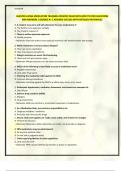
ASSISTED LIVING MEDICATION TRAINING UPDATED EXAM WITH MOST TESTED QUESTIONS
AND ANSWERS | GRADED A+ | ASSURED SUCCESS WITH DETAILED RATIONALES
A resident may store and self-administer his own medications if:
A. The facility nurse approves verbally
B. The resident requests it
C. There is written physician approval
D. Family consents
– Rationale: Physician orders must explicitly authorize self-administration and storage.
Which statement is not true about allergies?
A. They can cause anaphylaxis
B. They may require epinephrine
C. Allergic reactions are never life-threatening
D. Hives and rash are common signs
– Rationale: Allergic reactions can be severe and even fatal.
Which of the following is least likely to cause a medication error?
A. Illegible handwriting
B. Look-alike drug names
C. Checking the medication label against the MAR
D. Incorrect dosing calculations
– Rationale: Verifying against the MAR is a safety step, not an error cause.
Orthostatic hypotension, confusion, drowsiness, and nausea are examples of:
A. Side effects
B. Adverse drug reactions (ADRs)
C. Allergies
D. Drug interactions
– Rationale: ADRs are harmful or unintended responses to medications.
As a Medication Aide, your primary responsibility is to:
A. Diagnose residents’ conditions
B. Prescribe over-the-counter drugs
C. Ensure meds and supplies are ready, assist safely, and monitor for changes
D. Perform IV infusions
– Rationale: Medication Aides administer per order, not prescribe or diagnose.
PRN medications may be administered:
A. At any time without order
B. On the aide’s judgment alone
C. Under special guidelines in state regulations
D. Only once per shift
– Rationale: PRNs require defined parameters in policy or regulation.
, ESTUDYR
A routine medication is given:
A. Only after meals
B. Whenever the resident requests
C. On a regularly scheduled basis
D. Only in the morning
– Rationale: Routine orders specify fixed dosing intervals.
Injectable medications by the aide:
A. Can be mixed in the syringe
B. Are given to any resident upon request
C. Must follow state regulations for scope of practice
D. Require no documentation
– Rationale: Injections may be delegated only where legally permitted.
A resident may refuse medication:
A. Only in writing
B. Only during day shift
C. At any time
D. If family agrees
– Rationale: Competent residents have the right to refuse treatment.
When documenting PRN medication use, you must record:
A. Time given
B. Dose given
C. Resident’s response
D. All of the above
– Rationale: Complete documentation ensures safety and continuity.
If a resident refuses medication, on the MAR you should:
A. Skip the line
B. Sign without notation
C. Circle your initials and explain refusal/action taken on the back
D. Call family immediately
– Rationale: Clear record of refusal and follow-up maintains accurate MAR.
Who may administer insulin injections to Mr. Smith?
A. Any staff member
B. Certified Med Aide only
C. Med Passers or Nurses only
D. Family members
– Rationale: Insulin is a high-risk med requiring trained personnel.
If Mrs. Jones’s blood pressure medication runs out, you should:
A. Substitute another resident’s drug
ASSISTED LIVING MEDICATION TRAINING UPDATED EXAM WITH MOST TESTED QUESTIONS
AND ANSWERS | GRADED A+ | ASSURED SUCCESS WITH DETAILED RATIONALES
A resident may store and self-administer his own medications if:
A. The facility nurse approves verbally
B. The resident requests it
C. There is written physician approval
D. Family consents
– Rationale: Physician orders must explicitly authorize self-administration and storage.
Which statement is not true about allergies?
A. They can cause anaphylaxis
B. They may require epinephrine
C. Allergic reactions are never life-threatening
D. Hives and rash are common signs
– Rationale: Allergic reactions can be severe and even fatal.
Which of the following is least likely to cause a medication error?
A. Illegible handwriting
B. Look-alike drug names
C. Checking the medication label against the MAR
D. Incorrect dosing calculations
– Rationale: Verifying against the MAR is a safety step, not an error cause.
Orthostatic hypotension, confusion, drowsiness, and nausea are examples of:
A. Side effects
B. Adverse drug reactions (ADRs)
C. Allergies
D. Drug interactions
– Rationale: ADRs are harmful or unintended responses to medications.
As a Medication Aide, your primary responsibility is to:
A. Diagnose residents’ conditions
B. Prescribe over-the-counter drugs
C. Ensure meds and supplies are ready, assist safely, and monitor for changes
D. Perform IV infusions
– Rationale: Medication Aides administer per order, not prescribe or diagnose.
PRN medications may be administered:
A. At any time without order
B. On the aide’s judgment alone
C. Under special guidelines in state regulations
D. Only once per shift
– Rationale: PRNs require defined parameters in policy or regulation.
, ESTUDYR
A routine medication is given:
A. Only after meals
B. Whenever the resident requests
C. On a regularly scheduled basis
D. Only in the morning
– Rationale: Routine orders specify fixed dosing intervals.
Injectable medications by the aide:
A. Can be mixed in the syringe
B. Are given to any resident upon request
C. Must follow state regulations for scope of practice
D. Require no documentation
– Rationale: Injections may be delegated only where legally permitted.
A resident may refuse medication:
A. Only in writing
B. Only during day shift
C. At any time
D. If family agrees
– Rationale: Competent residents have the right to refuse treatment.
When documenting PRN medication use, you must record:
A. Time given
B. Dose given
C. Resident’s response
D. All of the above
– Rationale: Complete documentation ensures safety and continuity.
If a resident refuses medication, on the MAR you should:
A. Skip the line
B. Sign without notation
C. Circle your initials and explain refusal/action taken on the back
D. Call family immediately
– Rationale: Clear record of refusal and follow-up maintains accurate MAR.
Who may administer insulin injections to Mr. Smith?
A. Any staff member
B. Certified Med Aide only
C. Med Passers or Nurses only
D. Family members
– Rationale: Insulin is a high-risk med requiring trained personnel.
If Mrs. Jones’s blood pressure medication runs out, you should:
A. Substitute another resident’s drug