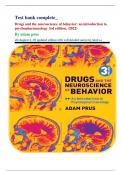
Test bank complete_
Drugs and the neuroscience of behavior: an introduction to
psychopharmacology 3rd edition, (2022)
By adam prus
all chapters 1-15| updated edition with well detailed answers| rated a+
,chapter 1: introduction to psychopharmacology ------------------------------------------------------------ 3
chapter 2: the nervous system --------------------------------------------------------------------------------- 54
chapter 3: neurotransmission ---------------------------------------------------------------------------------- 90
chapter 4: properties of drugs -------------------------------------------------------------------------------- 129
chapter 5: drugs of abuse -------------------------------------------------------------------------------------- 168
chapter 6: psychostimulants ----------------------------------------------------------------------------------- 211
chapter 7: nicotine and caffeine ------------------------------------------------------------------------------ 252
chapter 8. Depressants------------------------------------------------------------------------------------------ 290
chapter 9: alcohol ------------------------------------------------------------------------------------------------ 332
chapter 10. Opioids ---------------------------------------------------------------------------------------------- 373
chapter 11. Cannabinoids -------------------------------------------------------------------------------------- 415
chapter 12. Psychedelic drugs --------------------------------------------------------------------------------- 463
chapter 13. Treatments for depression and bipolar disorder ----------------------------------------- 504
chapter 14. Treatments for anxiety disorders ------------------------------------------------------------- 544
chapter 15. Antipsychotic drugs ------------------------------------------------------------------------------ 587
,Chapter 1: introduction to psychopharmacology
adam prus: drugs and the neuroscience of behavior: an introduction to psychopharmacology 3rd edition, (2022) test bank
Multiple choice
1. Which of the following fields are encompassed in psychopharmacology?
A. Psychology and pharmacology
B. Psychology and sociology
C. Biology and sociology
D. Pharmacy and pharmacology
Ans: a
Psychopharmacology combines psychology, the study of behavior and mental processes,
with pharmacology, the study of drug action. It focuses on how drugs affect mood,
perception, thinking, and behavior.
Answer location: psychopharmacology
Learning objective: psychopharmacology
Cognitive domain: knowledge difficulty
Level: easy
2. Which of the following describes a psychoactive drug?
A. John feels better after rubbing an oral gel on his sore tooth.
B. John’s headache pain is gone after taking a pain-relieving drug.
C. John feels less depressed after taking his antidepressant medication.
D. None of these answers describes a psychoactive drug.
Ans: c
A psychoactive drug affects the central nervous system and alters mood, perception, or
behavior. Antidepressants influence brain chemistry and emotional state, fitting this
definition.
Answer location: psychopharmacology
, Learning objective: psychopharmacology
Cognitive domain: application
Difficulty level: medium
3. Drugs used to treat disorders are referred to as:
A. Pharmacotherapeutic drugs.
B. Psychoactive drugs.
C. Alternative medicines.
D. Recreational drugs.
Ans: a
Pharmacotherapeutic drugs are prescribed or used to treat, manage, or prevent disease,
including psychological and neurological conditions.
Answer location: why read a book on psychopharmacology?
Learning objective: psychopharmacology
Cognitive domain: knowledge
Difficulty level: medium
4. A drug is defined as an administered substance that:
A. Produces psychological effects.
B. Is taken orally.
C. Is shaped like a pill or tablet.
D. Alters physiological functioning.
Ans: d
A drug is any substance that, when introduced into the body, causes a physiological
change. This broad definition includes all routes of administration and types of effects.
Answer location: drugs: administered substances that alter physiological functions
Learning objective: psychopharmacology
Cognitive domain: knowledge
Difficulty level: easy
Drugs and the neuroscience of behavior: an introduction to
psychopharmacology 3rd edition, (2022)
By adam prus
all chapters 1-15| updated edition with well detailed answers| rated a+
,chapter 1: introduction to psychopharmacology ------------------------------------------------------------ 3
chapter 2: the nervous system --------------------------------------------------------------------------------- 54
chapter 3: neurotransmission ---------------------------------------------------------------------------------- 90
chapter 4: properties of drugs -------------------------------------------------------------------------------- 129
chapter 5: drugs of abuse -------------------------------------------------------------------------------------- 168
chapter 6: psychostimulants ----------------------------------------------------------------------------------- 211
chapter 7: nicotine and caffeine ------------------------------------------------------------------------------ 252
chapter 8. Depressants------------------------------------------------------------------------------------------ 290
chapter 9: alcohol ------------------------------------------------------------------------------------------------ 332
chapter 10. Opioids ---------------------------------------------------------------------------------------------- 373
chapter 11. Cannabinoids -------------------------------------------------------------------------------------- 415
chapter 12. Psychedelic drugs --------------------------------------------------------------------------------- 463
chapter 13. Treatments for depression and bipolar disorder ----------------------------------------- 504
chapter 14. Treatments for anxiety disorders ------------------------------------------------------------- 544
chapter 15. Antipsychotic drugs ------------------------------------------------------------------------------ 587
,Chapter 1: introduction to psychopharmacology
adam prus: drugs and the neuroscience of behavior: an introduction to psychopharmacology 3rd edition, (2022) test bank
Multiple choice
1. Which of the following fields are encompassed in psychopharmacology?
A. Psychology and pharmacology
B. Psychology and sociology
C. Biology and sociology
D. Pharmacy and pharmacology
Ans: a
Psychopharmacology combines psychology, the study of behavior and mental processes,
with pharmacology, the study of drug action. It focuses on how drugs affect mood,
perception, thinking, and behavior.
Answer location: psychopharmacology
Learning objective: psychopharmacology
Cognitive domain: knowledge difficulty
Level: easy
2. Which of the following describes a psychoactive drug?
A. John feels better after rubbing an oral gel on his sore tooth.
B. John’s headache pain is gone after taking a pain-relieving drug.
C. John feels less depressed after taking his antidepressant medication.
D. None of these answers describes a psychoactive drug.
Ans: c
A psychoactive drug affects the central nervous system and alters mood, perception, or
behavior. Antidepressants influence brain chemistry and emotional state, fitting this
definition.
Answer location: psychopharmacology
, Learning objective: psychopharmacology
Cognitive domain: application
Difficulty level: medium
3. Drugs used to treat disorders are referred to as:
A. Pharmacotherapeutic drugs.
B. Psychoactive drugs.
C. Alternative medicines.
D. Recreational drugs.
Ans: a
Pharmacotherapeutic drugs are prescribed or used to treat, manage, or prevent disease,
including psychological and neurological conditions.
Answer location: why read a book on psychopharmacology?
Learning objective: psychopharmacology
Cognitive domain: knowledge
Difficulty level: medium
4. A drug is defined as an administered substance that:
A. Produces psychological effects.
B. Is taken orally.
C. Is shaped like a pill or tablet.
D. Alters physiological functioning.
Ans: d
A drug is any substance that, when introduced into the body, causes a physiological
change. This broad definition includes all routes of administration and types of effects.
Answer location: drugs: administered substances that alter physiological functions
Learning objective: psychopharmacology
Cognitive domain: knowledge
Difficulty level: easy