
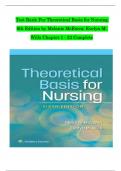
Test Bank For Theoretical Basis for Nursing
6th Edition by Melanie McEwen; Evelyn M.
Wills Chapter 1 - 23 Complete
,Unit I: Introduction to Theory
Chapter 1 Philosophy, Science, and Nursing
Chapter 2 Overview of Theory in Nursing
Chapter 3 Concept Development: Clarifying Meaning of Terms
Chapter 4 Theory Development: Structuring Conceptual
Relationships in Nursing
Chapter 5 Theory Analysis and Evaluation
Unit II: Nursing Theories
Chapter 6 Overview of Grand Nursing Theories
Chapter 7 Grand Nursing Theories Based on Human Needs
Chapter 8 Grand Nursing Theories Based on Interactive
Process
Chapter 9 Grand Nursing Theories Based on Unitary Process
Chapter 10 Introduction to Middle-Range Nursing Theories
Chapter 11 Overview of Selected Middle-Range Nursing
Theories
Chapter 12 Evidence-Based Practice and Nursing Theory
Unit III: Shared Theories Used by Nurses
Chapter 13 Theories From the Sociologic Sciences
Chapter 14 Theories From the Behavioral Sciences
Chapter 15 Theories From the Biomedical Sciences
Chapter 16 Theories, Models, and Frameworks From
Leadership and Management
Chapter 17 Learning Theories
Chapter 18 Ethical Theories and Principles
Unit IV: Application of Theory in Nursing
Chapter 19 Application of Theory in Nursing Practice
Chapter 20 Application of Theory in Nursing Research
Chapter 21 Application of Theory in Nursing Administration
and Management
Chapter 22 Application of Theory in Nursing Education
Chapter 23 Future Issues in Nursing Theory
,Chapter 1 Philosophy, Science, and Nursing
1. Nursing has been considered both a profession and an occupation.
Which of the following supports defining nursing as a profession?
A) Autonomy
B) Learned vocation
C) Varied level of skill
D) Career with varied knowledge
2. How many levels of entry into practice exist for registered nurses?
A) One
B) Two
C) Three
D) Four
3. Nursing is classified as which type of science?
A) Pure
B) Natural
C) Human
D) Applied
4. In defining the philosophy of nursing, which of the following would not be
included?
A) Purpose of human life
B) Nature of being
C) Theory of knowledge
D) Scientific method
5. When discussing the science and philosophy of a discipline, how would one
define the two in relation to each other?
A) Autonomous
B) Reliant
C) Linked
D) Unrelated
6. Philosophy's ddefinition dincludes dwhich dof dthe dfollowing?
A) Study dof dproblems dthat dare dabstract dand dgeneral
B) Measures dobservable dphenomena dof dinterest din da ddiscipline
C) Empirical dway dof dgathering ddata
D) Grounded dand dtested din dexperience
, 7. Based don dthe dscience dand dphilosophical dschools dof dthought, dwhich done
dis dfounded don dthedbelief dthat dwhat dis dexperienced dis dwhat dexists dand
dthat dexperiences dbe dverified dthrough dscientific dmethodology?
A) Received dview
B) Human dscience
C) Phenomenology
D) Constructivism
8. Based don dthe dscience dand dphilosophical dschools dof dthought, dwhich
done dcenters don ddescriptions dthat dare dderived dfrom dcollectively
dlived dexperiences, dinterrelatedness, dhuman dinterpretation, dand
d learned dreality?
A) Empiricism
B) Positivism
C) Rationalism
D) Perceived dview
9. When ddefining dnursing dphilosophy, dwhich dof dthe dfollowing dis
dappropriate?
A) Refers dto dthe dbelief dsystem dof dthe dprofession dand dprovides
dperspectives dfor dpractice,dscholarship, dand dresearch.
B) The dsubstantive, ddiscipline-specific dknowledge dthat
dfocuses don dthedhuman-universe-health dprocess.
C) Refers dto dthe dsystem dof drelationship dof dhuman dresponse din dhealth
dand dillness.
D) Responsible dfor dgeneration dof dknowledge, dwhich dprovides ddirection dfor
dfuture.
10. When ddiscussing dthe dknowledge ddevelopment d in dnursing dscience, dthe
dstudy dof dtheory disdreferred dto das dwhich dof dthe dfollowing?
A) Ontology
B) Epistemology
C) Methodology
D) Philosophy
11. There dare dseveral ddefined dways dof dknowing. dWhich dway dof dknowing
dis ddefined das d“adpriori dknowledge dthat d pertain dto dknowledge dgained
dfrom dthought d alone?”
A) Empirics
B) Personal
C) Intuitive
D) Somatic
6th Edition by Melanie McEwen; Evelyn M.
Wills Chapter 1 - 23 Complete
,Unit I: Introduction to Theory
Chapter 1 Philosophy, Science, and Nursing
Chapter 2 Overview of Theory in Nursing
Chapter 3 Concept Development: Clarifying Meaning of Terms
Chapter 4 Theory Development: Structuring Conceptual
Relationships in Nursing
Chapter 5 Theory Analysis and Evaluation
Unit II: Nursing Theories
Chapter 6 Overview of Grand Nursing Theories
Chapter 7 Grand Nursing Theories Based on Human Needs
Chapter 8 Grand Nursing Theories Based on Interactive
Process
Chapter 9 Grand Nursing Theories Based on Unitary Process
Chapter 10 Introduction to Middle-Range Nursing Theories
Chapter 11 Overview of Selected Middle-Range Nursing
Theories
Chapter 12 Evidence-Based Practice and Nursing Theory
Unit III: Shared Theories Used by Nurses
Chapter 13 Theories From the Sociologic Sciences
Chapter 14 Theories From the Behavioral Sciences
Chapter 15 Theories From the Biomedical Sciences
Chapter 16 Theories, Models, and Frameworks From
Leadership and Management
Chapter 17 Learning Theories
Chapter 18 Ethical Theories and Principles
Unit IV: Application of Theory in Nursing
Chapter 19 Application of Theory in Nursing Practice
Chapter 20 Application of Theory in Nursing Research
Chapter 21 Application of Theory in Nursing Administration
and Management
Chapter 22 Application of Theory in Nursing Education
Chapter 23 Future Issues in Nursing Theory
,Chapter 1 Philosophy, Science, and Nursing
1. Nursing has been considered both a profession and an occupation.
Which of the following supports defining nursing as a profession?
A) Autonomy
B) Learned vocation
C) Varied level of skill
D) Career with varied knowledge
2. How many levels of entry into practice exist for registered nurses?
A) One
B) Two
C) Three
D) Four
3. Nursing is classified as which type of science?
A) Pure
B) Natural
C) Human
D) Applied
4. In defining the philosophy of nursing, which of the following would not be
included?
A) Purpose of human life
B) Nature of being
C) Theory of knowledge
D) Scientific method
5. When discussing the science and philosophy of a discipline, how would one
define the two in relation to each other?
A) Autonomous
B) Reliant
C) Linked
D) Unrelated
6. Philosophy's ddefinition dincludes dwhich dof dthe dfollowing?
A) Study dof dproblems dthat dare dabstract dand dgeneral
B) Measures dobservable dphenomena dof dinterest din da ddiscipline
C) Empirical dway dof dgathering ddata
D) Grounded dand dtested din dexperience
, 7. Based don dthe dscience dand dphilosophical dschools dof dthought, dwhich done
dis dfounded don dthedbelief dthat dwhat dis dexperienced dis dwhat dexists dand
dthat dexperiences dbe dverified dthrough dscientific dmethodology?
A) Received dview
B) Human dscience
C) Phenomenology
D) Constructivism
8. Based don dthe dscience dand dphilosophical dschools dof dthought, dwhich
done dcenters don ddescriptions dthat dare dderived dfrom dcollectively
dlived dexperiences, dinterrelatedness, dhuman dinterpretation, dand
d learned dreality?
A) Empiricism
B) Positivism
C) Rationalism
D) Perceived dview
9. When ddefining dnursing dphilosophy, dwhich dof dthe dfollowing dis
dappropriate?
A) Refers dto dthe dbelief dsystem dof dthe dprofession dand dprovides
dperspectives dfor dpractice,dscholarship, dand dresearch.
B) The dsubstantive, ddiscipline-specific dknowledge dthat
dfocuses don dthedhuman-universe-health dprocess.
C) Refers dto dthe dsystem dof drelationship dof dhuman dresponse din dhealth
dand dillness.
D) Responsible dfor dgeneration dof dknowledge, dwhich dprovides ddirection dfor
dfuture.
10. When ddiscussing dthe dknowledge ddevelopment d in dnursing dscience, dthe
dstudy dof dtheory disdreferred dto das dwhich dof dthe dfollowing?
A) Ontology
B) Epistemology
C) Methodology
D) Philosophy
11. There dare dseveral ddefined dways dof dknowing. dWhich dway dof dknowing
dis ddefined das d“adpriori dknowledge dthat d pertain dto dknowledge dgained
dfrom dthought d alone?”
A) Empirics
B) Personal
C) Intuitive
D) Somatic


