
Chapter 07: Bacterial Metabolism
MULTIPLE CHOICE
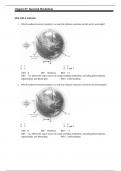
1. Which numbered arrow(s) point(s) to a step that indicates reactions carried out by autotrophs?
a. 1 c. 3
b. 2 d. 1 and 2
ANS: A DIF: Moderate REF: 7.1
OBJ: 7.1a Define the major classes of energy-yielding metabolism, including photosynthesis,
organotrophy, and lithotrophy. MSC: Understanding
2. Which numbered arrow(s) point(s) to a step that indicates reactions carried out by heterotrophs?
a. 1 c. 3
b. 2 d. 1 and 2
ANS: B DIF: Moderate REF: 7.1
OBJ: 7.1a Define the major classes of energy-yielding metabolism, including photosynthesis,
organotrophy, and lithotrophy. MSC: Understanding
,3. An organism gains energy using H2 as an electron donor and sulfate as an electron acceptor. This
organism is categorized as an
a. aerobic lithotroph. c. aerobic organotroph.
b. anaerobic lithotroph. d. anaerobic organotroph.
ANS: B DIF: Moderate REF: 7.1
OBJ: 7.1a Define the major classes of energy-yielding metabolism, including photosynthesis,
organotrophy, and lithotrophy. MSC: Analyzing
4. Which of the following is true of energy and living cells?
a. Organisms can create their own energy.
b. Organisms do not require inputs of energy from the environment.
c. Organisms require inputs of energy from the environment to survive.
d. Only heterotrophic organisms require environmental energy inputs to survive.
ANS: C DIF: Easy REF: 7.1
OBJ: 7.1b Explain the importance of energy and entropy for living cells.
MSC: Understanding
5. A metabolic reaction can only provide energy to cells if
a. DG is negative. c. DS is negative.
b. DG is positive. d. DS is positive.
ANS: A DIF: Easy REF: 7.1
OBJ: 7.1b Explain the importance of energy and entropy for living cells.
MSC: Understanding
6. Enzymes increase reaction rates by
a. increasing activation energies.
b. decreasing activation energies.
c. increasing the concentration of reactants.
d. increasing the concentration of products.
ANS: B DIF: Easy REF: 7.1
OBJ: 7.1c State the role of enzymes in controlling metabolic biochemistry.
MSC: Understanding
7. Which of the following is true of metabolic reactions?
a. They are all catalyzed by enzymes.
b. They all release energy.
c. Reactions are unique to particular organisms.
d. They always use or produce ATP.
ANS: A DIF: Moderate REF: 7.1
OBJ: 7.1c State the role of enzymes in controlling metabolic biochemistry.
MSC: Analyzing
8. What catabolite is produced first from the catabolism of starch and cellulose?
a. acetyl-CoA c. glucose
b. amino acids d. glycerol
, ANS: C DIF: Moderate REF: 7.2
OBJ: 7.2a Describe how catabolism converts many complex food molecules to a few kinds of
catabolites. MSC: Understanding
9. The hydrolysis of a protein into amino acids is an example of
a. anabolism. c. lithotrophy.
b. catabolism. d. nitrogen fixation.
ANS: B DIF: Easy REF: 7.2
OBJ: 7.2a Describe how catabolism converts many complex food molecules to a few kinds of
catabolites. MSC: Understanding
10. The human genome does NOT code for enzymes that can catabolize
a. cellulose. c. fatty acids.
b. starch. d. proteins.
ANS: A DIF: Moderate REF: 7.2
OBJ: 7.2a Describe how catabolism converts many complex food molecules to a few kinds of
catabolites. MSC: Understanding
11. Which reactions both require energy?
a. ATP hydrolysis and reduction of NAD+
b. ATP hydrolysis and oxidation of NADH
c. ATP production and reduction of NAD+
d. ATP production and oxidation of NADH
ANS: C DIF: Moderate REF: 7.2
OBJ: 7.2c Describe how the energy carriers ATP and NADH transfer energy between energy-yielding
and energy-spending reactions. MSC: Understanding
12. Which statement describes the reaction shown?
a. It is an anabolic reaction.
b. It is a hydrolysis reaction.
c. It is a redox reaction.
d. It has a negative change in free energy.
ANS: A DIF: Difficult REF: 7.2
OBJ: 7.2b Explain how catabolism yields energy and how the energy is stored for use.
MSC: Analyzing
13. What molecule is depicted here?
MULTIPLE CHOICE
1. Which numbered arrow(s) point(s) to a step that indicates reactions carried out by autotrophs?
a. 1 c. 3
b. 2 d. 1 and 2
ANS: A DIF: Moderate REF: 7.1
OBJ: 7.1a Define the major classes of energy-yielding metabolism, including photosynthesis,
organotrophy, and lithotrophy. MSC: Understanding
2. Which numbered arrow(s) point(s) to a step that indicates reactions carried out by heterotrophs?
a. 1 c. 3
b. 2 d. 1 and 2
ANS: B DIF: Moderate REF: 7.1
OBJ: 7.1a Define the major classes of energy-yielding metabolism, including photosynthesis,
organotrophy, and lithotrophy. MSC: Understanding
,3. An organism gains energy using H2 as an electron donor and sulfate as an electron acceptor. This
organism is categorized as an
a. aerobic lithotroph. c. aerobic organotroph.
b. anaerobic lithotroph. d. anaerobic organotroph.
ANS: B DIF: Moderate REF: 7.1
OBJ: 7.1a Define the major classes of energy-yielding metabolism, including photosynthesis,
organotrophy, and lithotrophy. MSC: Analyzing
4. Which of the following is true of energy and living cells?
a. Organisms can create their own energy.
b. Organisms do not require inputs of energy from the environment.
c. Organisms require inputs of energy from the environment to survive.
d. Only heterotrophic organisms require environmental energy inputs to survive.
ANS: C DIF: Easy REF: 7.1
OBJ: 7.1b Explain the importance of energy and entropy for living cells.
MSC: Understanding
5. A metabolic reaction can only provide energy to cells if
a. DG is negative. c. DS is negative.
b. DG is positive. d. DS is positive.
ANS: A DIF: Easy REF: 7.1
OBJ: 7.1b Explain the importance of energy and entropy for living cells.
MSC: Understanding
6. Enzymes increase reaction rates by
a. increasing activation energies.
b. decreasing activation energies.
c. increasing the concentration of reactants.
d. increasing the concentration of products.
ANS: B DIF: Easy REF: 7.1
OBJ: 7.1c State the role of enzymes in controlling metabolic biochemistry.
MSC: Understanding
7. Which of the following is true of metabolic reactions?
a. They are all catalyzed by enzymes.
b. They all release energy.
c. Reactions are unique to particular organisms.
d. They always use or produce ATP.
ANS: A DIF: Moderate REF: 7.1
OBJ: 7.1c State the role of enzymes in controlling metabolic biochemistry.
MSC: Analyzing
8. What catabolite is produced first from the catabolism of starch and cellulose?
a. acetyl-CoA c. glucose
b. amino acids d. glycerol
, ANS: C DIF: Moderate REF: 7.2
OBJ: 7.2a Describe how catabolism converts many complex food molecules to a few kinds of
catabolites. MSC: Understanding
9. The hydrolysis of a protein into amino acids is an example of
a. anabolism. c. lithotrophy.
b. catabolism. d. nitrogen fixation.
ANS: B DIF: Easy REF: 7.2
OBJ: 7.2a Describe how catabolism converts many complex food molecules to a few kinds of
catabolites. MSC: Understanding
10. The human genome does NOT code for enzymes that can catabolize
a. cellulose. c. fatty acids.
b. starch. d. proteins.
ANS: A DIF: Moderate REF: 7.2
OBJ: 7.2a Describe how catabolism converts many complex food molecules to a few kinds of
catabolites. MSC: Understanding
11. Which reactions both require energy?
a. ATP hydrolysis and reduction of NAD+
b. ATP hydrolysis and oxidation of NADH
c. ATP production and reduction of NAD+
d. ATP production and oxidation of NADH
ANS: C DIF: Moderate REF: 7.2
OBJ: 7.2c Describe how the energy carriers ATP and NADH transfer energy between energy-yielding
and energy-spending reactions. MSC: Understanding
12. Which statement describes the reaction shown?
a. It is an anabolic reaction.
b. It is a hydrolysis reaction.
c. It is a redox reaction.
d. It has a negative change in free energy.
ANS: A DIF: Difficult REF: 7.2
OBJ: 7.2b Explain how catabolism yields energy and how the energy is stored for use.
MSC: Analyzing
13. What molecule is depicted here?


