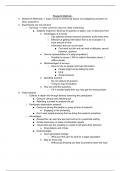
Unit 1: Surds, algebra, functions and probability
In Unit 1, students will develop mathematical understandings and skills to solve problems relating to:
• Topic 1: Surds and quadratic functions
• Topic 2: Binomial expansion and cubic functions
• Topic 3: Functions and relations
• Topic 4: Trigonometric functions
• Topic 5: Probability.
SYLLABUS: NOTES: Mr Kingscote, KING of the HOMEWORK:
Topic 1: Surds and Quadratic Functions
Understand the Simplifying Surds: Simplifying Surds:
concept of a surd Find the square numbers that can be multiplied to get the number Simplify: √ 32
as an irrational inside the square root.
number √4 × √8
represented using √ x2 y
a square root or a 2√8
radical sign. √ x2 √ y
2 √4 √2
• Simplify square x√y
roots of natural 2 ×2 × √ 2
numbers which
contain perfect Rationalising the Denominator: 4 √2
square factors, e.g. The denominator must be a rational number. To make the
√45 = √9 × 5 = denominator a rational number, you must multiply the Rationalising the Denominator:
√9√5 = 3√5 denominator by itself: 1
Rationalise:
√7
• Rationalise the x √y
denominator of × 1 √7
√y √y ×
fractional √7 √ 7
expressions x x√y
involving square = √7
√y y
roots, e.g. √7 √3 = 7
,√7 √3 × √3 √3 = Adding and Subtracting Surds:
√7×√3 √3×√3 = √21 Collect ‘like’ terms. 1
Specialist:
3 If no ‘like’ terms are found, try simplifying surds. 3+ √ 2
n √ x+ m √ y +n √ x +m √ y¿ 2 n √ x +2 m √ y
• Use the four 1 3−√ 2
¿ ×
operations to 2 n √ y −n √ y 3+ √ 2 3−√ 2
simplify surds, e.g. ¿n√ y
√5 − 2√5 + 4√5 = 3−√ 2
¿
3√5 and 2√3 × Multiplying and Dividing Surds: 9−3 √ 2+3 √ 2−2
5√11 = 10√33 Sub- √ a × √ b=√ ab
3−√ 2
¿
topic: Quadratic m √ a× n √ b=mn √ ab 9−2
functions (7 hours)
√
√a = a 3−√ 2
¿
• Recognise and 7
determine
√b b
features of the Adding and Subtracting Surds:
Linear Functions:
graphs of 𝑦 = 𝑥 2 , 2 √5+ 4 √ 5
𝑦 = 𝑎𝑥 2 + 𝑏𝑥 + 𝑐, 𝑦 √ 2 2
d= ( x 2−x 1 ) + ( y 2− y1 )
¿6√ 5
= 𝑎(𝑥 − ℎ) 2 + 𝑘
y 2− y 1
and 𝑦 = 𝑎(𝑥 − 𝑥1 ) m= 3 √ 5−√ 7+ 4 √ 5−3 √ 7
(𝑥 − 𝑥2 ), including x 2−x 1 ¿ 7 √ 5−4 √ 7
their parabolic
nature, turning Quadratic: 5 √ 3−√ 2+4 √ 8−2 √12
points, axes of Function: ¿ 5 √ 3−√ 2+4 √ 4 √ 2−2 √ 4 √ 3
2
symmetry and y=a x +bx +c ¿ 5 √ 3−√ 2+8 √ 2−4 √ 3
intercepts. ¿ √ 3+7 √ 2
Equation:
• Solve quadratic 0=a x 2+ bx+ c Multiplying and Dividing Surds:
equations √3 ×√5
algebraically using Expression: ¿ √ 15
2
factorisation, the a x +bx+ c
quadratic formula 2 √3 × 4 √ 7
(both exact and Quadratic Functions: ¿ 8 √ 21
approximate There are 3 ways to express a quadratic.
solutions), General Form Vertex Form Intercept form
, completing the
square and using
technology.
(standard):
2
y=a x +bx +c
(turning
point):
(root):
y=a ( x−h ) +k y=a(x−x 1)( x−x2 )
2
√ 10 = 10
2 √
¿√5
2
‘a ’ is the same in all 3 forms. It tells us the vertical
• Sketch the stretch (dilation). 6 √ 20 × 4 √ 2
graphs of Vertex: Turning point 16 √ 3 × 2 √ 10
quadratic −b (h , k ) vertex x 1+ x 2
functions, with or x= x=
2a ( x , y ) vertex 2 24 √ 40
¿
without Middle of the 32 √ 30
technology. Substitute x to get y roots.
3 √ 4 √3
• Use the ¿ ×
Substitute x to 4 √ 3 √3
discriminant to get y
determine the Roots (x-intercepts): 6 √3
number of ¿
y=0 y=0 Roots x 1and 4×3
solutions to a Solve: Do the x2
quadratic Formula same to 6 √3
equation. ¿
Factorise both sides 12
Null factor
• Determine law √3
turning points and Completin ¿
2
zeros of quadratic g the
functions, with square
and without GDC Solve: Recap from year 10
technology. y-intercept: a) By factorising: 4 x2 +1=4 x
x=0 x=0 x=0 2
4 x −4 x +1=0
• Model and solve c
‘ ’ value Solve: Solve: 2
4 x −2 x−2 x +1=0
problems that 2 x ( 2 x−1 )−1 ( 2 x−1 )=0
involve quadratic ( 2 x−1 ) (2 x−1 )=0
functions, with ( 2 x−1 )2=0
and without Quadratic Formula:
1
−b ± √ b −4 ac
2
technology. x=
x= 2
2a
FUN: b) By completing the square: x 2+ 4 x−7=0
Quadratic Formula
The Discriminant: ( x +2 )2
Proof: 2
Delta : ∆ ¿ x + 4 x +4=0
In Unit 1, students will develop mathematical understandings and skills to solve problems relating to:
• Topic 1: Surds and quadratic functions
• Topic 2: Binomial expansion and cubic functions
• Topic 3: Functions and relations
• Topic 4: Trigonometric functions
• Topic 5: Probability.
SYLLABUS: NOTES: Mr Kingscote, KING of the HOMEWORK:
Topic 1: Surds and Quadratic Functions
Understand the Simplifying Surds: Simplifying Surds:
concept of a surd Find the square numbers that can be multiplied to get the number Simplify: √ 32
as an irrational inside the square root.
number √4 × √8
represented using √ x2 y
a square root or a 2√8
radical sign. √ x2 √ y
2 √4 √2
• Simplify square x√y
roots of natural 2 ×2 × √ 2
numbers which
contain perfect Rationalising the Denominator: 4 √2
square factors, e.g. The denominator must be a rational number. To make the
√45 = √9 × 5 = denominator a rational number, you must multiply the Rationalising the Denominator:
√9√5 = 3√5 denominator by itself: 1
Rationalise:
√7
• Rationalise the x √y
denominator of × 1 √7
√y √y ×
fractional √7 √ 7
expressions x x√y
involving square = √7
√y y
roots, e.g. √7 √3 = 7
,√7 √3 × √3 √3 = Adding and Subtracting Surds:
√7×√3 √3×√3 = √21 Collect ‘like’ terms. 1
Specialist:
3 If no ‘like’ terms are found, try simplifying surds. 3+ √ 2
n √ x+ m √ y +n √ x +m √ y¿ 2 n √ x +2 m √ y
• Use the four 1 3−√ 2
¿ ×
operations to 2 n √ y −n √ y 3+ √ 2 3−√ 2
simplify surds, e.g. ¿n√ y
√5 − 2√5 + 4√5 = 3−√ 2
¿
3√5 and 2√3 × Multiplying and Dividing Surds: 9−3 √ 2+3 √ 2−2
5√11 = 10√33 Sub- √ a × √ b=√ ab
3−√ 2
¿
topic: Quadratic m √ a× n √ b=mn √ ab 9−2
functions (7 hours)
√
√a = a 3−√ 2
¿
• Recognise and 7
determine
√b b
features of the Adding and Subtracting Surds:
Linear Functions:
graphs of 𝑦 = 𝑥 2 , 2 √5+ 4 √ 5
𝑦 = 𝑎𝑥 2 + 𝑏𝑥 + 𝑐, 𝑦 √ 2 2
d= ( x 2−x 1 ) + ( y 2− y1 )
¿6√ 5
= 𝑎(𝑥 − ℎ) 2 + 𝑘
y 2− y 1
and 𝑦 = 𝑎(𝑥 − 𝑥1 ) m= 3 √ 5−√ 7+ 4 √ 5−3 √ 7
(𝑥 − 𝑥2 ), including x 2−x 1 ¿ 7 √ 5−4 √ 7
their parabolic
nature, turning Quadratic: 5 √ 3−√ 2+4 √ 8−2 √12
points, axes of Function: ¿ 5 √ 3−√ 2+4 √ 4 √ 2−2 √ 4 √ 3
2
symmetry and y=a x +bx +c ¿ 5 √ 3−√ 2+8 √ 2−4 √ 3
intercepts. ¿ √ 3+7 √ 2
Equation:
• Solve quadratic 0=a x 2+ bx+ c Multiplying and Dividing Surds:
equations √3 ×√5
algebraically using Expression: ¿ √ 15
2
factorisation, the a x +bx+ c
quadratic formula 2 √3 × 4 √ 7
(both exact and Quadratic Functions: ¿ 8 √ 21
approximate There are 3 ways to express a quadratic.
solutions), General Form Vertex Form Intercept form
, completing the
square and using
technology.
(standard):
2
y=a x +bx +c
(turning
point):
(root):
y=a ( x−h ) +k y=a(x−x 1)( x−x2 )
2
√ 10 = 10
2 √
¿√5
2
‘a ’ is the same in all 3 forms. It tells us the vertical
• Sketch the stretch (dilation). 6 √ 20 × 4 √ 2
graphs of Vertex: Turning point 16 √ 3 × 2 √ 10
quadratic −b (h , k ) vertex x 1+ x 2
functions, with or x= x=
2a ( x , y ) vertex 2 24 √ 40
¿
without Middle of the 32 √ 30
technology. Substitute x to get y roots.
3 √ 4 √3
• Use the ¿ ×
Substitute x to 4 √ 3 √3
discriminant to get y
determine the Roots (x-intercepts): 6 √3
number of ¿
y=0 y=0 Roots x 1and 4×3
solutions to a Solve: Do the x2
quadratic Formula same to 6 √3
equation. ¿
Factorise both sides 12
Null factor
• Determine law √3
turning points and Completin ¿
2
zeros of quadratic g the
functions, with square
and without GDC Solve: Recap from year 10
technology. y-intercept: a) By factorising: 4 x2 +1=4 x
x=0 x=0 x=0 2
4 x −4 x +1=0
• Model and solve c
‘ ’ value Solve: Solve: 2
4 x −2 x−2 x +1=0
problems that 2 x ( 2 x−1 )−1 ( 2 x−1 )=0
involve quadratic ( 2 x−1 ) (2 x−1 )=0
functions, with ( 2 x−1 )2=0
and without Quadratic Formula:
1
−b ± √ b −4 ac
2
technology. x=
x= 2
2a
FUN: b) By completing the square: x 2+ 4 x−7=0
Quadratic Formula
The Discriminant: ( x +2 )2
Proof: 2
Delta : ∆ ¿ x + 4 x +4=0