

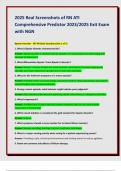
2025 Real Screenshots of RN ATI
Comprehensive Predictor 2023/2025 Exit Exam
with NGN
Bipolar Disorder - ATI RN Style Questions (Set 1 of 5)
1. What is bipolar disorder characterized by?
Answer: Bipolar disorder is characterized by episodes of mania/hypomania alternating with
episodes of depression.
2. What differentiates Bipolar I from Bipolar II disorder?
Answer: Bipolar I involves at least one manic episode, while Bipolar II involves hypomanic
episodes and major depressive episodes but no full manic episodes.
3. What are the hallmark symptoms of a manic episode?
Answer: Elevated mood, increased energy, decreased need for sleep, grandiosity, rapid speech,
racing thoughts, and impulsive behaviors.
4. During a manic episode, what behavior might indicate poor judgment?
Answer: Risky behaviors like excessive spending, sexual indiscretions, or dangerous activities.
5. What is hypomania?
Answer: A milder form of mania with less severe symptoms that do not cause marked
impairment in functioning.
6. Which mood stabilizer is considered the gold standard for bipolar disorder?
Answer: Lithium.
7. What symptoms should a nurse monitor for to detect lithium toxicity?
Answer: Nausea, vomiting, diarrhea, tremors, confusion, and ataxia.
8. What is a major nursing priority when caring for a patient experiencing mania?
Answer: Providing a safe, structured environment and limiting stimuli to reduce agitation.
9. Name two common side effects of lithium therapy.
, Answer: Fine hand tremors and polyuria.
10. What laboratory test is essential for monitoring lithium therapy?
Answer: Serum lithium level.
11. What are common depressive symptoms in bipolar disorder?
Answer: Sadness, fatigue, loss of interest, changes in appetite, sleep disturbances, and suicidal
ideation.
12. Why should antidepressants be used cautiously in bipolar patients?
Answer: Because they can trigger manic episodes if given without mood stabilizers.
13. What is cyclothymic disorder?
Answer: A chronic mood disorder with alternating hypomanic and depressive symptoms that
don’t meet full criteria for mania or major depression.
14. How can nurses help patients manage sleep disturbances in bipolar disorder?
Answer: By encouraging regular sleep patterns and avoiding caffeine and stimulating activities
before bedtime.
15. What is the purpose of psychoeducation for bipolar disorder patients?
Answer: To help patients recognize mood changes, adhere to treatment, and avoid triggers.
16. Which antipsychotic medications are commonly used to treat acute mania?
Answer: Olanzapine and risperidone.
17. What nursing intervention helps manage hyperactivity during a manic episode?
Answer: Providing a low-stimulation environment and redirecting energy into constructive
activities.
18. What risk does a bipolar patient in a depressive episode pose?
Answer: High risk of suicide.
19. Which electrolyte imbalance should be monitored closely in patients on lithium?
Answer: Sodium imbalance.
20. What is the therapeutic serum lithium level?
Answer: Typically 0.6 to 1.2 mEq/L.
Comprehensive Predictor 2023/2025 Exit Exam
with NGN
Bipolar Disorder - ATI RN Style Questions (Set 1 of 5)
1. What is bipolar disorder characterized by?
Answer: Bipolar disorder is characterized by episodes of mania/hypomania alternating with
episodes of depression.
2. What differentiates Bipolar I from Bipolar II disorder?
Answer: Bipolar I involves at least one manic episode, while Bipolar II involves hypomanic
episodes and major depressive episodes but no full manic episodes.
3. What are the hallmark symptoms of a manic episode?
Answer: Elevated mood, increased energy, decreased need for sleep, grandiosity, rapid speech,
racing thoughts, and impulsive behaviors.
4. During a manic episode, what behavior might indicate poor judgment?
Answer: Risky behaviors like excessive spending, sexual indiscretions, or dangerous activities.
5. What is hypomania?
Answer: A milder form of mania with less severe symptoms that do not cause marked
impairment in functioning.
6. Which mood stabilizer is considered the gold standard for bipolar disorder?
Answer: Lithium.
7. What symptoms should a nurse monitor for to detect lithium toxicity?
Answer: Nausea, vomiting, diarrhea, tremors, confusion, and ataxia.
8. What is a major nursing priority when caring for a patient experiencing mania?
Answer: Providing a safe, structured environment and limiting stimuli to reduce agitation.
9. Name two common side effects of lithium therapy.
, Answer: Fine hand tremors and polyuria.
10. What laboratory test is essential for monitoring lithium therapy?
Answer: Serum lithium level.
11. What are common depressive symptoms in bipolar disorder?
Answer: Sadness, fatigue, loss of interest, changes in appetite, sleep disturbances, and suicidal
ideation.
12. Why should antidepressants be used cautiously in bipolar patients?
Answer: Because they can trigger manic episodes if given without mood stabilizers.
13. What is cyclothymic disorder?
Answer: A chronic mood disorder with alternating hypomanic and depressive symptoms that
don’t meet full criteria for mania or major depression.
14. How can nurses help patients manage sleep disturbances in bipolar disorder?
Answer: By encouraging regular sleep patterns and avoiding caffeine and stimulating activities
before bedtime.
15. What is the purpose of psychoeducation for bipolar disorder patients?
Answer: To help patients recognize mood changes, adhere to treatment, and avoid triggers.
16. Which antipsychotic medications are commonly used to treat acute mania?
Answer: Olanzapine and risperidone.
17. What nursing intervention helps manage hyperactivity during a manic episode?
Answer: Providing a low-stimulation environment and redirecting energy into constructive
activities.
18. What risk does a bipolar patient in a depressive episode pose?
Answer: High risk of suicide.
19. Which electrolyte imbalance should be monitored closely in patients on lithium?
Answer: Sodium imbalance.
20. What is the therapeutic serum lithium level?
Answer: Typically 0.6 to 1.2 mEq/L.


