
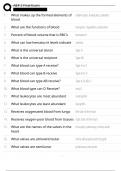
A&P 2 Final Exam
1. What makes up the formed elements of erythrocytes, leukocytes, platelets
blood
2. What are the functions of blood transport, regulation, protection
3. Percent of blood volume that is RBC's hematocrit
4. What can low hematocrit levels indicate anemia
5. What is the universal donor Type O
6. What is the universal recipient Type AB
7. What blood can type A receive? Type A or O
8. What blood can type B receive Type B or O
9. What blood can type AB receive? Type A, B, AB, O
10. What blood type can O Receive? only O
11. What leukocytes are most abundant neutrophils
12. What leukocytes are least abundant basophils
13. Receives oxygenated blood from lungs left side of the heart
14. Recieves oxygen-poor blood from tissues right side of the heart
15. What are the names of the valves in the tricuspid, pulmonary, mitral, aortic
heart
16. What valves are atrioventricular mitral (Bicuspid) and tricuspid
17. What valves are semilunar pulmonary and aortic
, A&P 2 Final Exam
18. What produces the heart sounds that we The closing of the heart valves
know as "Lub-dup"
19. What is the pathway of electrical activity Sinoatrial node, Atrioventricular node, Atri-
oventricular bundle, bundle branches,
subendocardial conducting network
20. What happens when SA node isn't func- Ectopic focus, an abnormal pacemaker that
tioning properly takes over pacing
21. What does the P wave represent? atrial depolarization
22. What does the QRS wave represent? ventricular depolarization
23. What does the T wave represent? ventricular repolarization
24. Site where resistance to blood flow is the Arterioles
greatest
25. Site where exchange of food and gases are Capillaries
made
26. Site where blood pressure is the lowest Large veins
27. Site where the velocity of blood flow is the Large Arteries
fastest
28. Creates the most resistance to blood flow Arterioles
29. What are the primary lymphoid organs red bone marrow and thymus
30. What are the secondary lymphoid organs? lymph nodes, tonsils, spleen, peyers patch-
es, appendix
31. What does the right lymphatic duct drain
1. What makes up the formed elements of erythrocytes, leukocytes, platelets
blood
2. What are the functions of blood transport, regulation, protection
3. Percent of blood volume that is RBC's hematocrit
4. What can low hematocrit levels indicate anemia
5. What is the universal donor Type O
6. What is the universal recipient Type AB
7. What blood can type A receive? Type A or O
8. What blood can type B receive Type B or O
9. What blood can type AB receive? Type A, B, AB, O
10. What blood type can O Receive? only O
11. What leukocytes are most abundant neutrophils
12. What leukocytes are least abundant basophils
13. Receives oxygenated blood from lungs left side of the heart
14. Recieves oxygen-poor blood from tissues right side of the heart
15. What are the names of the valves in the tricuspid, pulmonary, mitral, aortic
heart
16. What valves are atrioventricular mitral (Bicuspid) and tricuspid
17. What valves are semilunar pulmonary and aortic
, A&P 2 Final Exam
18. What produces the heart sounds that we The closing of the heart valves
know as "Lub-dup"
19. What is the pathway of electrical activity Sinoatrial node, Atrioventricular node, Atri-
oventricular bundle, bundle branches,
subendocardial conducting network
20. What happens when SA node isn't func- Ectopic focus, an abnormal pacemaker that
tioning properly takes over pacing
21. What does the P wave represent? atrial depolarization
22. What does the QRS wave represent? ventricular depolarization
23. What does the T wave represent? ventricular repolarization
24. Site where resistance to blood flow is the Arterioles
greatest
25. Site where exchange of food and gases are Capillaries
made
26. Site where blood pressure is the lowest Large veins
27. Site where the velocity of blood flow is the Large Arteries
fastest
28. Creates the most resistance to blood flow Arterioles
29. What are the primary lymphoid organs red bone marrow and thymus
30. What are the secondary lymphoid organs? lymph nodes, tonsils, spleen, peyers patch-
es, appendix
31. What does the right lymphatic duct drain


