Le Passé Composé
Comment utiliser le passé composé?
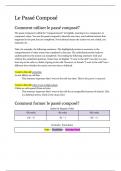
The passé composé is called the “compound past” in English, meaning it is a compound–or
composed–tense. You use the passé composé to describe one-time, non-habitual actions that
happened in the past that are completed. Non-habitual means the action was not a habit, not
repeated, etc.
Take, for example, the following sentences. The highlighted portion is necessary to the
comprehension of what action was completed in the past. The underlined portion helps to
understand how the action was completed. Try reading the following sentences with and
without the underlined portions. Notice how in English, “I went to the café” can refer to a one-
time trip to the café or a habit of going to the café. However, in French “I went to the café” has a
different form whether the action was one time or habitual.
I went to the café yesterday.
Je suis allé(e) au café hier.
- This sentence expresses that I went to the café one time. This is the passé com posé.
I went to the café when I was in high school.
J’allais au café quand j’étais au lycée.
- This sentence expresses that I went to the café for an unspecified amount of time(s). This
is a habitual action, which is the im par fait.
Comment former le passé composé?
Rules for Regular Verbs
-ER verbs -IR verbs -RE verbs
-ER → É -IR → I -RE → U
Formula / Formulaire
Sujet + l'Auxiliaire + Participe Passé
, The auxiliary verb is either êtr e or avoir . The auxiliary verb is also referred to as the “helping
verb” because it makes the passé composé a compound tense. The past participle is whatever
verb happened in the past with the passé composé ending for that verb group (-ER, -IR, -RE).
The auxiliary verb must match the past participle, as only some verbs use êtr e , and most use
avoir.
Comment utiliser le passé composé?
The passé composé is called the “compound past” in English, meaning it is a compound–or
composed–tense. You use the passé composé to describe one-time, non-habitual actions that
happened in the past that are completed. Non-habitual means the action was not a habit, not
repeated, etc.
Take, for example, the following sentences. The highlighted portion is necessary to the
comprehension of what action was completed in the past. The underlined portion helps to
understand how the action was completed. Try reading the following sentences with and
without the underlined portions. Notice how in English, “I went to the café” can refer to a one-
time trip to the café or a habit of going to the café. However, in French “I went to the café” has a
different form whether the action was one time or habitual.
I went to the café yesterday.
Je suis allé(e) au café hier.
- This sentence expresses that I went to the café one time. This is the passé com posé.
I went to the café when I was in high school.
J’allais au café quand j’étais au lycée.
- This sentence expresses that I went to the café for an unspecified amount of time(s). This
is a habitual action, which is the im par fait.
Comment former le passé composé?
Rules for Regular Verbs
-ER verbs -IR verbs -RE verbs
-ER → É -IR → I -RE → U
Formula / Formulaire
Sujet + l'Auxiliaire + Participe Passé
, The auxiliary verb is either êtr e or avoir . The auxiliary verb is also referred to as the “helping
verb” because it makes the passé composé a compound tense. The past participle is whatever
verb happened in the past with the passé composé ending for that verb group (-ER, -IR, -RE).
The auxiliary verb must match the past participle, as only some verbs use êtr e , and most use
avoir.