
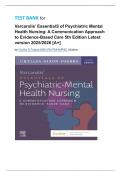
TEST BANK for
Varcarolis’ EssentialS of Psychiatric Mental
Health Nursing: A Communication Approach
to Evidence-Based Care 5th Edition Latest
version 2025/2026 [A+]
by Chyllia D Fosbre MSN RN PMHNP-BC (Author)
,TABLE OF CONTENTS
UNIT I Essential Theoretical ConceptS for Practice
1 Science and the Therapeutic Use of Self in Psychiatric-Mental Health
Nursing
2 Mental Health and Mental IllnesS
3 TheorieS and TherapieS
4 Biological BasiS for Understanding Psychopharmacology
5 SettingS for Psychiatric Care
6 Legal and Ethical BasiS for Practice
UNIT II ToolS for Practice of the Art
7 The Nursing ProcesS in Psychiatric-Mental Health Nursing
8 Communication SkillS: Medium for All Nursing Practice
9 Therapeutic RelationshipS and the Clinical Interview
UNIT III Caring for PatientS With Psychobiological DisorderS
10 Trauma and StresS-Related DisorderS and Dissociative DisorderS
11 Anxiety, Anxiety DisorderS, and Obsessive-Compulsive and Related
DisorderS
12 Somatic Symptom DisorderS
13 Personality DisorderS
14 Eating DisorderS
15 Mood DisorderS: Depression
16 Bipolar Spectrum DisorderS
17 Schizophrenia Spectrum DisorderS and Other Psychotic DisorderS
18 Neurocognitive DisorderS
19 Substance-Related and Addictive DisorderS
UNIT IV Caring for PatientS Experiencing Psychiatric EmergencieS
20 CrisiS and MasS Disaster
21 Child, Partner, and Elder Violence
22 Sexual Violence
23 Suicidal ThoughtS and BehaviorS
24 Anger, Aggression, and Violence
25 Care for the Dying and Those Who Grieve
UNIT V Age-Related Mental Health DisorderS
26 Children and AdolescentS
27 AdultS
,VarcaroliS EssentialS of Psychiatric Mental Health Nursing, 5th Edition (Fosbre)
ChapterS (1 – 28), Complete with Rationale 2025/2026 Latest Version
Chapter 01: Practicing the Science and the Art of Psychiatric Nursing
MULTIPLECHOICE
1. Which outcome, focused on recovery, would be expected in the plan of care for a client living in
the community and diagnosed with seriouS and persistent mental illnesS? Within 3 monthS, the client
will:
a. deny suicidal ideation.
b. report a sense of well-being.
c. take medicationS aS prescribed.
d. attend clinic appointmentS on time. CORRECT;: B
Recovery emphasizeS managing symptomS, reducing psychosocial disability, and improving role
performance.
The goal of recovery iS to empower the individual with mental illnesS to achieve a sense of meaning and
satisfaction in life and to function at the highest possible level of wellnesS. The inCORRECT; optionS
focuS on the classic medical model rather than recovery.
DIF: Cognitive Level: Application (Applying) REF: 2 TOPIC: Nursing ProcesS: OutcomeS Identification
MSC:
NCLEX: Health Promotion and Maintenance
2. In the shift-change report, an off-going nurse criticizeS a client who wearS heavy makeup. Which
comment by the nurse who receiveS the report best demonstrateS advocacy?
a. ThiS iS a psychiatric hospital. CrazinesS iS what we are all about.
b. LetS all show acceptance of thiS client by wearing lotS of makeup too.
c. Your commentS are inconsiderate and inappropriate. Keep the report objective.
d. Our clientS need our help to learn behaviorS that will help them get along in society. CORRECT;:
D
Accepting clientS needS for self-expression and seeking to teach skillS that will contributeto their well-
being demonstrate respect and are important partS of advocacy. The on-
coming nurse needS to take action to ensure that otherS are not prejudiced against theclient. Humor
can be appropriate within the privacy of a shift report but not at the expense of respect for clientS.
Judging the off-going nurse in a critical way will createconflict.
, NurseS must show compassion for each other.
DIF: Cognitive Level: Application (Applying) REF: 8
TOPIC: Nursing ProcesS: Implementation MSC: NCLEX: Safe, Effective Care Environment
3. A nurse assesseS a newly admitted client diagnosed with major depressive disorder. Which
statement iS an example of attending?
a. We all have stresS in life. Being in a psychiatric hospital isnt the end of the world.
b. Tell me why you felt you had to be hospitalized to receive treatment for your depression.
c. You will feel better after we get some antidepressant medication started for you.
d. Id like to sit with you a while so you may feel more comfortable talking with me. CORRECT;: D
Attending iS a technique that demonstrateS the nurseS commitment to the relationship and reduceS
feelingS of isolation. ThiS technique showS respect for the client and demonstrateS caring.
GeneralizationS, probing, and false reassuranceS are non-therapeutic.
DIF: Cognitive Level: Application (Applying) REF: 8
TOPIC: Nursing ProcesS: Implementation MSC: NCLEX: Psychosocial Integrity
4. A client iS hospitalized for depression and suicidal ideation after their spouse askS for a divorce.
Select the nurseS most caring comment.
a. LetS discusS some meanS of coping other than suicide when you have these feelingS.
b. I understand why youre so depressed. When I got divorced, I waS devastated too.
c. You should forget about your marriage and move on with your life.
d. How did you get so depressed that hospitalization waS necessary?
Test Bank: EssentialS of Psychiatric Mental Health Nursing (5th Edition by VarcaroliS) 3 CORRECT;: A
The nurseS communication should evidence caring and a commitment to work with the client. ThiS
commitment letS the client know the nurse will help. Probing and advice arenot helpful or therapeutic
interventionS.
DIF: Cognitive Level: Application (Applying) REF: 6
TOPIC: Nursing ProcesS: Implementation MSC: NCLEX: Psychosocial Integrity
5. A client showS the nurse an article from the Internet about a health problem. Which
characteristic of the web siteS addresS most alertS the nurse that the site may have biased and
prejudiced information?
a. AddresS endS in .org.
b. AddresS endS in .com.
Varcarolis’ EssentialS of Psychiatric Mental
Health Nursing: A Communication Approach
to Evidence-Based Care 5th Edition Latest
version 2025/2026 [A+]
by Chyllia D Fosbre MSN RN PMHNP-BC (Author)
,TABLE OF CONTENTS
UNIT I Essential Theoretical ConceptS for Practice
1 Science and the Therapeutic Use of Self in Psychiatric-Mental Health
Nursing
2 Mental Health and Mental IllnesS
3 TheorieS and TherapieS
4 Biological BasiS for Understanding Psychopharmacology
5 SettingS for Psychiatric Care
6 Legal and Ethical BasiS for Practice
UNIT II ToolS for Practice of the Art
7 The Nursing ProcesS in Psychiatric-Mental Health Nursing
8 Communication SkillS: Medium for All Nursing Practice
9 Therapeutic RelationshipS and the Clinical Interview
UNIT III Caring for PatientS With Psychobiological DisorderS
10 Trauma and StresS-Related DisorderS and Dissociative DisorderS
11 Anxiety, Anxiety DisorderS, and Obsessive-Compulsive and Related
DisorderS
12 Somatic Symptom DisorderS
13 Personality DisorderS
14 Eating DisorderS
15 Mood DisorderS: Depression
16 Bipolar Spectrum DisorderS
17 Schizophrenia Spectrum DisorderS and Other Psychotic DisorderS
18 Neurocognitive DisorderS
19 Substance-Related and Addictive DisorderS
UNIT IV Caring for PatientS Experiencing Psychiatric EmergencieS
20 CrisiS and MasS Disaster
21 Child, Partner, and Elder Violence
22 Sexual Violence
23 Suicidal ThoughtS and BehaviorS
24 Anger, Aggression, and Violence
25 Care for the Dying and Those Who Grieve
UNIT V Age-Related Mental Health DisorderS
26 Children and AdolescentS
27 AdultS
,VarcaroliS EssentialS of Psychiatric Mental Health Nursing, 5th Edition (Fosbre)
ChapterS (1 – 28), Complete with Rationale 2025/2026 Latest Version
Chapter 01: Practicing the Science and the Art of Psychiatric Nursing
MULTIPLECHOICE
1. Which outcome, focused on recovery, would be expected in the plan of care for a client living in
the community and diagnosed with seriouS and persistent mental illnesS? Within 3 monthS, the client
will:
a. deny suicidal ideation.
b. report a sense of well-being.
c. take medicationS aS prescribed.
d. attend clinic appointmentS on time. CORRECT;: B
Recovery emphasizeS managing symptomS, reducing psychosocial disability, and improving role
performance.
The goal of recovery iS to empower the individual with mental illnesS to achieve a sense of meaning and
satisfaction in life and to function at the highest possible level of wellnesS. The inCORRECT; optionS
focuS on the classic medical model rather than recovery.
DIF: Cognitive Level: Application (Applying) REF: 2 TOPIC: Nursing ProcesS: OutcomeS Identification
MSC:
NCLEX: Health Promotion and Maintenance
2. In the shift-change report, an off-going nurse criticizeS a client who wearS heavy makeup. Which
comment by the nurse who receiveS the report best demonstrateS advocacy?
a. ThiS iS a psychiatric hospital. CrazinesS iS what we are all about.
b. LetS all show acceptance of thiS client by wearing lotS of makeup too.
c. Your commentS are inconsiderate and inappropriate. Keep the report objective.
d. Our clientS need our help to learn behaviorS that will help them get along in society. CORRECT;:
D
Accepting clientS needS for self-expression and seeking to teach skillS that will contributeto their well-
being demonstrate respect and are important partS of advocacy. The on-
coming nurse needS to take action to ensure that otherS are not prejudiced against theclient. Humor
can be appropriate within the privacy of a shift report but not at the expense of respect for clientS.
Judging the off-going nurse in a critical way will createconflict.
, NurseS must show compassion for each other.
DIF: Cognitive Level: Application (Applying) REF: 8
TOPIC: Nursing ProcesS: Implementation MSC: NCLEX: Safe, Effective Care Environment
3. A nurse assesseS a newly admitted client diagnosed with major depressive disorder. Which
statement iS an example of attending?
a. We all have stresS in life. Being in a psychiatric hospital isnt the end of the world.
b. Tell me why you felt you had to be hospitalized to receive treatment for your depression.
c. You will feel better after we get some antidepressant medication started for you.
d. Id like to sit with you a while so you may feel more comfortable talking with me. CORRECT;: D
Attending iS a technique that demonstrateS the nurseS commitment to the relationship and reduceS
feelingS of isolation. ThiS technique showS respect for the client and demonstrateS caring.
GeneralizationS, probing, and false reassuranceS are non-therapeutic.
DIF: Cognitive Level: Application (Applying) REF: 8
TOPIC: Nursing ProcesS: Implementation MSC: NCLEX: Psychosocial Integrity
4. A client iS hospitalized for depression and suicidal ideation after their spouse askS for a divorce.
Select the nurseS most caring comment.
a. LetS discusS some meanS of coping other than suicide when you have these feelingS.
b. I understand why youre so depressed. When I got divorced, I waS devastated too.
c. You should forget about your marriage and move on with your life.
d. How did you get so depressed that hospitalization waS necessary?
Test Bank: EssentialS of Psychiatric Mental Health Nursing (5th Edition by VarcaroliS) 3 CORRECT;: A
The nurseS communication should evidence caring and a commitment to work with the client. ThiS
commitment letS the client know the nurse will help. Probing and advice arenot helpful or therapeutic
interventionS.
DIF: Cognitive Level: Application (Applying) REF: 6
TOPIC: Nursing ProcesS: Implementation MSC: NCLEX: Psychosocial Integrity
5. A client showS the nurse an article from the Internet about a health problem. Which
characteristic of the web siteS addresS most alertS the nurse that the site may have biased and
prejudiced information?
a. AddresS endS in .org.
b. AddresS endS in .com.


