
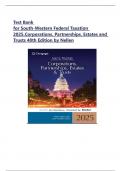
Test Bank
for South-Western Federal Taxation
2025,Corporations, Partnerships, Estates and
Trusts 48th Edition by Nellen
, TABLE OF CONTENTS
Discussion Questions ..................................................................................... 1
Computational Exercises ................................................................................ 5
Problems ................................................................................................... 8
Research Problems ...................................................................................... 17
Check Figures ............................................................................................. 18
Solutions To Becker CPA Review Questions ..................................................... 19
Discussion Questions
1. (LO 1) You Should Ask Questions That Will Enable You To Assess Both Tax And
Nontax Factors That Will Affect The Entity Choice. Some Relevant Questions Are
Addressed In The Following Table, Although There Are Many Additional Possibilities.
Question Reason For The Question
What Type Of Business Are You This Question Will Provide Information That
Going To Operate? May Affect The Need For Limited Liability,
Ability To Raise Capital, Ease Of Transferring
Interests In The Business, How Long The
Business Will
Continue, And How The Business Will Be
Managed.
What Amount And Type Of Income From A Business Will Eventually Be
Income (Loss) Do You Expect Reported On The Tax Returns Of The Owners.
From The Business?
What Is The Amount And Type For Example, Income (Loss) From A
Of Income (Loss) That You Partnership, An S Corporation, Or An LLC Will
Expect From Other Sources? ―Flow Through‖ To The Owners. Dividends
From A C Corporation Must Be Reported On The
Tax Returns Of The Shareholders. Any Income
(Loss) From Other Sources Also Will Be
Reported On The Returns Of The Owners. If
Applicable, The Deduction For Qualified
Business Income Must Be Factored Into The
Analysis. Thus, For Planning Purposes, It Is
Important To Know All Sources And Types Of
Income (Loss) The Owners Will Have.
, Question Reason For The Question
Do You Expect To Have Losses Losses Of Partnerships, S Corporations, And Llcs
In The Early Years Of The Flow Through To The Owners And Represent
Business? Potential Deductions On Their Individual
Returns. The § 461(L) Limitation On Excess
Business Losses
Must Be Considered In This Analysis. Losses Of A
C Corporation Do Not Flow Through.
Will You Withdraw Profits From Profits From A Partnership, An S Corporation, Or
The Business Or Leave Them An LLC Will ―Flow Through‖ To The Owners And
In The Business So That It Can Will Be Subject To Taxation On Their Individual
Grow? Tax Returns. Profits Of A C Corporation Must Be
Reported On The Tax Returns Of The Shareholders
Only If Such Profits Are Paid Out To Shareholders
As Dividends. Thus, In The Case Of A Partnership,
An S Corporation, Or An LLC, Owners Must Pay
Tax On Profits Before Reinvesting Funds Back
Into The Business. In The Case Of A C
Corporation, The Corporation Must Pay Tax On Its
Profits. The Corporate 21% Flat Tax Rate May
Present Tax Savings Opportunities For High-
Income Taxpayers, Particularly Where Earnings Are
Retained Within The Corporation.
In What State(S) Will The Business States Assess Business Taxes (E.G., Corporate
Be Formed? Income Tax, Franchise Tax) On Various Forms Of
Entities, Including Some That Apply To S
Corporations, Partnerships, And/Or Llcs.
2. (LO 1) C Corporations Are Separate Taxable Entities. Cassowary Corporation Will
Report The Operating Income And Tax-Exempt Income On Its Return (Form 1120),
Resulting In Taxable Income Of $120,000 For The Year. Shareholders Are Required To
Report Income From A C Corporation Only To The Extent Of Dividends Received;
Thus, Brianna Reports No Income From Cassowary For The Year. An S Corporation Is A
Tax Reporting Entity But (Generally) Not A Taxable Entity. Instead, Its Profit (Loss)
And Separately Stated Items Flow Through To The Shareholders. Emu Corporation
Will Report Ordinary Business Income Of $120,000 And Separately Stated Tax-
Exempt Interest Income Of
$8,000 On Its Return (Form 1120S), With 40% Of These Amounts Allocated To Brianna
(Schedule K–1). Brianna Will Report Ordinary Business Income Of $48,000 And Tax-
Exempt Interest Income Of $3,200 On Her Individual Return (Form 1040). Brianna Would
Claim Any Related Deduction For Qualified Business Income On Her Form 1040. The
Absence Of Dividend Distributions From Emu Corporation Does Not Affect Brianna’s
Treatment Of The Income.
3. (LO 1, 5) Art Should Consider Operating The Business As A Sole Proprietorship (Or A
Single Member LLC) For The First Three Years. If He Works 15 Hours Per Week In The
Business, He Will Exceed The Minimum Number Of Hours Required To Be A Material
Participant
(52 × 15 = 780) Under The Passive Activity Loss Rules. [An Individual Is Treated As
Materially Participating In An Activity If He Or She Participates In The Activity For More
Than 500 Hours During The Year. Reg. § 1.469–5T(A)(1).] Therefore, He Will Be Able To
Deduct The Losses Against His Other Income, Subject To The § 461(L) Limitation On
for South-Western Federal Taxation
2025,Corporations, Partnerships, Estates and
Trusts 48th Edition by Nellen
, TABLE OF CONTENTS
Discussion Questions ..................................................................................... 1
Computational Exercises ................................................................................ 5
Problems ................................................................................................... 8
Research Problems ...................................................................................... 17
Check Figures ............................................................................................. 18
Solutions To Becker CPA Review Questions ..................................................... 19
Discussion Questions
1. (LO 1) You Should Ask Questions That Will Enable You To Assess Both Tax And
Nontax Factors That Will Affect The Entity Choice. Some Relevant Questions Are
Addressed In The Following Table, Although There Are Many Additional Possibilities.
Question Reason For The Question
What Type Of Business Are You This Question Will Provide Information That
Going To Operate? May Affect The Need For Limited Liability,
Ability To Raise Capital, Ease Of Transferring
Interests In The Business, How Long The
Business Will
Continue, And How The Business Will Be
Managed.
What Amount And Type Of Income From A Business Will Eventually Be
Income (Loss) Do You Expect Reported On The Tax Returns Of The Owners.
From The Business?
What Is The Amount And Type For Example, Income (Loss) From A
Of Income (Loss) That You Partnership, An S Corporation, Or An LLC Will
Expect From Other Sources? ―Flow Through‖ To The Owners. Dividends
From A C Corporation Must Be Reported On The
Tax Returns Of The Shareholders. Any Income
(Loss) From Other Sources Also Will Be
Reported On The Returns Of The Owners. If
Applicable, The Deduction For Qualified
Business Income Must Be Factored Into The
Analysis. Thus, For Planning Purposes, It Is
Important To Know All Sources And Types Of
Income (Loss) The Owners Will Have.
, Question Reason For The Question
Do You Expect To Have Losses Losses Of Partnerships, S Corporations, And Llcs
In The Early Years Of The Flow Through To The Owners And Represent
Business? Potential Deductions On Their Individual
Returns. The § 461(L) Limitation On Excess
Business Losses
Must Be Considered In This Analysis. Losses Of A
C Corporation Do Not Flow Through.
Will You Withdraw Profits From Profits From A Partnership, An S Corporation, Or
The Business Or Leave Them An LLC Will ―Flow Through‖ To The Owners And
In The Business So That It Can Will Be Subject To Taxation On Their Individual
Grow? Tax Returns. Profits Of A C Corporation Must Be
Reported On The Tax Returns Of The Shareholders
Only If Such Profits Are Paid Out To Shareholders
As Dividends. Thus, In The Case Of A Partnership,
An S Corporation, Or An LLC, Owners Must Pay
Tax On Profits Before Reinvesting Funds Back
Into The Business. In The Case Of A C
Corporation, The Corporation Must Pay Tax On Its
Profits. The Corporate 21% Flat Tax Rate May
Present Tax Savings Opportunities For High-
Income Taxpayers, Particularly Where Earnings Are
Retained Within The Corporation.
In What State(S) Will The Business States Assess Business Taxes (E.G., Corporate
Be Formed? Income Tax, Franchise Tax) On Various Forms Of
Entities, Including Some That Apply To S
Corporations, Partnerships, And/Or Llcs.
2. (LO 1) C Corporations Are Separate Taxable Entities. Cassowary Corporation Will
Report The Operating Income And Tax-Exempt Income On Its Return (Form 1120),
Resulting In Taxable Income Of $120,000 For The Year. Shareholders Are Required To
Report Income From A C Corporation Only To The Extent Of Dividends Received;
Thus, Brianna Reports No Income From Cassowary For The Year. An S Corporation Is A
Tax Reporting Entity But (Generally) Not A Taxable Entity. Instead, Its Profit (Loss)
And Separately Stated Items Flow Through To The Shareholders. Emu Corporation
Will Report Ordinary Business Income Of $120,000 And Separately Stated Tax-
Exempt Interest Income Of
$8,000 On Its Return (Form 1120S), With 40% Of These Amounts Allocated To Brianna
(Schedule K–1). Brianna Will Report Ordinary Business Income Of $48,000 And Tax-
Exempt Interest Income Of $3,200 On Her Individual Return (Form 1040). Brianna Would
Claim Any Related Deduction For Qualified Business Income On Her Form 1040. The
Absence Of Dividend Distributions From Emu Corporation Does Not Affect Brianna’s
Treatment Of The Income.
3. (LO 1, 5) Art Should Consider Operating The Business As A Sole Proprietorship (Or A
Single Member LLC) For The First Three Years. If He Works 15 Hours Per Week In The
Business, He Will Exceed The Minimum Number Of Hours Required To Be A Material
Participant
(52 × 15 = 780) Under The Passive Activity Loss Rules. [An Individual Is Treated As
Materially Participating In An Activity If He Or She Participates In The Activity For More
Than 500 Hours During The Year. Reg. § 1.469–5T(A)(1).] Therefore, He Will Be Able To
Deduct The Losses Against His Other Income, Subject To The § 461(L) Limitation On


