
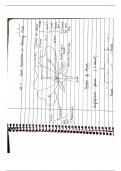
Sexual reproduction in flowering plants
The document on sexual reproduction in flowering plants typically refers to an educational or scientific text that explains the process by which flowering plants reproduce sexually, involving the fusion of male and female gametes. Here's a complete description of what such a document would include: --- Sexual Reproduction in Flowering Plants – Document Overview 1. Introduction Sexual reproduction in flowering plants involves the formation of male and female gametes, pollination, fertilization, and the development of seeds and fruits. It ensures genetic variation and survival of the species. --- 2. Structure of a Flower Describes the parts of the flower, the reproductive organ of angiosperms: Male Reproductive Part (Androecium) Stamens: Each consists of Anther (produces pollen grains containing male gametes) Filament Female Reproductive Part (Gynoecium) Carpels/Pistils: Consists of Stigma (receives pollen) Style (tube leading to the ovary) Ovary (contains ovules with female gametes) --- 3. Pollination Transfer of pollen from anther to stigma. Types: Self-pollination: Pollen lands on the stigma of the same flower or another flower on the same plant. Cross-pollination: Pollen lands on the stigma of a different plant of the same species. Agents: Wind, water, insects, birds, and animals. --- 4. Fertilization After pollination, the pollen grain germinates on the stigma. A pollen tube grows down the style and enters the ovule. Male gamete fuses with the female egg cell — this process is called syngamy. Double fertilization occurs: One male gamete fuses with the egg (forms zygote). Another fuses with two polar nuclei (forms endosperm). --- 5. Post-Fertilization Events Zygote → Embryo Ovule → Seed Ovary → Fruit The seed contains a protective coat, embryo, and stored food. --- 6. Significance of Sexual Reproduction Promotes genetic diversity Helps in evolution Increases adaptability to changing environments --- 7. Diagrams and Illustrations (usually included in the document) Structure of a flower Pollination process Fertilization steps Seed and fruit development --- 8. Conclusion The document concludes by summarizing that sexual reproduction in flowering plants is a complex, highly organized process that plays a critical role in the continuation and variation of plant species. ---

Document information
- Uploaded on
- June 22, 2025
- Number of pages
- 43
- Written in
- 2024/2025
- Type
- Class notes
- Professor(s)
- Miss rupali simar
- Contains
- 12


