
Photosynthesis
The process of Photosynthesis
All living organisms need food to:
• Provide energy- bodies can work
• Build new cells to repair worn out ones
• Build new cells and tissue as they grow
All Animals and fungi feed on other organisms to get their energy are called
Heterotrophs. Most plants and many Protista and bacteria don’t feed on other
organisms but make their own energy rich food or nutrients in their bodies
and are called autotrophs.
Photosynthesis is the food making process. When the source of energy used
to make food is radiant energy called light. During photosynthesis light
energy is used to make energy rich food from simple substances.
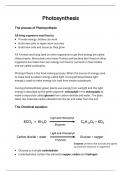
During photosynthesis green plants use energy from sunlight and this light
energy is absorbed by the green pigment- chlorophyll in the chloroplasts to
make compounds called glucose from carbon dioxide and water. The plant
takes raw materials carbon dioxide from the air and water from the soil.
The Chemical equation:
Enzymes: proteins that activate and speed
up chemical reactions in organisms
• Glucose is a simple carbohydrate
• Carbohydrates contain the elements oxygen, carbon and hydrogen
, The carbon and oxygen of the carbohydrates comes from the carbon dioxide
in the air and the hydrogen comes from the water. Chlorophyll in the
chloroplast of the plant cell absorbs the sunlight and changes light energy
into chemical energy which is then stored in the food molecules that are
made.
Intake of raw materials
The process of photosynthesis takes place in the leaves where chlorophyll is
found. Land plants absorb water from the soil and carry it in the xylem vessels
of the stem to the veins of the leaves. Carbon dioxide is absorbed from the air
through the stromata in the leaves.
In the leaf cells, the carbon dioxide combines with the hydrogen from the
water to form sugar called glucose. The energy for this reaction comes from
sunlight.
Trapping and storing of energy and the release of oxygen
Light phase of photosynthesis:
The chlorophyll traps energy from sunlight and uses it to spilt the water
molecules into hydrogen and oxygen. The oxygen is released from the leaf
through the stomata. The hydrogen is given to hydrogen acceptor.
Dark phase of photosynthesis:
When the hydrogen acceptor gives its hydrogen atoms to carbon dioxide to
form glucose.
Formation of food in chloroplasts and its storage
Glucose is soluble in water so it moves around the plant water. Starch is
insoluble and is stored in the cells. Plants store the energy-rich glucose in the
form of starch. Starch is made up of hundreds of glucose molecules that are
joined together. Starch is stored I the leaves and other parts of the plants
such as the stem and root tubes and seeds.
The process of Photosynthesis
All living organisms need food to:
• Provide energy- bodies can work
• Build new cells to repair worn out ones
• Build new cells and tissue as they grow
All Animals and fungi feed on other organisms to get their energy are called
Heterotrophs. Most plants and many Protista and bacteria don’t feed on other
organisms but make their own energy rich food or nutrients in their bodies
and are called autotrophs.
Photosynthesis is the food making process. When the source of energy used
to make food is radiant energy called light. During photosynthesis light
energy is used to make energy rich food from simple substances.
During photosynthesis green plants use energy from sunlight and this light
energy is absorbed by the green pigment- chlorophyll in the chloroplasts to
make compounds called glucose from carbon dioxide and water. The plant
takes raw materials carbon dioxide from the air and water from the soil.
The Chemical equation:
Enzymes: proteins that activate and speed
up chemical reactions in organisms
• Glucose is a simple carbohydrate
• Carbohydrates contain the elements oxygen, carbon and hydrogen
, The carbon and oxygen of the carbohydrates comes from the carbon dioxide
in the air and the hydrogen comes from the water. Chlorophyll in the
chloroplast of the plant cell absorbs the sunlight and changes light energy
into chemical energy which is then stored in the food molecules that are
made.
Intake of raw materials
The process of photosynthesis takes place in the leaves where chlorophyll is
found. Land plants absorb water from the soil and carry it in the xylem vessels
of the stem to the veins of the leaves. Carbon dioxide is absorbed from the air
through the stromata in the leaves.
In the leaf cells, the carbon dioxide combines with the hydrogen from the
water to form sugar called glucose. The energy for this reaction comes from
sunlight.
Trapping and storing of energy and the release of oxygen
Light phase of photosynthesis:
The chlorophyll traps energy from sunlight and uses it to spilt the water
molecules into hydrogen and oxygen. The oxygen is released from the leaf
through the stomata. The hydrogen is given to hydrogen acceptor.
Dark phase of photosynthesis:
When the hydrogen acceptor gives its hydrogen atoms to carbon dioxide to
form glucose.
Formation of food in chloroplasts and its storage
Glucose is soluble in water so it moves around the plant water. Starch is
insoluble and is stored in the cells. Plants store the energy-rich glucose in the
form of starch. Starch is made up of hundreds of glucose molecules that are
joined together. Starch is stored I the leaves and other parts of the plants
such as the stem and root tubes and seeds.


