1
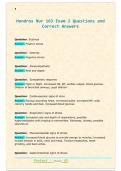
Hondros Nur 163 Exam 2 Questions and
Correct Answers
Question: Eustress
Answer: Positive stress
Question: Distress
Answer: Negative stress
Question: Parasympathetic
Answer: Rest and digest
Question: Sympathetic response
Answer: Fight or flight. Increased HR, BP, cardiac output, blood glucose.
Dilation of bronchial airways, pupil dilation.
Question: Cardiovascular signs of strss
Answer: Racing/ pounding heart, increased pulse, increased BP, cold/
clammy hands and feet, increased blood glucose
Question: Respiratory signs of stress
Answer: Increased rate and depth of respirations, possible
hyperventilation with tingling in extremities. Faintness, diiness, possible
seizures.zz
Question: Musculoskeletal signs of stress
Answer: Increased blood glucose to provide energy to muscles, increased
muscle tension in back, neck and head. Tension headaches, teeth
grinding, and back aches.
Question: Gastrointestinal signs of stress
Pretest - Stuvia US
, 2
Answer: Decreased production of gastric enzymes, loss of appetite,
nausea, abdominal distinction, vomiting, heartburn, ulcers. Decreased
peristalsis resulting in excess gas and constipation, but diarrhea is also
common.
Question: Urinary signs of stress
Answer: Decreased urinary output but increased urinary frequency.
Question: Psychological and emotional response to stress
Answer: Anxiety, depression, anger, irritability, frustration, overreaction,
memory loss, lack of concentration, insomnia
Question: Physiological response to stress
Answer: Muscle tension, headache, stomachache, acid reflux, tachycardia,
hyperventilation, elevated BP
Question: Behavioral response to stress
Answer: Smoking, overeating, substance abuse
Question: Major risks associated with stress
Answer: Angina, heart rhythm abnormalities, heart attack, stroke,
infections, ulcers, GERD, IBS, sleep problems, headaches, muscle
spasms.
Question: Stressor activates what
Answer: Hypothalamus response
Question: Hypothalamus response to stress
Answer: Secretes corticotropin-releasing factor
Question: Corticotropin-releasing factor activates what
Answer: Sympathetic nervous system, anterior pituitary and posterior
pituitary glands
Pretest - Stuvia US
Hondros Nur 163 Exam 2 Questions and
Correct Answers
Question: Eustress
Answer: Positive stress
Question: Distress
Answer: Negative stress
Question: Parasympathetic
Answer: Rest and digest
Question: Sympathetic response
Answer: Fight or flight. Increased HR, BP, cardiac output, blood glucose.
Dilation of bronchial airways, pupil dilation.
Question: Cardiovascular signs of strss
Answer: Racing/ pounding heart, increased pulse, increased BP, cold/
clammy hands and feet, increased blood glucose
Question: Respiratory signs of stress
Answer: Increased rate and depth of respirations, possible
hyperventilation with tingling in extremities. Faintness, diiness, possible
seizures.zz
Question: Musculoskeletal signs of stress
Answer: Increased blood glucose to provide energy to muscles, increased
muscle tension in back, neck and head. Tension headaches, teeth
grinding, and back aches.
Question: Gastrointestinal signs of stress
Pretest - Stuvia US
, 2
Answer: Decreased production of gastric enzymes, loss of appetite,
nausea, abdominal distinction, vomiting, heartburn, ulcers. Decreased
peristalsis resulting in excess gas and constipation, but diarrhea is also
common.
Question: Urinary signs of stress
Answer: Decreased urinary output but increased urinary frequency.
Question: Psychological and emotional response to stress
Answer: Anxiety, depression, anger, irritability, frustration, overreaction,
memory loss, lack of concentration, insomnia
Question: Physiological response to stress
Answer: Muscle tension, headache, stomachache, acid reflux, tachycardia,
hyperventilation, elevated BP
Question: Behavioral response to stress
Answer: Smoking, overeating, substance abuse
Question: Major risks associated with stress
Answer: Angina, heart rhythm abnormalities, heart attack, stroke,
infections, ulcers, GERD, IBS, sleep problems, headaches, muscle
spasms.
Question: Stressor activates what
Answer: Hypothalamus response
Question: Hypothalamus response to stress
Answer: Secretes corticotropin-releasing factor
Question: Corticotropin-releasing factor activates what
Answer: Sympathetic nervous system, anterior pituitary and posterior
pituitary glands
Pretest - Stuvia US